

The Financial Impact of Upgrading to Next-Gen VR Hardware: Saving 15% on Operational Costs by Q3 2026
In an increasingly digitized world, businesses are constantly seeking innovative solutions to enhance efficiency, reduce expenditures, and gain a competitive edge. Virtual Reality (VR) technology, once a niche for gaming enthusiasts, has rapidly evolved into a powerful tool with profound implications for enterprise operations. The adoption of next-generation VR hardware is no longer a futuristic fantasy but a tangible strategy for achieving significant financial returns. This comprehensive article explores the compelling financial impact of embracing a VR hardware upgrade, projecting a remarkable 15% reduction in operational costs by Q3 2026.
The Evolution of VR in the Enterprise Landscape
The journey of VR from concept to mainstream enterprise application has been nothing short of transformative. Early VR systems were often cumbersome, expensive, and limited in their capabilities, making their widespread business adoption impractical. However, advancements in display technology, processing power, ergonomic design, and software integration have ushered in a new era of next-generation VR hardware. These sophisticated devices offer unparalleled immersion, improved user comfort, and seamless connectivity, making them viable for a wide array of business applications.
From immersive training simulations that reduce the need for physical prototypes and travel, to virtual collaboration spaces that transcend geographical boundaries, and even remote maintenance and design reviews, the potential applications of a VR hardware upgrade are vast. This evolution signifies a pivotal moment for businesses to re-evaluate their operational strategies and consider how integrating cutting-edge VR can streamline processes and unlock substantial savings.
Understanding the Direct Financial Benefits of a VR Hardware Upgrade
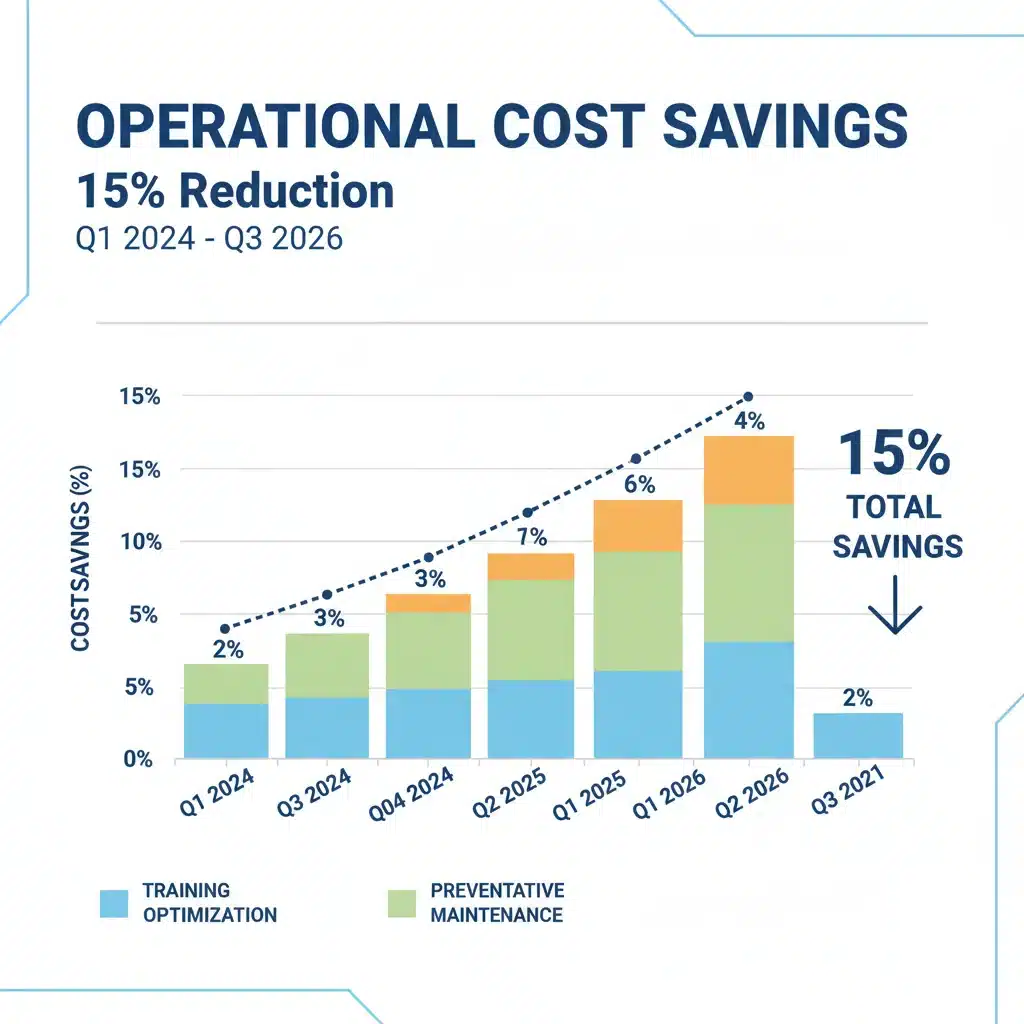
The promise of a 15% reduction in operational costs by Q3 2026 through a VR hardware upgrade is not an arbitrary figure; it’s a conservative estimate based on the cumulative effects of various efficiencies and cost reductions across multiple business functions. Let’s break down the key areas where these savings materialize:
1. Training and Development Cost Reduction
Traditional training methods often involve significant expenses related to travel, accommodation, physical facilities, specialized equipment, and instructor fees. A VR hardware upgrade revolutionizes this paradigm. Immersive VR training modules can simulate complex scenarios, hazardous environments, or intricate machinery without any physical risk or the need for expensive real-world resources. Employees can practice procedures repeatedly until mastery, leading to higher retention rates and reduced error margins.
- Reduced Travel Expenses: Training global teams virtually eliminates the need for costly flights, hotels, and per diems.
- Elimination of Physical Prototypes/Equipment: Industries like manufacturing, automotive, and aerospace can train on virtual models, saving millions on physical prototypes.
- Faster Onboarding: New hires can be trained more quickly and effectively, reducing the time to productivity.
- Scalability: VR training can be scaled to hundreds or thousands of employees simultaneously, without proportional increases in logistical costs.
The ability to conduct high-fidelity training anywhere, anytime, with a consistent quality standard, directly contributes to a significant portion of the projected cost savings.
2. Enhanced Collaboration and Remote Work Efficiency
The rise of remote and hybrid work models has highlighted the limitations of traditional video conferencing. Next-gen VR hardware offers truly immersive collaboration spaces where teams can interact with 3D models, brainstorm on virtual whiteboards, and experience a sense of presence that mimics in-person meetings. This dramatically improves communication, accelerates decision-making, and fosters a stronger team dynamic, regardless of geographical distribution.
- Reduced Business Travel: Fewer in-person meetings translate to substantial savings on travel and entertainment.
- Improved Productivity: More engaging and effective virtual meetings lead to quicker project completion and fewer misunderstandings.
- Access to Global Talent: Businesses can tap into a worldwide talent pool without incurring relocation costs, as remote collaboration becomes more effective.
The efficiency gains from superior virtual collaboration directly impact project timelines and resource allocation, leading to measurable cost reductions.
3. Streamlined Design and Prototyping Processes
For industries involved in product development, architecture, or engineering, a VR hardware upgrade can cut down design cycles and prototyping costs dramatically. Designers and engineers can visualize, interact with, and iterate on 3D models in real-time, identifying flaws and making adjustments before any physical resources are committed.
- Fewer Physical Prototypes: Virtual prototyping eliminates the need for multiple expensive physical iterations.
- Faster Iteration Cycles: Real-time visualization and feedback accelerate the design process.
- Reduced Material Waste: By perfecting designs virtually, material waste from erroneous physical prototypes is minimized.
- Enhanced Stakeholder Review: Clients and stakeholders can review designs immersively, providing clearer feedback and reducing rework.
This area alone can account for significant savings, especially in sectors where physical prototyping is a major cost driver.
4. Remote Maintenance and Field Service Optimization
Imagine technicians being able to diagnose and repair complex machinery from miles away, guided by an expert in a shared VR environment. Next-gen VR hardware facilitates this by allowing remote experts to overlay instructions, schematics, and diagnostic data onto a technician’s real-world view, or even take them through a virtual representation of the equipment. This minimizes downtime, reduces the need for expensive expert travel, and improves first-time fix rates.
- Reduced Expert Travel: Fewer trips for specialized technicians to remote sites.
- Faster Issue Resolution: Quicker diagnosis and repair lead to reduced operational downtime.
- Improved Knowledge Transfer: Experts can guide junior technicians, upskilling the workforce remotely.
The operational efficiencies in maintenance and field service contribute directly to a leaner cost structure.
Calculating the Return on Investment (ROI) for Your VR Hardware Upgrade
While the benefits are clear, a successful VR hardware upgrade requires a robust ROI calculation. Businesses must consider the initial investment in hardware, software, development of VR content, and integration costs against the projected savings. The 15% operational cost reduction by Q3 2026 serves as a powerful incentive, but a detailed financial model is crucial.
Key factors in ROI calculation include:
- Initial Investment: Cost of VR headsets, controllers, powerful workstations (if needed), and specialized software licenses.
- Content Development: Costs associated with creating or customizing VR training modules, collaboration environments, or design applications.
- Integration Costs: Expenses for integrating VR systems with existing enterprise software and IT infrastructure.
- Training for Users: Costs for familiarizing employees with new VR hardware and software.
- Projected Savings: Quantifiable reductions in travel, training, prototyping, and maintenance expenses.
- Intangible Benefits: Improved employee engagement, enhanced brand image, and accelerated innovation, which, while harder to quantify, add significant value.
Many organizations find that the rapid realization of savings in areas like travel and training allows for a surprisingly quick payback period, often within 12-24 months, making the VR hardware upgrade a highly attractive investment.
Strategic Planning for a Successful VR Hardware Upgrade
Achieving the projected 15% operational cost savings by Q3 2026 requires more than just purchasing new headsets; it demands strategic planning and meticulous execution. Here are critical steps for a successful VR hardware upgrade:
1. Conduct a Thorough Needs Assessment
Before investing, identify specific pain points and opportunities within your organization where VR can deliver the most impact. Which departments stand to gain the most from improved training, collaboration, or design processes? Understanding your unique requirements will guide hardware and software selection.
2. Pilot Programs and Phased Rollouts
Start with a small-scale pilot program in a specific department or for a particular use case. This allows you to test the technology, gather feedback, refine processes, and demonstrate tangible ROI before a wider rollout. A phased approach minimizes risk and ensures smoother adoption.
3. Choose the Right Hardware and Software
The market for VR hardware is diverse. Select devices that meet your specific needs in terms of resolution, field of view, tracking capabilities, comfort, and enterprise-grade features (e.g., security, device management). Equally important is choosing robust software platforms and content development tools that align with your objectives.
4. Invest in Content Creation and Customization
Off-the-shelf VR content may not fully address your specific needs. Be prepared to invest in custom content development or work with partners to tailor existing solutions. High-quality, relevant content is paramount for maximizing the effectiveness of your VR hardware upgrade.
5. Employee Training and Adoption Strategies
User adoption is crucial. Provide comprehensive training and support to employees to ensure they are comfortable and proficient with the new VR hardware and applications. Highlight the benefits to them personally and professionally to foster enthusiasm and overcome potential resistance to change.
6. Measure and Monitor Performance
Establish clear KPIs and regularly measure the impact of your VR investment. Track metrics such as training completion times, error rates, travel cost reductions, project timelines, and employee feedback. Continuous monitoring allows for adjustments and ensures you stay on track to achieve your cost-saving goals.
Addressing Potential Challenges and Mitigating Risks
While the benefits are significant, organizations undertaking a VR hardware upgrade should be aware of potential challenges. These include the initial capital investment, the learning curve for new technology, potential integration complexities with existing IT infrastructure, and ensuring content relevance and quality.
Mitigation strategies include:
- Phased Investment: Spreading the capital expenditure over time.
- Vendor Partnerships: Collaborating with experienced VR solution providers to navigate technical complexities.
- Change Management: Proactive communication and training to address employee concerns and drive adoption.
- Scalable Solutions: Choosing hardware and software that can grow with your organization’s needs.
By anticipating and addressing these challenges proactively, businesses can ensure a smoother transition and maximize the financial upside of their VR investment.
Case Studies and Industry Examples
Numerous industries are already reaping the rewards of a VR hardware upgrade. For instance, major automotive manufacturers are using VR for collaborative design reviews, significantly reducing the number of physical prototypes. Healthcare providers are leveraging VR for surgical training, allowing medical professionals to practice complex procedures in a risk-free environment, leading to fewer errors and better patient outcomes. Retailers are using VR to design store layouts and visualize product placements, optimizing customer experience and sales efficiency.
These real-world examples underscore the versatility and tangible financial benefits that next-gen VR hardware brings to diverse business sectors. The experiences of these early adopters provide a blueprint for others looking to embark on their own VR journey and achieve similar cost efficiencies.

The Future Outlook: Beyond 2026
The 15% operational cost savings by Q3 2026 is just the beginning. As VR technology continues to advance, we can expect even greater efficiencies and innovative applications to emerge. Future iterations of VR hardware will likely feature lighter form factors, higher resolutions, more advanced haptics, and even more seamless integration with AI and other emerging technologies. This ongoing evolution suggests that the long-term financial benefits of investing in a VR hardware upgrade will only continue to grow.
Businesses that embrace this technology early will not only realize significant cost savings but also position themselves as leaders in innovation, attracting top talent and fostering a forward-thinking culture. The competitive advantage gained through enhanced efficiency, faster time-to-market, and superior training capabilities will be invaluable in the years to come.
Conclusion: A Strategic Imperative for Modern Businesses
The evidence is clear: upgrading to next-gen VR hardware is a strategic imperative for modern businesses aiming to optimize operations and achieve substantial financial savings. The projected 15% reduction in operational costs by Q3 2026 is a compelling testament to the power of this technology to transform training, collaboration, design, and maintenance processes. By carefully planning, investing wisely, and fostering user adoption, organizations can unlock these benefits and secure a more efficient, innovative, and cost-effective future.
The time to consider a comprehensive VR hardware upgrade is now. Those who act decisively will not only save significant capital but also build a more resilient and future-proof enterprise capable of navigating the complexities of the 21st-century business landscape.