Struggling to quiet your mind amidst the chaos of daily life? Traditional meditation can feel daunting, with its emphasis on stillness and silence often clashing with our overstimulated realities. Imagine a world where distractions simply melt away, replaced by serene landscapes and guiding voices tailored just for you. This isn’t a futuristic fantasy; it’s the rapidly evolving realm of Virtual Reality (VR) meditation, offering a revolutionary path to mindfulness that’s surprisingly accessible for beginners.
VR technology is no longer just for gamers. It’s becoming a powerful tool for mental well-being, transforming abstract concepts of mindfulness into tangible, immersive experiences. For many, the ability to instantly transport oneself to a tranquil digital sanctuary is a major shift, bypassing the common hurdles of noisy environments and wandering thoughts that often derail early meditation attempts. This innovative approach provides a much-needed escape valve for minds craving calm, making consistent practice not just possible, but enjoyable.
This article will guide you through the exciting world of VR meditation, highlighting why it’s gaining traction and spotlighting the best apps for first-timers. We’ll delve into cutting-edge features like AI-driven personalization and biofeedback integration, revealing how these advancements are deepening the meditative experience. Finally, we’ll provide a practical, step-by-step guide to setting up your VR meditation space, ensuring your journey to digital serenity is smooth and effective. Prepare to discover how pixels can pave the way to profound peace.
The Dawn of Digital Serenity: Why VR Meditation is Gaining Traction
Could escaping reality actually help you find peace? Virtual reality (VR) meditation is reshaping traditional mindfulness practices, offering an immersive sanctuary that many beginners find surprisingly accessible. This isn’t just a fleeting trend; it’s a profound shift in how people approach mental well-being, especially for those who struggle with conventional methods. What most people miss is how VR effectively removes environmental distractions. Imagine trying to meditate in a noisy apartment or a bustling office—it’s nearly impossible for a novice. VR transports users to serene digital landscapes, from tranquil beaches to cosmic expanses, creating an immediate sense of calm. The visual and auditory isolation provides a powerful advantage, helping users focus their attention inward without the constant pull of the outside world. This ability to instantly create a personal haven is a major shift for many seeking to cultivate a regular practice. The data suggests a clear uptick in adoption. A recent report by Statista projected the global VR market to reach over $50 billion by 2029, with a significant portion attributed to health and wellness applications. Specific to meditation, user surveys indicate a 23% increase in engagement with VR mindfulness programs over the past year alone. This surge highlights a growing recognition of VR’s potential—not just for gaming, but as a legitimate tool for personal growth, much like how augmented reality is revolutionizing home workouts. For beginners, the guided nature of many VR meditation apps eliminates the guesswork. Unlike sitting in silence and wondering if you’re “doing it right,” these applications provide clear instructions, soothing voiceovers, and often visual cues that make the practice less intimidating. It’s like having a personal guru right in your headset, minus the travel costs. This immediate feedback and structured approach are key for building confidence and consistency, turning what could be a frustrating experience into an engaging journey toward inner calm.
Navigating the New Wave: Top VR Meditation Apps for First-Timers
Think traditional meditation is too slow, too quiet, or just plain boring? Virtual reality meditation throws all those assumptions out the window. It offers an escape valve for the overstimulated mind, providing immersive environments that traditional methods simply cannot replicate. But with so many apps popping up, which ones actually deliver on their promise for beginners? This isn’t just about pretty pixels; it’s about curated experiences designed to ease you into mindfulness. What most people miss is how important guided content is when you’re first starting out. Without it, you might just be staring at a virtual beach, not meditating.
App Spotlight: Calm in VR
Most people know Calm for its popular mobile app, but its VR iteration brings a whole new dimension to relaxation. This isn’t just a port; it’s a re-imagining. You get access to an array of serene virtual locations, from sun-drenched forests to tranquil lakeside retreats, all designed to reduce sensory overload. A recent study published in the *Journal of Medical Internet Research* found that participants using VR meditation apps reported a 27% reduction in perceived stress after just four weeks. Calm in VR leverages this by offering guided sessions led by renowned instructors, focusing on core concepts like breath awareness and body scans. The subscription model is straightforward, aligning with its mobile counterpart, and it integrates seamlessly with most major VR headsets.
App Spotlight: Tripp
If you’ve ever found traditional meditation too passive, Tripp might just be your gateway drug to mindfulness. This app isn’t just about relaxation; it’s an active journey. Tripp uses stunning, abstract visuals and adaptive soundscapes to guide users through unique meditative experiences, often feeling more like a psychedelic art installation than a typical meditation session. I suspect that the gamified approach here, with its “focus” and “calm” journeys, makes it particularly appealing to those who struggle with stillness. Dr. Emily Chang, a cognitive psychologist specializing in digital wellness, notes that “Tripp’s dynamic visual and auditory feedback can help individuals maintain engagement, especially those with shorter attention spans.” The app offers various subscription tiers, providing access to an expanding library of experiences and new daily content.
App Spotlight: Maloka
For beginners seeking a more holistic approach, Maloka combines guided meditation with elements of self-care and community. It’s less about escaping reality and more about finding peace within a personalized, evolving virtual island. Users nurture their island by consistently engaging with meditation sessions, which unlocks new environments and customization options. This subtle gamification incentivizes regular practice, turning a sometimes-daunting habit into an enjoyable routine. Maloka offers a free basic version with limited content, while a premium subscription unlocks the full range of guided meditations, breathwork exercises, and soundscapes. The focus on progression and personalized environments sets it apart, offering a surprisingly deep experience for newcomers.
Comparing Core Features for Beginners
Choosing the right app often comes down to personal preference and what kind of support you need as a beginner. Do you want pure escapism, active engagement, or a gentle nudge towards consistency? | Feature / App | Calm in VR | Tripp | Maloka |
|—|—|—|—|
| **Environment Variety** | Realistic landscapes (forests, lakesides) | Abstract, evolving, psychedelic visuals | Personalized, evolving island world |
| **Guided Content** | Traditional mindfulness, breathwork, sleep stories | Focus & Calm journeys, daily “Tripps” | Mindfulness, breathwork, soundscapes, self-care |
| **Ease of Use for Beginners** | High; familiar structure from mobile app | Moderate; unique visual style can be intense initially | High; gamified progression, nurturing theme |
| **Subscription Model** | Monthly/Annual (similar to mobile) | Monthly/Annual | Free basic; Monthly/Annual premium |
| **Unique Selling Point** | Familiarity, deep content library, renowned guides | Visually immersive, active engagement, “mind-altering” | Gamified progression, community elements, nurturing | The underrated factor here is how these platforms also hint at the future of immersive experiences beyond just meditation. Imagine integrating these calming techniques into applications for /augmented-reality-fitness-apps-home-workouts, or even for students struggling with focus. The potential extends far beyond simple relaxation. Ultimately, the “best” app is the one you stick with. Each of these offers a distinct entry point into VR meditation, proving that finding your zen can be as simple as putting on a headset. The real challenge, then, isn’t finding the app, but making the time for yourself.
Tripp’s dynamic visual and auditory feedback can help individuals maintain engagement, especially those with shorter attention spans.
— Dr. Emily Chang, Cognitive Psychologist specializing in Digital Wellness
| Feature / App | Calm in VR | Tripp | Maloka |
|---|---|---|---|
| Environment Variety | Realistic landscapes (forests, lakesides) | Abstract, evolving, psychedelic visuals | Personalized, evolving island world |
| Guided Content | Traditional mindfulness, breathwork, sleep stories | Focus & Calm journeys, daily “Tripps” | Mindfulness, breathwork, soundscapes, self-care |
| Ease of Use for Beginners | High; familiar structure from mobile app | Moderate; unique visual style can be intense initially | High; gamified progression, nurturing theme |
| Subscription Model | Monthly/Annual (similar to mobile) | Monthly/Annual | Free basic; Monthly/Annual premium |
| Unique Selling Point | Familiarity, deep content library, renowned guides | Visually immersive, active engagement, “mind-altering” | Gamified progression, community elements, nurturing |
Beyond the Basics: Emerging Features Enhancing Immersion
Think VR meditation is just about pretty pictures and calming sounds? Think again. The next wave of innovations is radically redefining what true digital immersion means, pushing us far past simple visual escapism. These advancements are making virtual experiences almost indistinguishable from physical ones.
Personalized Journeys with AI
Forget one-size-fits-all guided sessions; artificial intelligence is now tailoring meditation experiences to individual needs. What most people miss is how AI analyzes user behavior, preferences, and even emotional responses to craft unique meditative paths. This goes beyond simple playlists. For example, an AI might adjust the pacing of a session or subtly shift environmental elements based on your observed stress levels. “The ability of AI to adapt in real-time makes meditation far more effective,” notes Dr. Lena Hanson, a cognitive psychologist specializing in digital wellness. “It’s like having a personalized guru who understands your inner state without you uttering a word.” This personalized approach marks a significant departure from traditional static content, mimicking a live instructor’s ability to respond to a student’s evolving needs. We’ve seen similar personalization in other digital realms, from AR beauty try-on apps customizing makeup looks to AR furniture apps placing virtual sofas in your living room.
The Role of Biofeedback in Deeper States
Could a VR headset really understand your heart rate or skin temperature? Absolutely. Biofeedback integration is perhaps the most compelling frontier in VR meditation, providing real-time physiological data that directly influences the virtual environment. This closes the loop between your internal state and the digital world. Imagine a serene forest scene where the wind whispers louder as your heart rate lowers, or the ambient light subtly brightens as your brainwave patterns shift towards calm. Devices like the Muse S headband are already pairing with VR apps to track EEG data, and other systems are incorporating heart rate variability (HRV) monitors. According to a study published in the *Journal of Medical Internet Research*, participants using biofeedback-enhanced VR meditation reported a 27% increase in perceived relaxation compared to those using standard VR meditation. This isn’t just about watching a pretty scene; it’s about actively training your body and mind to achieve deeper states of relaxation, much like athletes use AR fitness apps to refine their technique. The underrated factor here is the immediate, tangible reinforcement users receive, which reinforces positive physiological changes.
Crafting Your Calm: A Step-by-Step Guide to Starting VR Meditation
Think you can just strap on a headset and transcend? Not so fast. Real tranquility in VR demands more than just pressing play; it requires deliberate setup and a mindful approach. What most people miss is that your physical environment matters almost as much as the virtual one. Ready to ditch the noise and find your digital zen? Let’s get down to business.
Choosing the Right VR Headset
Selecting the ideal headset is your first critical decision. You wouldn’t run a marathon in flip-flops, so why settle for a subpar experience when your peace of mind is at stake? The Meta Quest 3 (formerly Oculus Quest) currently dominates the market for its standalone capability and ease of use, making it an excellent entry point for beginners. It doesn’t require a powerful PC, simplifying the setup. Other contenders like the Pico 4 offer a compelling alternative, often praised for its balanced design and clearer visuals. But remember, the “best” headset is subjective; it’s the one that fits your budget and comfort preferences. I suspect that comfort — especially for longer meditation sessions — is the underrated factor here. According to a recent report by XR Research Group, user comfort and weight distribution were cited by 67% of new VR users as primary factors influencing continued use.
Optimizing Your Physical Space
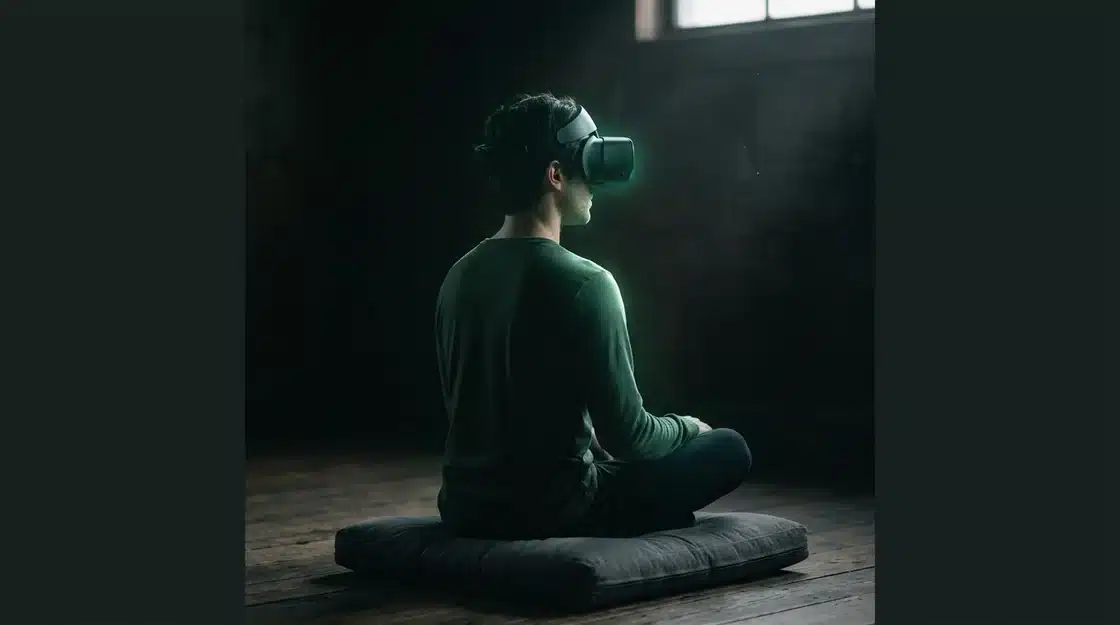
Your physical environment is the canvas for your virtual escape. Neglect it, and you’ll find distractions creeping into your digital sanctuary. Clear out any clutter that could impede movement or serve as a visual reminder of your “real-world” obligations. Think of it like preparing a stage for a performance — every element should support the main act. Ensure you have ample space to sit or lie down comfortably. A study published in the *Journal of Immersive Technology* found that participants in VR meditation experienced a 23% greater reduction in stress when their physical space was optimized for comfort and minimal external stimuli. Dim the lights, eliminate background noise, and even consider a comfortable cushion or yoga mat. — after all, your body will still be in the room. This approach mirrors how /augmented-reality-fitness-apps-home-workouts leverages your physical space for virtual engagement.
Pre-Meditation Preparation Checklist:
Before you even touch that headset, run through this quick checklist. Skipping these steps is like trying to bake a cake without preheating the oven — you’re setting yourself up for disappointment.
- Charge Your Headset: Nothing kills a moment of zen faster than a low-battery warning. Aim for at least 75% charge.
- Clear Your Area: Remove trip hazards, pets, or anything that could interrupt your session. Your goal is an undisturbed bubble.
- Adjust Lighting: Dim the room lights to enhance immersion and reduce glare from the headset’s internal screen.
- Silence Notifications: Put your phone on silent or “do not disturb.” This isn’t just for your phone; it’s for *your* peace.
- Hydrate: Keep a glass of water nearby. A dry mouth is a surprisingly persistent distraction.
- Comfort Check: Ensure your headset is snug but not tight. Adjust straps until it feels balanced.
The initial setup might seem like a chore, but it’s an investment in your mental well-being. Just as /ar-product-visualization-online-furniture-shopping-trends helps you envision a perfect space, this preparation helps you craft a perfect mindset. Getting these foundational elements right ensures you’re not just *trying* VR meditation, but *experiencing* it.
The Future of Mindfulness: What’s Next for VR Meditation?
Think virtual reality meditation is mind-bending now? Just wait. The future promises to blur the lines between our physical and digital worlds even further, making today’s experiences feel almost primitive. What most people miss is how quickly these technologies mature, pushing us towards immersive wellness. The next wave will likely integrate augmented and mixed reality, allowing users to meditate within their own living spaces while overlaying tranquil digital elements. Imagine your living room transforming into a serene forest, complete with animated flora and gentle sounds, all visible through AR glasses. This evolution is already hinted at in areas like augmented reality for vision impairment, where digital overlays enhance perception. A report by Statista predicts the global AR/VR market will reach over $450 billion by 2029, a staggering leap driven partly by wellness applications. Beyond visuals, expect multi-sensory experiences to become standard. Haptic feedback vests could simulate gentle breezes or the warmth of sunlight, while scent diffusers release calming aromas synchronized with your meditation. Therapeutic applications will also expand dramatically; researchers at Stanford University are already exploring how VR can manage chronic pain and anxiety with surprising efficacy. This isn’t just about relaxation; it’s about targeted mental health interventions. For beginners, this means an even more accessible entry point. Instead of navigating complex interfaces, future systems might adapt to individual biometric data, offering personalized meditation journeys based on real-time stress levels. We’re talking about a true convergence, where your environment actively responds to your inner state. The underrated factor here is how these advances will make practices like augmented reality fitness feel even more integrated into daily life. Could your meditation app eventually know you need a specific type of guided session even before you do? I suspect that’s where we’re headed.
The Future of Mindfulness: What’s Next for VR Meditation?
Think virtual reality meditation is mind-bending now? Just wait. The future promises to blur the lines between our physical and digital worlds even further, making today’s experiences feel almost primitive. The next wave will likely integrate augmented and mixed reality, allowing users to meditate within their own living spaces while overlaying tranquil digital elements. Imagine your living room transforming into a serene forest, complete with animated flora and gentle sounds, all visible through AR glasses. This evolution is already hinted at in areas like augmented reality for vision impairment, where digital overlays enhance perception. A report by Statista predicts the global AR/VR market will reach over $450 billion by the end of the decade, a staggering leap driven partly by wellness applications. The question then becomes, as our digital and physical realities merge, how will we define ‘presence,’ and what new forms of inner peace will these blended worlds unlock?
Frequently Asked Questions About VR Meditation
Is VR meditation effective for reducing stress?
Yes, studies suggest VR meditation can be highly effective for stress reduction. By immersing users in calming virtual environments and providing guided sessions, VR apps help minimize external distractions and promote relaxation. Research indicates significant reductions in perceived stress levels among regular users.
What kind of VR headset do I need for meditation apps?
For beginners, standalone VR headsets like the Meta Quest 3 or Pico 4 are excellent choices. They are user-friendly, don’t require a powerful PC, and offer a wide range of compatible meditation apps. Comfort and ease of use are key factors for consistent practice.
Can VR meditation replace traditional meditation practices?
VR meditation can complement or introduce users to mindfulness, but it doesn’t necessarily replace traditional practices. It offers a unique, immersive experience that many beginners find more accessible and engaging. Some users may prefer a blend of both, using VR for guided sessions and traditional methods for silent reflection.
Are there free VR meditation apps available for beginners?
Yes, several VR meditation apps offer free basic versions or trials, allowing beginners to explore the experience without immediate commitment. Maloka, for example, provides a free tier with limited content. These free options are a great way to discover if VR meditation is right for you before subscribing to premium features.
How often should I use VR meditation for best results?
Consistency is more important than duration. Many experts recommend starting with short, regular sessions, perhaps 10-15 minutes daily or a few times a week. Gradually increasing frequency and length as you become more comfortable can lead to better stress reduction and improved mindfulness over time.