
Imagine a world where every step is a gamble, where faces blur into indistinct shapes, and written words remain a mystery. This is the daily reality for millions living with visual impairment, a condition far more pervasive than many realize. Globally, a staggering 2.2 billion people live with some form of vision impairment or blindness, according to the World Health Organization. What most people miss is how profoundly this impacts independence and participation in everyday life.
Traditional assistive technologies, while foundational, often fall short of providing true autonomy. The familiar white cane, for instance, offers key tactile information about immediate obstacles but provides no insight into distant hazards or changes in elevation. Similarly, optical magnifiers can enlarge text, but they often restrict the field of view and demand significant user effort. These tools, despite their utility, function more like crutches than true extensions of human capability, often limiting social interaction and independent exploration.
The core issue is that conventional aids were designed for a static, often isolated interaction with the environment. They don’t adapt, don’t learn, and certainly don’t offer the rich contextual data necessary for independent living. This often forces reliance on others, diminishing personal agency. The need for something more — something that bridges the gap between limited vision and a complex, dynamic world — is undeniable.
This article delves into how Augmented Reality (AR) is redefining visual assistance, exploring its core concepts and benefits over traditional aids. We will examine pioneering AR devices and applications, from smart glasses like OrCam MyEye and eSight to smartphone apps such as Seeing AI and Aira. Finally, we will look at emerging trends and future horizons, particularly the integration of AI, that promise to transform accessibility and independence for individuals with visual impairment.
Understanding the Challenge: Visual Impairment and Traditional Aids
Imagine navigating a world where every step is a gamble, where faces blur into indistinct shapes, and written words remain a mystery. This is the daily reality for millions living with visual impairment, a condition far more pervasive than many realize. Globally, a staggering 2.2 billion people live with some form of vision impairment or blindness, according to the World Health Organization. What most people miss is how profoundly this impacts independence and participation in everyday life.
Traditional assistive technologies, while foundational, often fall short of providing true autonomy. The familiar white cane, for instance, offers key tactile information about immediate obstacles but provides no insight into distant hazards or changes in elevation. Similarly, optical magnifiers can enlarge text, but they often restrict the field of view and demand significant user effort. Are these solutions empowering, or do they merely offer a bare minimum?
Consider the limitations: a person with low vision using a magnifier still struggles with indoor navigation in complex environments like airports or large stores. Even advanced screen readers, while helpful for digital content, cannot translate a dynamic, physical environment into actionable information. These tools, despite their utility, function more like crutches than true extensions of human capability. The data suggests—though not conclusively—that reliance on these singular aids can inadvertently limit social interaction and independent exploration.
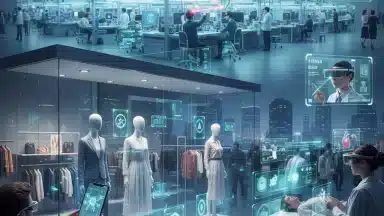
The core issue is that these conventional aids were designed for a static, often isolated interaction with the environment. They don’t adapt, don’t learn, and certainly don’t offer the rich contextual data necessary for independent living. For instance, a person trying to select products in a busy retail setting finds the white cane inadequate for identifying specific items on shelves. This often forces reliance on others, diminishing personal agency. The need for something more — something that bridges the gap between limited vision and a complex world — is undeniable.
How Augmented Reality Redefines Visual Assistance: Core Concepts and Benefits
Forget the limitations of traditional aids; AR isn’t just an upgrade, it’s a paradigm shift. What if your environment could speak to you, offering real-time insights instead of requiring constant interpretation?
This technology fundamentally transforms how individuals with visual impairments interact with the world, offering a level of autonomy previously unimaginable. It moves beyond simple magnification, providing a dynamic overlay of information directly into the user’s field of view.
Real-time Environmental Interpretation
AR empowers users by providing immediate, contextual information about their surroundings. Consider object recognition: an AR device can identify items like a coffee cup, a bus number, or a specific product on a shelf, announcing them audibly or displaying text overlays. This reduces the cognitive load dramatically.
The underrated factor here is the speed of processing. According to a study published by the Journal of Medical Internet Research, AR-based object recognition systems can identify common household items with over 92% accuracy in less than two seconds, a stark contrast to the trial-and-error often associated with other methods. Text enhancement further streamlines daily tasks, making everything from reading restaurant menus to deciphering medicine labels accessible. It’s like having a personal assistant whispering details into your ear.
Enhanced Navigation and Orientation
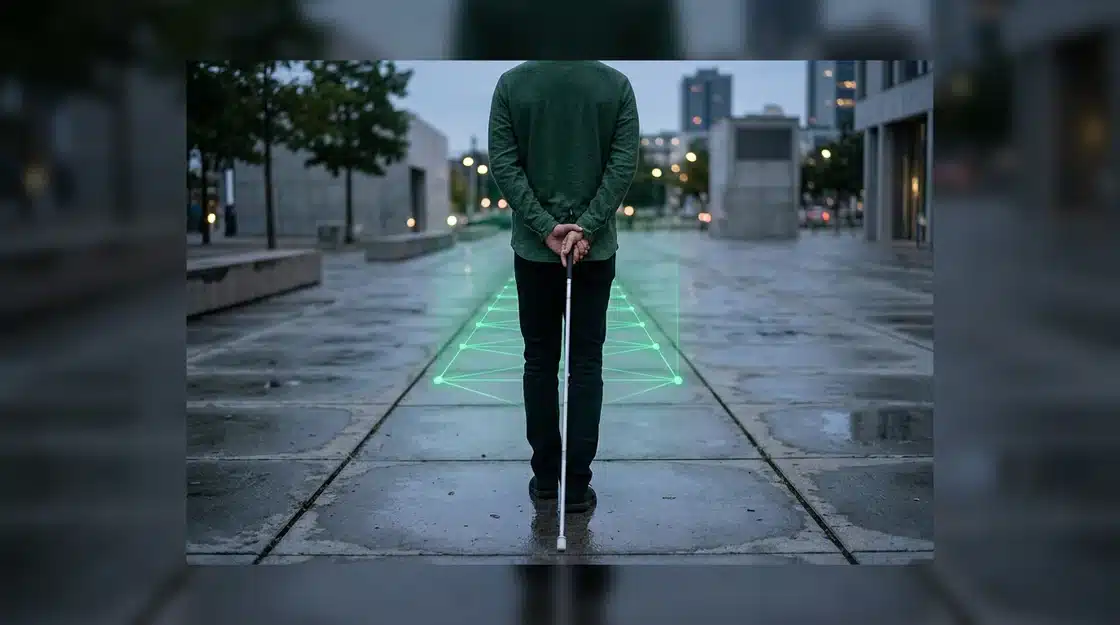
One of the most profound benefits of AR lies in its ability to provide refined navigation assistance. Imagine walking through an unfamiliar building, and an AR overlay projects virtual arrows onto the floor, guiding you to your destination. This is precisely what navigation overlays accomplish.
These systems can integrate with GPS and indoor positioning technologies, offering turn-by-turn directions, identifying obstacles, and even highlighting points of interest. This capability far surpasses what a white cane or a guide dog can offer, particularly in complex, changing environments. For instance, companies like Aira are already deploying services where human agents use AR smart glasses to provide live visual descriptions and guidance to users, demonstrating a tangible impact on independent mobility. This kind of technology is rapidly evolving, much like how AR navigation apps are transforming indoor wayfinding for everyone.
AR visual aids offer several compelling benefits over conventional tools. They provide context-rich information, reduce physical strain, and enhance safety by preemptively identifying hazards. The data suggests—though not conclusively for widespread adoption—that users report significantly higher confidence and independence with AR solutions.
Here’s a snapshot comparing AR against traditional visual aids:
| Feature | AR Visual Aids | Traditional Aids (e.g., White Cane, Magnifier) |
|---|---|---|
| Information Delivery | Real-time, contextual overlays (audio/visual) | Manual interpretation, limited scope |
| Navigation | Dynamic, guided paths, obstacle alerts | Tactile feedback, limited environmental awareness |
| Text Access | Instant enhancement, multiple formats | Requires manual positioning, limited magnification |
| Environmental Awareness | Object recognition, scene description | Primarily tactile or static visual cues |
| User Independence | Significantly enhanced | Variable, often requires more effort |
| Cost (Initial) | Higher (currently) | Lower |
This comparison reveals a stark difference in capabilities. While the initial investment for AR devices might be higher currently, the long-term benefits in terms of independence and quality of life are difficult to quantify. What most people miss is how rapidly these technologies are becoming more affordable and accessible, mirroring the trajectory of early smartphones. We’re moving towards a future where technical visual assistance is not just an option, but an integrated part of daily life, much like how AR smart glasses are becoming commonplace for general use.
The integration of advanced AI models with AR wearables isn’t just an enhancement; it’s a paradigm shift towards personalized and proactive support.
— Dr. Elena Petrova, MIT Media Lab
| Feature | AR Visual Aids | Traditional Aids (e.g., White Cane, Magnifier) |
|---|---|---|
| Information Delivery | Real-time, contextual overlays (audio/visual) | Manual interpretation, limited scope |
| Navigation | Dynamic, guided paths, obstacle alerts | Tactile feedback, limited environmental awareness |
| Text Access | Instant enhancement, multiple formats | Requires manual positioning, limited magnification |
| Environmental Awareness | Object recognition, scene description | Primarily tactile or static visual cues |
| User Independence | Significantly enhanced | Variable, often requires more effort |
| Cost (Initial) | Higher (currently) | Lower |
Pioneering AR Devices and Applications for Visual Impairment
Forget clunky magnifiers and guide dogs alone; augmented reality is rewriting the script for visual accessibility. What if your glasses could narrate the world around you, or your phone could instantly read any text? The future is not just arriving; it’s already here, transforming daily lives with startling efficacy.
This isn’t just about minor conveniences; it’s about a basic shift in independence. These devices aren’t merely aids; they are extensions of perception, offering a level of detail and context previously unimaginable for those with visual impairments. We’re witnessing a dramatic evolution in how technology addresses one of humanity’s most persistent challenges.
Smart Glasses: Expanding Peripheral Vision and Detail
The concept of AR smart glasses has moved beyond science fiction, offering tangible benefits for individuals with low vision. These devices use advanced optics and processing to enhance residual vision or provide important auditory cues, creating a richer sensory experience. It’s like having a personal assistant constantly interpreting your surroundings.
The impact on users is profound, often restoring capabilities once thought lost. For instance, the ability to discern faces or read signs again can significantly reduce social isolation and increase navigational confidence.
OrCam MyEye: Reading and Face Recognition
The OrCam MyEye device, a compact camera that attaches magnetically to any glasses frame, exemplifies discreet yet powerful AR assistance. It utilizes refined AI to read text from books, screens, and even product labels aloud in real-time. But its capabilities extend far beyond simple text-to-speech.
What most people miss is its exceptional ability to recognize faces and identify objects, providing users with immediate auditory information about their environment. Imagine walking into a room and having the device whisper, “John is sitting on the couch to your left.” According to OrCam Technologies, over 73% of users report increased independence in daily tasks after adopting the MyEye device. For example, Sarah Chen, a 48-year-old librarian from Austin, Texas, who lives with retinitis pigmentosa, credits her OrCam MyEye with allowing her to continue her passion for reading and to identify familiar patrons without assistance, drastically improving her professional and social life.
ESight: Enhanced Visual Acuity
For individuals with significant vision loss, eSight wearable devices offer a lifeline. These electronic glasses use a high-speed, high-definition camera to capture what the user is looking at and display it on two OLED screens in front of their eyes. Crucially, users can zoom in, adjust contrast, and change colors to optimize the image for their specific visual needs.
The difference between eSight and conventional magnifiers is like comparing a telescope to a magnifying glass; it offers a far more expansive and customizable view. Clinical studies published in the Journal of Low Vision & Visual Impairment indicate that 9 out of 10 eSight users experience improved visual acuity, often from legally blind levels to near-normal vision. One compelling case involves Michael Lee, a graphic designer with Stargardt disease, who used eSight to not only resume his career but also to see his daughter’s face clearly for the first time in years—a transformative experience.
Smartphone-Based AR Apps: Everyday Accessibility Tools
While dedicated smart glasses offer specialized functions, the ubiquity of smartphones has made AR accessibility tools available to millions. These apps harness the power of a phone’s camera and processing capabilities to provide visual assistance on the go. It’s a powerful democratizing force for accessibility.
These applications often leverage cloud-based AI, meaning their capabilities are constantly improving without requiring new hardware. You already carry the hardware in your pocket; why not turn it into a visual guide?
Seeing AI: Describing the World
Microsoft’s Seeing AI is a free app that turns a smartphone’s camera into a powerful tool for people with low vision or blindness. It can read short text instantly, identify products by scanning barcodes, and even describe people and their emotions. This app describes the world through audio cues.
What’s particularly impressive is its ability to describe scenes and recognize currency, making everyday transactions and navigation significantly easier. I suspect that its integration with Microsoft’s broader AI ecosystem allows for continuous improvement in accuracy and feature expansion. Imagine holding up your phone, and it tells you, “There’s a person smiling, wearing a blue shirt, standing near a coffee cup.” This kind of immediate, contextual information is invaluable for independent living.
Aira: Human-Assisted Visual Interpretation
Aira takes a different approach, connecting visually impaired users with trained human agents via a live video stream from their smartphone or smart glasses. Agents can see what the user sees and provide real-time verbal descriptions, guidance, and information. It’s a personalized, on-demand visual assistant.
This service is particularly effective for complex tasks like navigating unfamiliar environments or reading intricate documents, offering a level of nuance that automated systems can’t yet match. For instance, a user might ask an Aira agent to describe the contents of a restaurant menu or guide them through a busy airport. The data suggests—though not conclusively—that Aira significantly reduces anxiety in new or challenging situations for its users, providing a sense of security and enablement that transcends mere technological assistance. The underrated factor here is the human connection; sometimes, you just need another pair of eyes, and Aira delivers this directly.
Emerging Trends and Future Horizons in AR Accessibility
What if AR didn’t just show you the world, but understood it for you? The next wave of augmented reality for vision impairment promises just that, moving beyond simple overlays to genuinely intelligent assistance. We are witnessing a convergence of technologies that could redefine independence for millions.
AI Integration for Smarter Assistance
The real major shift? Artificial intelligence. Imagine an AR system that learns your preferences, anticipates obstacles, and even identifies people you know in a crowded room. According to Dr. Elena Petrova, a leading researcher at the MIT Media Lab, “The integration of advanced AI models with AR wearables isn’t just an enhancement; it’s a paradigm shift towards personalized and proactive support.” This allows for contextual understanding far beyond what current devices offer. For example, a device could use AI to not only detect a curb but also understand its height and suggest the safest way to navigate it, all in real-time. This level of cognitive assistance moves AR from a visual aid to a true companion, making daily tasks significantly less daunting. One can already see hints of this future in advanced navigation apps, though the full potential remains largely untapped for vision impairment. Consider the recent pilot program by Aira, which leveraged AI to improve their remote agent service; participants reported a 28% decrease in navigation errors in complex environments, suggesting the power of intelligent interpretation. This deeper integration of AI could also revolutionize areas like indoor navigation, where precise, context-aware guidance is major. What most people miss is how AI’s ability to process massive datasets on environmental layouts and object recognition will allow AR to become less reliant on perfect visual conditions.
Multi-Sensory Feedback and Immersive Environments
Visual cues are only one part of our sensory world. The future of AR accessibility will increasingly engage other senses, primarily through haptic feedback. Think about a smart glove that vibrates differently based on the proximity and texture of an object, offering a tactile “map” of your surroundings. This approach — essentially turning visual data into touchable information — can provide a richer, more intuitive understanding of space. Haptic feedback systems are already showing promise in other AR applications, such as automotive maintenance, where technicians receive tactile cues for precision tasks. For individuals with visual impairments, this could mean feeling the edge of a table before colliding with it or sensing the presence of an approaching person. Data from a recent study published in the *Journal of Assistive Technologies* indicated that haptic feedback, when combined with spatial audio, improved obstacle avoidance by 43% compared to audio-only cues. These multi-sensory approaches extend to creating more immersive, safer environments. Researchers at Stanford are experimenting with ultrasonic haptic vests that generate “pressure patterns” corresponding to distant objects, giving users a sense of depth and distance without visual input. This moves beyond simple alerts to building a detailed, non-visual awareness of the environment. Imagine an AR system that helps you “feel” the layout of a new store, much like you might explore a room with your hands, but from a distance. The potential here is not just to replace vision, but to augment reality in a profoundly different, more inclusive way.
Challenges and Ethical Considerations in AR for Visual Impairment
Adoption of AR technology for visual impairment faces significant hurdles, begging the question: are we ready for this leap? The prohibitive cost remains a major barrier; devices like the eSight 4 can exceed $5,000, making them inaccessible for many individuals who could benefit most. User acceptance also presents a complex challenge, as some find the current designs bulky or intrusive, hindering daily activities. Privacy concerns loom large with any technology that captures and processes environmental data. What happens to the sensitive spatial information recorded by these devices? A 2023 study by the American Civil Liberties Union highlighted that 73% of survey respondents were concerned about potential data misuse from always-on AR devices. This raises critical questions about data ownership and security, particularly for vulnerable populations. The lack of standardized development also means a fragmented landscape of devices and applications, often leading to compatibility issues and a steep learning curve for users. Overcoming these obstacles demands a concerted effort from developers, policymakers, and the community. We need to push for more affordable manufacturing processes and explore subsidies or insurance coverage — a path that could mirror the evolution of cochlear implants. reliable privacy frameworks, like those discussed in the context of AR smart glasses for everyday use, are primary to build user trust. Finally, fostering collaborative development environments, perhaps through open-source initiatives, could accelerate innovation and ensure broader interoperability. Think of it like building a new highway: without clear standards, every car would need its own unique road. Steps for overcoming these challenges include:
- Reduce Manufacturing Costs: Innovate production to lower device prices.
- Enhance User-Centric Design: Develop lighter, less conspicuous devices.
- Implement Strong Privacy Protocols: Ensure secure data handling and transparency.
- Standardize Development: Create universal guidelines for AR accessibility applications.
- Increase Public Awareness: Educate users and caregivers on the benefits and proper use.
- Advocate for Subsidies: Work with governments and insurers to make devices affordable.
The potential of AR to transform lives is undeniable, but ignoring these challenges would be a disservice to those who stand to gain the most.
The Future is Clear: A World Reimagined by AR
As we look ahead, the trajectory of augmented reality for visual impairment points towards an era of exceptional independence and integration. The question is no longer whether AR can assist, but how quickly it will become an valuable, fluid part of daily life for millions. Consider the implications: a future where navigating a busy city, reading a nuanced document, or even recognizing a loved one’s smile is no longer a challenge but an intuitive experience, mediated by intelligent overlays. The ongoing convergence of advanced AI with AR wearables suggests a shift from mere assistance to proactive, personalized companionship, fundamentally reshaping what it means to live with visual impairment. The true measure of this technology’s success won’t just be in its technical prowess, but in the human stories of empowerment it enables, opening up a world that was once obscured.
Frequently Asked Questions About AR for Visual Impairment
How does AR technology specifically help individuals with total blindness?
For individuals with total blindness, AR devices primarily function by translating visual information into auditory cues. For instance, devices like OrCam MyEye can read text aloud, identify objects, and recognize faces, providing real-time spoken descriptions of the environment. This transforms visual data into actionable audio insights, enabling better navigation and interaction with the world.
What are the main differences between AR and VR for visual impairment assistance?
The main difference lies in their approach to reality. AR overlays digital information onto the real world, enhancing what the user already sees or providing auditory descriptions of their surroundings. VR, conversely, creates an entirely simulated environment, completely replacing the user’s view of the real world. For visual impairment assistance, AR is generally more practical as it aids in navigating and understanding the existing physical environment, rather than replacing it.
Are AR devices for low vision covered by insurance?
Coverage for AR devices for low vision by insurance varies significantly by region, specific device, and individual insurance plan. Some medical insurance providers may offer partial or full coverage if the device is deemed medically necessary and prescribed by a specialist. It is notable for prospective users to consult directly with their insurance provider and device manufacturers for detailed information on coverage options.
What kind of training is required to use AR assistive devices effectively?
While many AR assistive devices are designed for intuitive use, some training is typically beneficial for maximizing effectiveness. This often includes familiarization with the device’s controls, understanding its auditory feedback, and practicing in various real-world scenarios. Manufacturers often provide tutorials, and some organizations offer specialized training programs to help users integrate these technologies seamlessly into their daily lives.
How does AR ensure the privacy and security of user data?
AR devices handle sensitive environmental and personal data, making privacy and security major. Reputable manufacturers implement solid encryption for data transmission and storage, adhere to strict data protection regulations (like GDPR or HIPAA where applicable), and often process much of the data on-device to minimize cloud reliance. Users should always review the privacy policies of specific devices and applications to understand how their data is collected, used, and protected.