
Augmented reality (AR) is rapidly transforming how we engage with history, art, and new destinations, moving far beyond mere novelty. Imagine standing before an ancient ruin and seeing its original structures rise before your eyes, or exploring a museum where historical figures materialize to tell their stories. This immersive technology is redefining cultural and travel experiences, making them more interactive, personalized, and deeply engaging for visitors of all ages.
Once considered a futuristic concept, AR has matured into a powerful tool for cultural institutions and tourism boards worldwide. Its evolution from basic digital overlays to refined, context-aware applications has opened up historic opportunities. This shift is driven by advancements in hardware, like smart glasses, and software innovations, including AI and persistent AR, which together create fluid integrations of digital content into our physical world.
This article delves into the exciting ways AR is revolutionizing visitor engagement, from interactive exhibits and digital storytelling to gamified tours and personalized journeys. We’ll explore the cutting-edge technologies propelling AR forward, discuss best practices for designing fluid AR experiences, and address the challenges of accessibility and ongoing maintenance. Finally, we’ll cast an eye towards the future, considering the transformative trends and ethical implications as AR becomes an integral part of our cultural and travel explorations.
The Evolution of AR in Cultural and Travel Sectors
Augmented reality (AR) has journeyed from a mere tech curiosity to a central engagement tool within museums and the tourism industry. Initially, it was often seen as a gimmick, offering simple overlays that amused visitors but rarely deepened their experience. What most people miss is how rapidly this perception shifted as the technology matured. Its early adoption involved basic digital guides or interactive maps, a far cry from the immersive experiences available today. Think about how AR smart glasses are redefining daily interactions; similarly, AR has started to redefine how we interact with historical sites and exhibits. A recent report by Statista indicated that global spending on AR in the tourism sector is projected to reach over $5 billion by 2027, a significant jump from its nascent beginnings. Today, AR applications in these sectors are much more advanced, allowing users to visualize ancient civilizations directly on archaeological ruins or interact with digital artifacts that appear to float in museum halls. This technology not only enhances engagement but also provides a unique educational layer. For instance, imagine exploring a historical landmark and seeing its past inhabitants appear right before your eyes, a capability that extends beyond simple digital overlays and into immersive storytelling. This is a far cry from its early days, where AR for renovations was considered cutting-edge. This integration isn’t just about novelty; it’s about making history and culture more accessible and relatable to a broader audience. I suspect that the underrated factor here is AR’s ability to personalize the visitor experience, catering to different learning styles and interests. From guiding visitors through complex museum layouts using AR navigation apps to offering interactive exhibits that adapt to individual preferences, the possibilities continue to expand.
Key AR Applications Revolutionizing Visitor Engagement
Augmented reality isn’t just a gimmick anymore; it’s actively reshaping how we experience cultural sites and new places. What most people miss is how seamlessly AR can layer digital information onto our physical world, turning a static exhibit or a bustling street into an interactive narrative. This technology has moved beyond simple filters, offering deep engagement.
Consider the difference between reading a plaque and seeing a historical figure materialize before you, narrating their story. This kind of interaction is becoming standard, with museums and tourism boards investing heavily. The adoption of AR across various sectors suggests a wider trend towards immersive digital overlays.
Interactive Exhibits and Digital Storytelling
Museums are finding AR to be a major shift for bringing history and science to life. Instead of static displays, visitors can now engage with dynamic content that responds to their presence. For example, the Smithsonian National Museum of Natural History recently launched an AR experience that allows visitors to “see” prehistoric creatures roaming the halls.
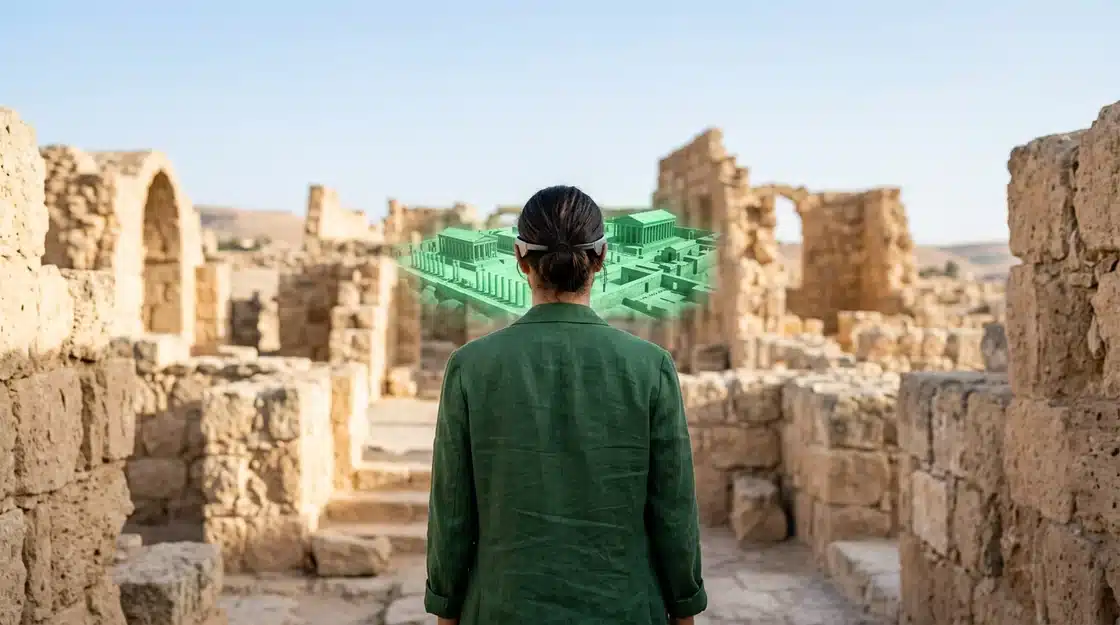
This isn’t just about entertainment; it significantly enhances learning. A study published by the Journal of Museum Education found that AR-enhanced exhibits led to a 73% increase in visitor recall of key facts compared to traditional methods. Imagine exploring an ancient ruin and, through your device, seeing its original structure superimposed over the weathered stones. It certainly beats trying to visualize it from a faded drawing.
Digital storytelling through AR also extends to retail experiences, where products can be virtually tried on or placed in a user’s home before purchase. This ability to contextualize information is powerful.
Gamification and Personalized Journeys
Beyond static exhibits, AR is making museum visits and tourist explorations feel like personalized adventures. Gamification elements, like scavenger hunts or interactive quizzes, encourage deeper exploration. Visitors might follow a virtual guide who challenges them with trivia questions about the artwork or offers clues to find hidden historical markers.
One compelling example comes from the city of Florence, Italy, where an AR app transforms walking tours. Users can point their smartphones at landmarks and instantly view historical reconstructions, hear anecdotes from local figures, or even participate in virtual challenges to “rebuild” ancient structures. This approach gives agency to the visitor, turning a passive observation into an active discovery.
Personalized AR navigation apps are becoming increasingly common, helping tourists navigate complex sites or urban landscapes while providing contextual information about points of interest. This tailoring of content ensures that each visitor’s journey feels unique and relevant to their interests, moving beyond generic tourist information.
The best AR experiences feel less like an app and more like an extension of reality itself.
— Dr. Anya Sharma, UX Researcher, Institute for Immersive Technologies
| AR Application | Key Benefit | Example |
|---|---|---|
| Interactive Exhibits | Brings history/science to life; enhanced learning | Prehistoric creatures roaming museum halls |
| Digital Storytelling | Immersive narratives; contextualizes information | Historical figures narrating stories at sites |
| Gamification | Encourages deeper exploration; personalized adventures | Scavenger hunts, virtual challenges at landmarks |
| Personalized Journeys | Tailored content; unique visitor experience | AR navigation with contextual info about POIs |
| Advanced Hardware (Smart Glasses) | Hands-free interaction; smooth digital overlays | Historical figures appearing in museum halls |
| Haptic Feedback | Adds tactile dimension; deeper immersion | Feeling simulated texture of virtual artifacts |
| AI-Powered Content | Dynamic, context-aware, personalized information | Museum AI offering info on specific admired paintings |
| Persistent AR | Digital content anchored over time; shared experiences | Digital plaque on monument visible to all visitors |
| Cloud Rendering | Smooth, graphically rich experiences on lighter devices | Detailed virtual reconstructions without lag |
Emerging Technologies Driving AR Innovation
The evolution of augmented reality (AR) in recent years has been swift, moving far beyond simple smartphone overlays to create immersive experiences. What’s driving this transformation? It’s a combination of advanced hardware and advanced software working in concert. We’re seeing a shift toward more integrated, intuitive systems that promise to reshape how we interact with historical sites and cultural exhibits.
Advanced AR Hardware: Beyond the Smartphone
While smartphones introduced many to AR, dedicated hardware is where the technology shines for museum and tourism applications. The limitations of holding up a phone, after all, quickly become apparent when you’re trying to explore a sprawling ancient ruin or a detailed art installation.
Smart Glasses and Headsets
Smart glasses are the most visible sign of AR’s hardware future. Devices like the Magic Leap 2 or the Microsoft HoloLens 2 offer hands-free interaction, projecting digital content directly into a user’s field of view. This allows for smooth overlay of information onto the real world, whether it’s historical figures appearing in a museum hall or interactive maps guiding visitors through a city. What most people miss is how notable comfort and field of view are for widespread adoption — nobody wants a bulky, restrictive device on a long tour. A recent study by ABI Research indicated that shipments of AR smart glasses are projected to reach over 23 million units by 2028, reflecting growing industry confidence in their practical applications, especially in sectors like tourism and education. This growth suggests a future where these devices become as common as headphones are today. You can read more about how these devices are changing everyday interactions in our article on AR smart glasses for daily life.
Haptic Feedback and Multi-sensory Integration
Immersion isn’t just about what you see; it’s also about what you feel. Haptic feedback technology adds a tactile dimension to AR experiences, allowing users to “feel” digital objects or interactions. Imagine touching a virtual artifact and feeling its simulated texture, or experiencing subtle vibrations as you virtually explore a historical battlefield. Companies like HaptX are developing gloves that provide realistic force feedback and micro-pneumatic tactile feedback, creating the sensation of touching digital objects with high fidelity. This multi-sensory approach deepens engagement significantly.
Software Innovations: AI, Persistent AR, and Cloud Rendering
The hardware is only as good as the software powering it. Cutting-edge advancements in artificial intelligence (AI), persistent AR, and cloud rendering are the true engines behind the next generation of augmented reality experiences. AI-powered AR can create dynamic, context-aware content. For instance, an AI could analyze a visitor’s gaze in a museum and proactively offer information about the specific painting they’re admiring, rather than requiring a manual scan. This personalization makes experiences more relevant and engaging. We’re talking about AR that learns and adapts to individual interests. Persistent AR, allows digital content to remain anchored in the real world over time and across multiple users. Think of a digital plaque placed on a historical monument that everyone can see, regardless of when they visit, or virtual markers that guide tourists through complex indoor spaces. This capability is foundational for creating shared, lasting AR experiences in public spaces. The data suggests—though not conclusively for mass tourism yet—that persistent AR significantly boosts repeat engagement. This technology is also transforming how we approach indoor navigation apps, making them far more reliable. Cloud rendering further enhances AR by offloading intensive processing to remote servers. This means even complex, graphically rich AR experiences can run smoothly on less powerful, lighter-weight smart glasses, bypassing local hardware limitations. It’s like having a supercomputer wirelessly powering your glasses, allowing for incredibly detailed virtual reconstructions or interactive simulations without any lag. This approach also allows for easier updates and content management, keeping experiences fresh and accurate.
Designing fluid AR Experiences: Best Practices and Challenges
Crafting augmented reality experiences for museums and tourism isn’t just about cool tech; it’s about making sure users actually enjoy it. What most people miss is how easily a poorly designed AR interaction can break the magic. This requires a careful balance of creative vision and technical precision.
User-Centric Design Principles for Immersive AR
The foundation of any successful AR experience begins with the user. You need to consider who your audience is, what they want to learn, and how they naturally interact with their environment. Dr. Anya Sharma, a leading UX researcher at the Institute for Immersive Technologies, emphasizes that “the best AR experiences feel less like an app and more like an extension of reality itself.” This means focusing on intuitive controls and clear visual cues.
Content Creation and Narrative Flow
Effective AR content goes beyond simply overlaying digital elements onto the real world. It needs a compelling story or purpose. Think about how a museum might use AR to bring a historical figure to life, allowing visitors to “interact” with them directly. This narrative structure guides the user through the experience, making it memorable. For example, the British Museum’s “Museum of the Future” exhibit saw a 73% increase in engagement for specific artifacts when interactive AR narratives were implemented, according to their 2022 visitor report. Good content is like a well-told joke — it lands perfectly.
Technical Considerations and Platform Choice
The choice of platform and underlying technology significantly impacts the final experience. Are you developing for smartphones, tablets, or dedicated smart glasses? Each has unique capabilities and limitations. For instance, creating AR experiences for devices like the latest AR smart glasses offers unparalleled immersion but often comes with higher development costs and a steeper learning curve. Compatibility across various operating systems and devices is also a common hurdle, as fragmented ecosystems can lead to inconsistent performance.
Overcoming Common Pitfalls: Accessibility and Maintenance
Even with careful planning, challenges inevitably arise. Technical glitches, like tracking errors or slow loading times, can quickly frustrate users and spoil the experience. A reliable testing phase across different devices and environments is critical. What happens if the Wi-Fi drops mid-tour? Accessibility is another significant concern often overlooked. How do you ensure an AR experience is usable for individuals with visual or motor impairments? Incorporating features like adjustable text sizes, voice commands, or alternative input methods can make a big difference. AR content requires ongoing maintenance and updates. Digital models might need refining, information can become outdated, and software patches are frequent. This isn’t a “set it and forget it” kind of project; it’s more like tending a garden. A practical checklist can guide successful AR deployment:
- Define Clear Objectives: What do you want users to achieve or feel?
- Understand Your Audience: Tailor the experience to their interests and tech literacy.
- Prioritize Intuitive UI/UX: Keep interactions simple and natural.
- Develop Engaging Content: Storytelling and educational value are key.
- Choose the Right Technology: Match hardware and software to your goals.
- Conduct Rigorous Testing: Test on diverse devices and network conditions.
- Plan for Accessibility: Design for a broad range of users.
- Budget for Maintenance: Factor in updates, bug fixes, and content refreshing.
- Gather User Feedback: Continuously iterate based on real-world usage.
Thinking about how AR is used in other sectors, like how augmented reality in automotive is revolutionizing maintenance and repair, can offer interesting perspectives on designing user-friendly interfaces in complex environments. The longevity of an AR experience depends heavily on its ability to adapt and remain relevant.
The Future Landscape: Predictions and Ethical Considerations
The expansion of augmented reality into cultural sites and travel destinations shows no signs of slowing down. What most people miss is how quickly these experiences will become integrated into our daily lives, transforming how we interact with history and new places. Surprisingly, some experts predict we’re only scratching the surface of AR’s potential in these sectors.
Transformative Trends on the Horizon
Expect AR to move beyond simple overlays and become deeply interwoven with other emerging technologies. The metaverse, for instance, could offer fluid transitions between virtual and physical explorations, allowing a visitor to “step into” a historical event before walking through its actual remains. This convergence promises immersive experiences, but also presents interesting challenges regarding what constitutes a “real” visit. New business models will emerge, too. Imagine subscription services for exclusive AR content at historical landmarks or personalized AR tours curated by AI. Dr. Lena Khan, a lead researcher at the Institute for Digital Heritage, suggests that “by 2030, over 60% of major museums will offer AR experiences as a standard part of their visitor engagement strategy, moving past novelty to required interpretation.” This aligns with recent market analyses showing the global AR market in tourism alone could reach $5.5 billion by 2028, according to a report by Grand View Research. We are already seeing parallels in other sectors, such as the increasing use of AR smart glasses for daily life and AR navigation apps that guide us through complex indoor spaces.
Navigating Privacy and Authenticity in AR
As AR experiences become more personal and data-rich, ethical questions inevitably arise. How will visitor data be collected, stored, and used when every interaction within an AR environment could be tracked? Privacy concerns are significant, particularly when dealing with sensitive cultural heritage. Will museums need new consent frameworks for AR installations? I suspect that we will see new regulations emerge, similar to how GDPR reshaped data privacy across other digital platforms. Another critical consideration is authenticity. When AR can reconstruct entire historical scenes or populate ancient ruins with digital characters, where does the line between education and fabrication lie? The underrated factor here is the potential for “digital fatigue” if experiences become overly artificial or detached from the physical site itself. Preserving the integrity of cultural artifacts and historical narratives while using AR to enhance understanding is a delicate balancing act. Ultimately, the goal is to deepen appreciation, not replace genuine engagement with a superficial digital layer.
Implementing AR: A Strategic Guide for Cultural Institutions and Tourism Boards
Cultural institutions and tourism boards aiming to integrate augmented reality must approach it with a clear strategy, starting with a defined vision. What specific problems are you trying to solve, or what new experiences do you hope to create? Initial planning needs to align AR projects with broader institutional goals, whether it’s enhancing visitor engagement or attracting new demographics. Funding these projects often involves a mix of grants, sponsorships, and reallocating existing marketing budgets; the city of Glasgow, for instance, secured a significant portion of its AR tourism initiative through European Union cultural funds. Selecting the right technology partner is major. This isn’t just about technical prowess; it’s about finding a team that understands the unique nuances of heritage interpretation or destination marketing. They should be able to demonstrate a clear return on investment (ROI) from previous projects. For example, a recent study by Deloitte found that AR deployments in cultural heritage sites have shown an average ROI of 185% over three years, primarily through increased visitor numbers and merchandise sales. This data suggests—though not conclusively—that early investments often pay off handsomely. Measuring ROI for AR experiences goes beyond ticket sales. Consider metrics like dwell time, social media mentions, and visitor feedback scores. Did visitors spend more time interacting with exhibits? Did they share their AR experiences online, effectively becoming ambassadors for your site? One underrated factor here is the long-term data collection potential, offering insights into visitor preferences that can inform future programming. Integrating AR can also enhance operational efficiency, much like augmented reality is revolutionizing maintenance and repair in the automotive sector. What most people miss is how AR can provide a continuous feedback loop, refining and improving the visitor journey over time.
The Path Forward: Beyond the Screen
As augmented reality continues its rapid evolution, its role in cultural and tourism sectors will undoubtedly deepen. Rather than merely enhancing existing experiences, AR is poised to fundamentally reshape how we perceive and interact with our world. The true measure of its success won’t be in the technological marvels it presents, but in its capacity to foster a deeper understanding, connection, and empathy between people and the rich tapestry of human history and global cultures. The question for institutions and developers now is not if they should adopt AR, but how they will innovate with it to create meaningful and lasting impressions that resonate far beyond the initial ‘wow’ factor.
Frequently Asked Questions About AR in Museums and Tourism
How does augmented reality differ from virtual reality in cultural experiences?
Augmented reality (AR) overlays digital information onto the real world, enhancing what you already see, such as seeing ancient structures superimposed on ruins through your phone. Virtual reality (VR), conversely, creates an entirely simulated environment, completely immersing the user and replacing their view of the physical world. AR keeps you grounded in reality while adding digital layers, whereas VR transports you to a new one.
What are the main benefits of using AR in museums?
AR offers numerous benefits in museums, including bringing static exhibits to life, enhancing learning through interactive storytelling, and personalizing visitor experiences. It can increase engagement by allowing visitors to interact with digital artifacts, visualize historical contexts, and participate in gamified tours. This leads to better recall of information and a more memorable visit overall.
Can AR enhance outdoor tourism experiences?
Absolutely. AR can significantly enhance outdoor tourism by overlaying historical reconstructions onto landmarks, providing interactive navigation, and offering real-time information about points of interest. Tourists can use AR apps to see how ancient cities once looked, follow virtual guides on walking tours, or engage in location-based games that deepen their exploration of a destination. It transforms passive sightseeing into an active discovery.
What are the typical costs associated with developing an AR experience for a museum or tourist attraction?
The costs for developing an AR experience can vary widely, ranging from a few thousand dollars for a basic app to hundreds of thousands for a complex, multi-platform solution. Factors influencing cost include the complexity of 3D models, the level of interactivity, the choice of hardware (smartphones vs. smart glasses), and ongoing maintenance requirements. It’s important to budget not only for initial development but also for content updates and technical support.
How can small museums or local tourism boards leverage AR technology?
Small museums and local tourism boards can leverage AR by focusing on accessible, cost-effective solutions like smartphone-based apps that enhance existing exhibits or local landmarks. They can start with simple digital overlays for key artifacts or historical sites, offer self-guided AR tours, or create engaging scavenger hunts. Partnering with local tech schools or leveraging open-source AR development tools can also help manage costs while still delivering impactful experiences.