VR in Healthcare Training: Achieving 90% Skill Retention Rates for U.S. Medical Professionals by 2026 (RECENT UPDATES)
The landscape of medical education is undergoing a profound transformation, driven by innovative technologies that promise to revolutionize how healthcare professionals are trained. Among these, Virtual Reality (VR) stands out as a particularly powerful tool, poised to significantly enhance learning outcomes and, crucially, elevate skill retention rates. The ambitious goal of achieving 90% skill retention for U.S. medical professionals by 2026 through the integration of VR in healthcare training is no longer a distant dream but a tangible objective, supported by compelling research and rapid technological advancements.
Traditional medical training, while foundational, often faces limitations in providing consistent, high-stakes, and risk-free environments for practice. VR, however, offers an immersive, interactive, and repeatable platform that transcends these constraints. By simulating complex medical scenarios, from intricate surgical procedures to critical patient interactions and emergency responses, VR allows learners to practice, make mistakes, and learn from them without any real-world consequences. This dynamic learning environment is proving to be a game-changer, fostering a deeper understanding and more robust memory consolidation of vital medical skills.
This article delves into the burgeoning role of VR healthcare training, exploring the mechanisms through which it boosts skill retention, examining the latest updates and breakthroughs, and outlining the path towards achieving the ambitious 90% retention target. We will dissect the pedagogical advantages of VR, showcase real-world implementations, discuss the challenges, and project the future impact of this transformative technology on the U.S. healthcare system.
The Foundational Shift: Why VR is Essential for Modern Medical Education
Medical knowledge and procedural skills are constantly evolving, demanding continuous education and practice. The traditional ‘see one, do one, teach one’ model, while historically significant, is increasingly insufficient in today’s complex healthcare environment. The stakes are too high, and the margin for error too thin, to rely solely on on-the-job training for critical skills. This is where VR healthcare training emerges as an indispensable solution.
VR provides an unparalleled level of immersion and realism. Learners are transported into virtual operating rooms, emergency departments, or patient care settings, where they can interact with virtual patients, medical equipment, and other healthcare professionals in highly realistic simulations. This active engagement, as opposed to passive observation, fundamentally changes the learning process. Cognitive science research consistently shows that active learning, especially when combined with experiential elements, leads to significantly higher retention rates. VR capitalizes on this principle by offering a ‘learning by doing’ approach that is both safe and highly effective.
Moreover, VR addresses several critical shortcomings of traditional methods:
- Repetition without Risk: Medical procedures often require extensive practice to achieve proficiency. VR allows learners to repeat complex tasks countless times without fear of harming a real patient or consuming expensive resources.
- Standardized Scenarios: Every learner can experience the exact same high-fidelity scenarios, ensuring a consistent baseline of training that is difficult to achieve in varied clinical environments. This standardization is crucial for ensuring equitable and high-quality education across institutions.
- Immediate Feedback: Advanced VR platforms can provide instant, objective feedback on performance, highlighting areas for improvement and reinforcing correct techniques. This immediate feedback loop accelerates learning and skill refinement.
- Accessibility and Scalability: Once developed, VR modules can be deployed to a vast number of learners across different geographical locations, democratizing access to high-quality medical training. This scalability is particularly important for addressing workforce shortages and ensuring continuous professional development.
- Training for Rare Events: Many critical medical emergencies or complex surgical cases are rare in everyday practice. VR can simulate these infrequent but high-impact events, preparing professionals for situations they might otherwise never encounter until a real crisis.
The integration of VR is not just an enhancement; it’s a fundamental shift towards a more effective, efficient, and equitable model of medical education, directly contributing to the goal of improved skill retention.
Mechanism of Skill Retention: How VR Rewires Learning
The remarkable effectiveness of VR healthcare training in boosting skill retention stems from several key neurocognitive and pedagogical principles. Understanding these mechanisms is crucial to appreciating why VR is such a powerful educational tool.
Experiential Learning and Muscle Memory
VR simulations are inherently experiential. Learners don’t just read about a procedure or watch a video; they actively perform it. This hands-on, immersive experience engages multiple senses and motor pathways, leading to the development of ‘muscle memory’ for procedural tasks. When a medical professional physically manipulates virtual instruments or navigates a virtual anatomical structure, the brain forms stronger, more durable neural connections associated with those actions. This kinesthetic learning is far more effective for long-term retention of motor skills than purely cognitive learning.
Enhanced Cognitive Load Management
Traditional learning environments can sometimes overwhelm learners with excessive cognitive load, especially in high-pressure medical settings. VR, when designed effectively, can optimize cognitive load by presenting information in a structured, interactive, and manageable way. It allows learners to focus on specific tasks, break down complex procedures into smaller steps, and receive targeted feedback. This controlled environment reduces extraneous cognitive load, freeing up mental resources for deeper processing and encoding of information, which directly contributes to better retention.
Emotional Engagement and Stress Inoculation
Medical practice often involves high-stress situations. VR can simulate these high-stakes scenarios, allowing learners to experience and manage stress in a safe environment. This ‘stress inoculation’ helps professionals develop coping mechanisms and decision-making skills under pressure, which are critical for real-world performance. The emotional engagement fostered by immersive VR experiences also makes learning more memorable. Emotions play a significant role in memory formation; highly emotional experiences, even simulated ones, tend to be more deeply encoded and more easily retrieved.
Spaced Repetition and Deliberate Practice
VR platforms are perfectly suited for implementing principles of spaced repetition and deliberate practice. Learners can revisit challenging scenarios at optimal intervals, reinforcing learning and preventing decay. Deliberate practice, characterized by focused effort on specific areas of weakness and continuous feedback, is a cornerstone of expertise development. VR provides the ideal environment for this, allowing for individualized learning paths and targeted practice sessions based on performance data.
Multi-Modal Learning
VR engages multiple sensory modalities – sight, sound, and often haptics (touch feedback). This multi-modal input creates a richer and more comprehensive learning experience. When information is processed through various sensory channels, it creates a more robust memory trace, making it easier to recall and apply in different contexts. For instance, a surgeon practicing in VR not only sees the virtual anatomy but also ‘feels’ the resistance of tissues through haptic feedback, mimicking the real-world experience.
By leveraging these powerful learning mechanisms, VR healthcare training is fundamentally changing how medical professionals acquire and retain critical skills, paving the way for the ambitious 90% retention target.
Recent Updates and Technological Breakthroughs in Medical VR
The rapid evolution of VR technology is accelerating its adoption and effectiveness in healthcare training. Recent updates and breakthroughs are making VR simulations more realistic, accessible, and sophisticated than ever before, further solidifying its role in achieving high skill retention.
Enhanced Haptic Feedback Systems
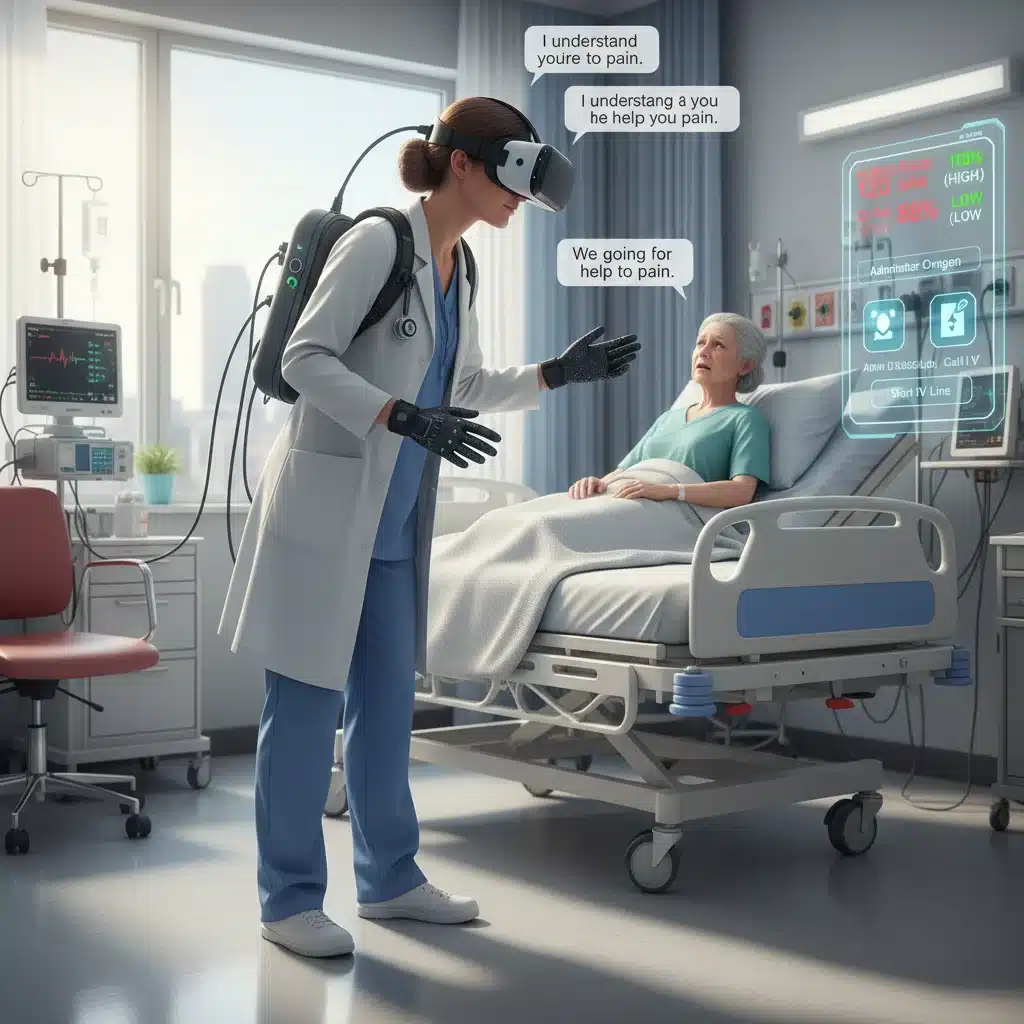
One of the most significant advancements is in haptic feedback. Modern VR systems now offer highly nuanced haptic gloves and instruments that can simulate the texture, resistance, and pressure of human tissues with remarkable accuracy. This allows surgical residents, for example, to ‘feel’ the difference between cutting muscle, fat, or bone, or to palpate organs, adding a critical layer of realism that was previously missing. These haptic improvements are vital for developing fine motor skills and tactile discrimination, which are essential in many medical procedures.
AI-Powered Adaptive Learning
The integration of Artificial Intelligence (AI) with VR is creating truly adaptive learning environments. AI algorithms can analyze a learner’s performance in real-time, identify areas of struggle, and dynamically adjust the simulation’s difficulty or provide personalized feedback and guidance. This means that if a student consistently misses a specific step in a procedure, the AI can generate additional practice scenarios focused solely on that step. This personalized approach ensures that training is maximally efficient and targeted, accelerating skill acquisition and retention.
High-Fidelity Graphics and Photorealistic Environments
Improvements in graphics processing and rendering capabilities have led to incredibly photorealistic VR environments. Modern VR simulations can replicate human anatomy, surgical tools, and clinical settings with astonishing detail, making the virtual experience almost indistinguishable from reality. This high fidelity reduces the cognitive load associated with interpreting abstract representations and enhances the sense of presence, making the learning experience more engaging and effective.
Multiplayer and Collaborative VR Training
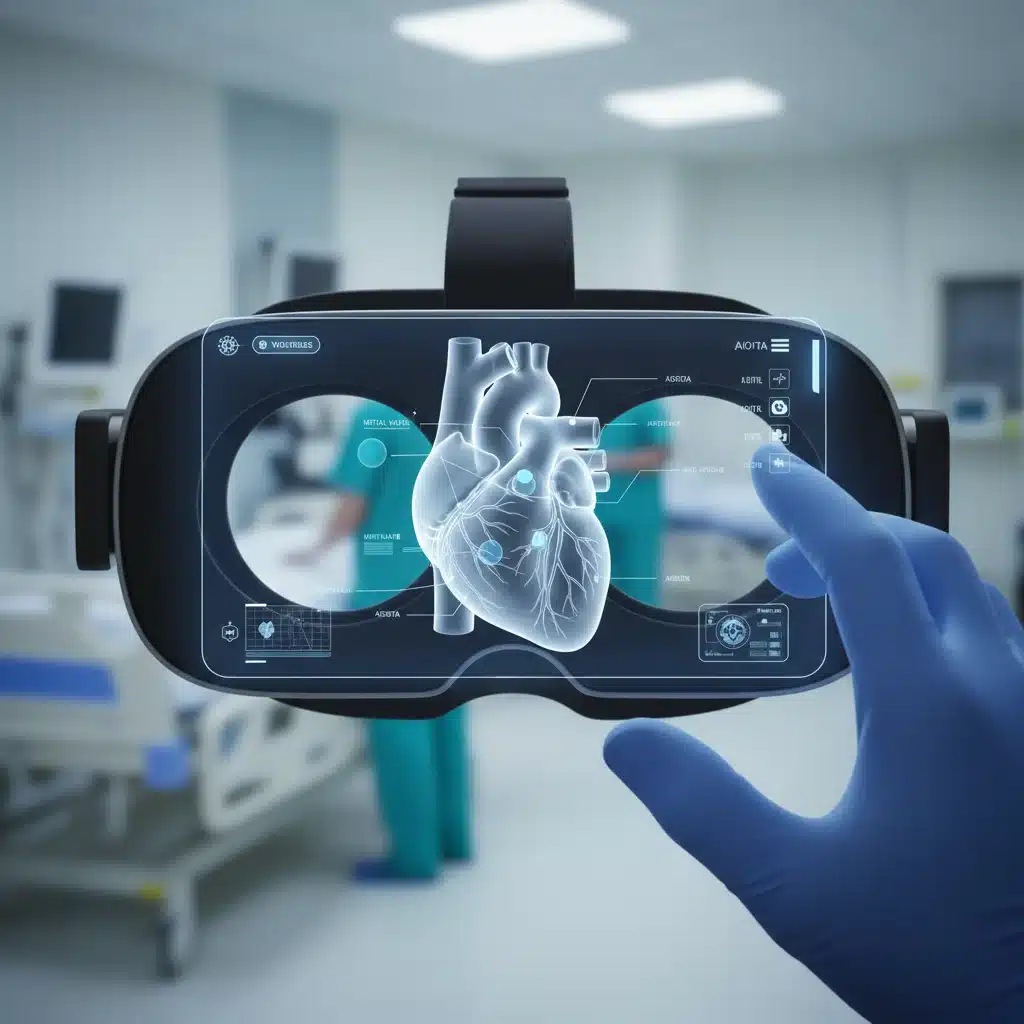
The development of multiplayer VR platforms allows multiple users to train together in the same virtual space, fostering teamwork, communication, and leadership skills. Surgeons, nurses, and anesthesiologists can practice complex team-based procedures, such as trauma response or operating room coordination, in a truly collaborative environment. This is crucial for developing the ‘soft skills’ that are just as vital as technical proficiency in healthcare. Collaborative VR training helps improve interprofessional communication, error management, and crisis resource management, all of which are directly linked to patient safety and positive outcomes.
Eye-Tracking and Biometric Integration
New VR headsets are incorporating eye-tracking technology, which provides invaluable data on where a learner is focusing their attention. This data can be used to assess cognitive processing, identify distractions, and even infer decision-making patterns. Combined with other biometric inputs (e.g., heart rate monitors), VR systems can now provide a more holistic assessment of a learner’s performance under stress, offering deeper insights into their readiness for real-world clinical situations.
These technological advancements are not just incremental improvements; they represent a paradigm shift in the capabilities of VR healthcare training, making the 90% skill retention goal increasingly attainable.
Current Implementations and Success Stories
Across the United States, leading medical institutions and training programs are actively integrating VR healthcare training into their curricula, demonstrating tangible benefits and paving the way for widespread adoption.
Surgical Training
Major university hospitals and surgical residency programs are utilizing VR for training in various specialties, including orthopedics, neurosurgery, and general surgery. Platforms like Osso VR and FundamentalVR offer highly realistic haptic-enabled simulations for procedures ranging from knee arthroscopy to complex spinal surgeries. Studies have shown that residents who train with VR achieve higher scores in live surgical performance, exhibit fewer errors, and complete procedures more efficiently. For instance, a study published in the Annals of Surgery found that VR-trained residents performed 29% faster and made 6x fewer errors than their traditionally trained counterparts.
Nursing and Emergency Response
Nursing schools are deploying VR to train students in critical patient care scenarios, such as administering medication, responding to cardiac arrest, or managing difficult patient conversations. VR allows nurses to practice these high-stakes situations in a safe environment, building confidence and competence. For emergency medical services (EMS) personnel, VR simulations provide realistic training for mass casualty incidents, disaster response, and complex field interventions, enhancing their ability to perform under extreme pressure.
Medical Device Training
Pharmaceutical and medical device companies are increasingly using VR to train healthcare professionals on the proper use of new equipment and devices. This ensures that practitioners are proficient before using these tools on real patients, reducing the risk of errors and improving patient safety. VR offers a scalable and cost-effective solution for disseminating training on complex new technologies across a wide geographical area.
Patient Education and Rehabilitation
Beyond professional training, VR is also finding applications in patient education and rehabilitation. VR experiences can help patients understand complex medical conditions or upcoming procedures, reducing anxiety and improving compliance. In rehabilitation, VR can provide engaging and motivating exercises for physical therapy, stroke recovery, and pain management, often leading to better adherence and outcomes.
These diverse applications underscore the versatility and impact of VR healthcare training, providing concrete evidence of its ability to enhance learning and improve clinical outcomes.
Challenges and Considerations for Widespread Adoption
While the benefits of VR healthcare training are undeniable, widespread adoption and the achievement of the 90% skill retention goal by 2026 are not without challenges. Addressing these considerations is crucial for successful integration.
Cost of Development and Hardware
Developing high-fidelity VR simulations, especially those with advanced haptics and AI integration, can be expensive and time-consuming. The initial investment in VR hardware (headsets, haptic devices, powerful computing systems) can also be substantial for institutions. However, as technology matures and economies of scale take effect, hardware costs are decreasing, and the long-term cost savings from reduced training errors and improved patient outcomes often outweigh the initial investment.
Curriculum Integration and Standardization
Integrating VR modules seamlessly into existing medical curricula requires careful planning and collaboration between VR developers, educators, and clinicians. There is a need for standardized curricula and certification pathways to ensure that VR training aligns with accreditation requirements and produces consistently competent professionals. Developing best practices for VR pedagogy and assessment is also an ongoing effort.
Technical Expertise and Support
Implementing and maintaining VR training programs requires a certain level of technical expertise. Institutions need to invest in IT infrastructure and provide adequate technical support for both instructors and learners. Training educators to effectively utilize VR technology and integrate it into their teaching methodologies is also a critical component.
Motion Sickness and User Experience
While VR technology has significantly improved, some users may still experience motion sickness or discomfort, especially during prolonged sessions. Developers are continuously working on optimizing frame rates, reducing latency, and designing experiences that minimize adverse effects. Ensuring an intuitive and comfortable user experience is paramount for sustained engagement and effective learning.
Data Privacy and Security
As VR systems collect performance data from learners, ensuring data privacy and security is of utmost importance, especially in healthcare settings. Compliance with regulations like HIPAA is crucial, and robust data protection protocols must be in place to safeguard sensitive information.
Overcoming these challenges will require concerted effort from technology providers, educational institutions, policymakers, and the healthcare industry as a whole. However, the immense potential benefits of VR healthcare training make these investments worthwhile.
The Path to 90% Skill Retention by 2026
Achieving a 90% skill retention rate through VR healthcare training by 2026 is an ambitious yet attainable goal. It hinges on several key strategies and continued advancements:
Continued R&D and Innovation
Ongoing research and development in VR hardware, software, and AI will be critical. This includes further improvements in haptics, fidelity, adaptive learning algorithms, and the development of new, highly specialized medical simulations. Funding for interdisciplinary research combining VR, cognitive science, and medical education will be essential.
Scalable Deployment and Accessibility
Making VR training accessible to a broader range of institutions and individual learners is crucial. This involves developing more affordable and portable VR systems, as well as cloud-based platforms that can deliver high-quality simulations to diverse users. Partnerships between VR developers, medical schools, and healthcare organizations will facilitate wider deployment.
Evidence-Based Integration
Rigorous research demonstrating the efficacy of VR training in improving skill retention and patient outcomes must continue. This evidence will be vital for convincing stakeholders, securing funding, and guiding the development of best practices. Longitudinal studies tracking the long-term impact of VR training on clinical competence and career progression will be particularly valuable.
Policy Support and Funding
Government agencies, professional medical organizations, and accreditation bodies have a crucial role to play in supporting the adoption of VR. This includes developing guidelines for VR training, recognizing VR hours towards continuing medical education (CME) requirements, and providing funding for VR initiatives in healthcare education.
Interdisciplinary Collaboration
Success will depend on strong collaboration between technologists, medical educators, clinicians, and instructional designers. This interdisciplinary approach ensures that VR solutions are not only technologically advanced but also pedagogically sound and clinically relevant.
The journey towards 90% skill retention is a collaborative effort, but the trajectory of VR healthcare training suggests that this goal is well within reach, promising a future of highly skilled and confident medical professionals.
The Future Impact of VR on U.S. Healthcare
The successful integration of VR healthcare training, leading to significantly higher skill retention rates, will have a profound and positive impact on the U.S. healthcare system. This impact will extend far beyond individual learner proficiency, influencing patient care, safety, and the overall efficiency of medical services.
Improved Patient Safety and Outcomes
Perhaps the most critical benefit is the direct correlation between enhanced skill retention and improved patient safety. Medical errors, often stemming from a lack of proficiency or experience, are a significant concern. By ensuring that medical professionals are exceptionally well-trained and retain critical skills over time, VR will contribute to a substantial reduction in preventable errors, leading to better patient outcomes and fewer adverse events.
Enhanced Clinical Competence and Confidence
Professionals trained with VR will enter the clinical environment with a higher level of competence and confidence. This translates to more effective decision-making, smoother execution of procedures, and better communication, even in high-pressure situations. Confident practitioners are also more likely to engage in continuous learning and adapt to new challenges, fostering a culture of excellence.
Reduced Training Costs and Increased Efficiency
While initial VR development can be costly, in the long run, it can lead to significant cost savings. VR reduces the reliance on expensive cadaver labs, real operating room time, and specialized equipment that may be scarce. It also minimizes the need for extensive supervision during initial training phases, freeing up senior clinicians for other critical duties. The ability to standardize and scale training efficiently will also contribute to overall cost-effectiveness.
Addressing Workforce Shortages and Disparities
VR can play a vital role in addressing the ongoing healthcare workforce shortages, particularly in rural or underserved areas. By providing high-quality, accessible training regardless of geographical location, VR can help rapidly upskill existing professionals and attract new talent into the medical field. This democratization of education can help mitigate disparities in healthcare access and quality.
Accelerated Specialization and Professional Development
For experienced professionals, VR offers an excellent platform for accelerated specialization and continuous professional development. They can quickly learn new techniques, practice with novel medical devices, and refresh rarely used skills, ensuring they remain at the forefront of medical innovation throughout their careers. This lifelong learning capability is essential in a rapidly advancing field.
The future of U.S. healthcare, bolstered by the transformative power of VR healthcare training, promises a more skilled, resilient, and patient-centered medical workforce, ultimately benefiting society as a whole.
Conclusion
The integration of Virtual Reality into healthcare training represents a monumental leap forward in medical education. The goal of achieving 90% skill retention rates for U.S. medical professionals by 2026 is ambitious but entirely within reach, driven by continuous technological advancements, rigorous research, and dedicated implementation efforts. VR healthcare training offers an unparalleled platform for experiential learning, allowing professionals to practice complex procedures, manage high-stakes scenarios, and develop critical decision-making skills in a safe, immersive, and repeatable environment.
From enhancing surgical proficiency and improving nursing care to revolutionizing emergency response and medical device training, VR’s impact is broad and transformative. While challenges related to cost, curriculum integration, and technical support remain, the overwhelming benefits in terms of improved patient safety, enhanced clinical competence, and increased training efficiency far outweigh these hurdles. As VR technology continues to evolve and become more accessible, its role in shaping a highly skilled and confident healthcare workforce will only grow, ultimately leading to a healthier and safer future for all.
The journey to 90% skill retention is a testament to the power of innovation in education, and VR is undoubtedly at the vanguard of this exciting revolution in healthcare training.