Optimizing Supply Chain Logistics with VR: A 3-Month Implementation Plan for U.S. Businesses (TIME-SENSITIVE)
In the rapidly evolving landscape of global commerce, U.S. businesses face unprecedented pressures to enhance efficiency, reduce costs, and build resilient supply chains. The advent of technologies like Virtual Reality (VR) offers a transformative solution, moving beyond mere entertainment to become a critical tool for operational excellence. This article provides a comprehensive, time-sensitive 3-month implementation plan for U.S. businesses to effectively integrate VR supply chain logistics, unlocking significant competitive advantages.
The traditional perception of VR often limits its application to gaming or niche design. However, its immersive capabilities are proving invaluable in complex operational environments such as supply chain and logistics. From optimizing warehouse layouts and training personnel to simulating complex transportation routes and predictive maintenance, VR offers a dynamic platform for innovation. The urgency for adoption stems from the current global economic climate, characterized by supply chain disruptions, labor shortages, and increasing consumer demands for speed and transparency. Businesses that move swiftly to embrace technologies like VR will not only mitigate these challenges but also position themselves as industry leaders.
This detailed guide will walk you through the strategic steps, critical considerations, and expected outcomes of a rapid VR implementation. We will delve into the specifics of each month, providing actionable insights for U.S. businesses looking to revolutionize their logistics operations. The goal is not just to introduce VR but to embed it as a core component of your supply chain strategy, driving tangible results within a tight timeframe.
The Strategic Imperative: Why VR for Supply Chain Logistics Now?
The modern supply chain is a labyrinth of interconnected processes, people, and technologies. Any disruption, no matter how small, can have a cascading effect, leading to costly delays, inventory imbalances, and dissatisfied customers. U.S. businesses, in particular, are grappling with unique challenges: a diverse geographical landscape, stringent regulatory requirements, and a highly competitive market. This environment necessitates agile, innovative solutions, and VR supply chain logistics emerges as a frontrunner.
Addressing Key Challenges with VR
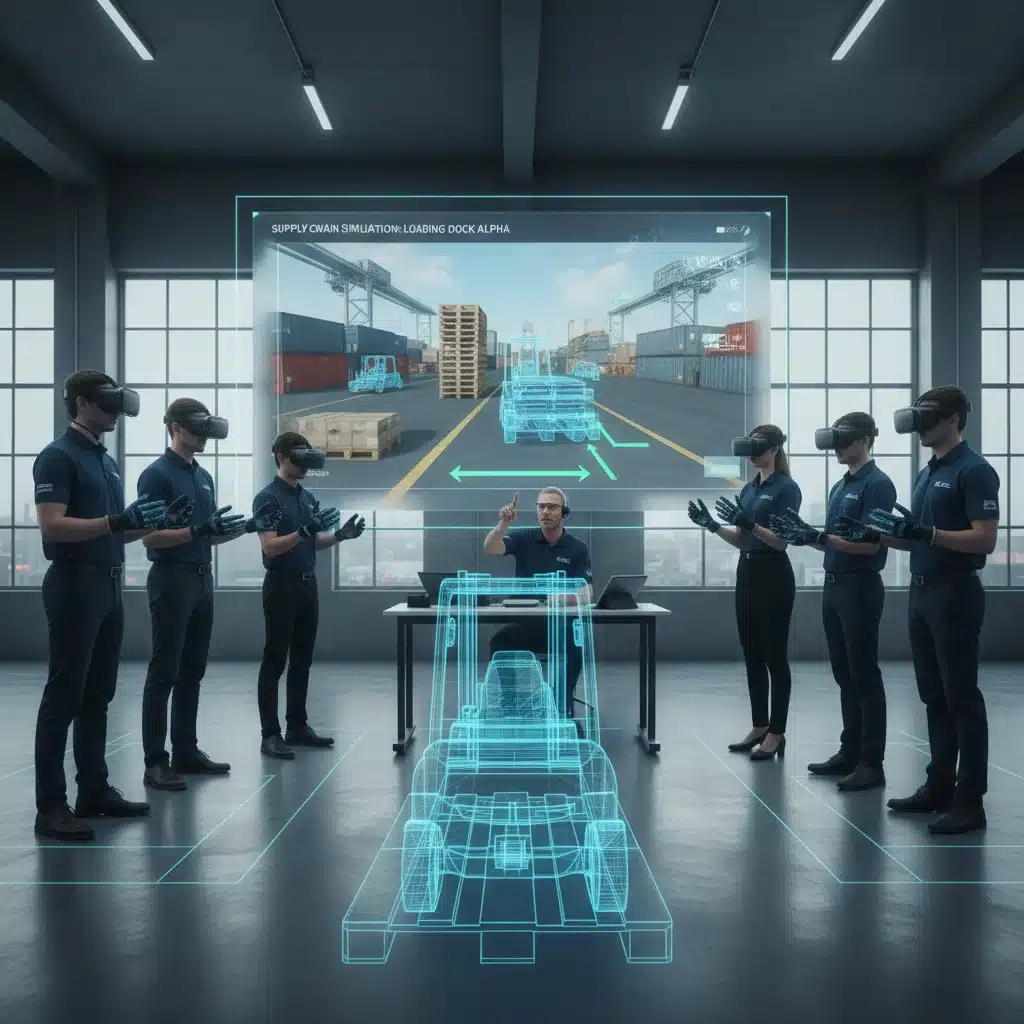
- Training and Workforce Development: A significant hurdle in logistics is the training of new employees and upskilling existing ones. Traditional methods can be time-consuming, resource-intensive, and often lack the real-world immersion necessary for complex tasks. VR simulations offer a safe, repeatable, and highly effective environment for training. Employees can practice operating heavy machinery, navigating complex warehouse layouts, or responding to emergency scenarios without risk or disruption to live operations. This accelerates learning curves, reduces errors, and improves safety records.
- Warehouse and Facility Optimization: Designing and reconfiguring warehouses or distribution centers is a monumental task. VR allows businesses to create virtual prototypes of facilities, test different layouts, optimize storage solutions, and simulate material flow before any physical changes are made. This pre-visualization can identify bottlenecks, improve space utilization, and significantly reduce the costs and risks associated with physical redesigns.
- Remote Collaboration and Inspection: In a globalized supply chain, teams are often geographically dispersed. VR facilitates immersive remote collaboration, allowing engineers, logistics managers, and even clients to walk through virtual facilities, inspect products, or review processes together, regardless of their physical location. This enhances decision-making speed and reduces travel costs.
- Predictive Maintenance and Troubleshooting: VR can be integrated with IoT sensors and digital twins to create interactive models of machinery and equipment. Technicians can use VR to perform virtual inspections, identify potential failures, and even practice complex repair procedures before engaging with the physical equipment. This proactive approach minimizes downtime and extends asset lifespans.
- Route Optimization and Simulation: For transportation logistics, VR can simulate various routing scenarios, taking into account traffic, weather conditions, and delivery schedules. This allows planners to identify the most efficient paths, test contingency plans, and optimize fuel consumption and delivery times.
The Time-Sensitive Advantage
The window of opportunity for early adoption and competitive advantage is narrowing. As more companies recognize the potential of VR, those who implement it first will reap the benefits of improved efficiency, reduced operational costs, and enhanced decision-making capabilities. A 3-month plan is ambitious but achievable, designed to deliver rapid proof-of-concept and scalable solutions. It emphasizes a phased approach, starting with targeted pilot programs and quickly moving to broader integration, ensuring that the investment yields measurable returns in a short period.
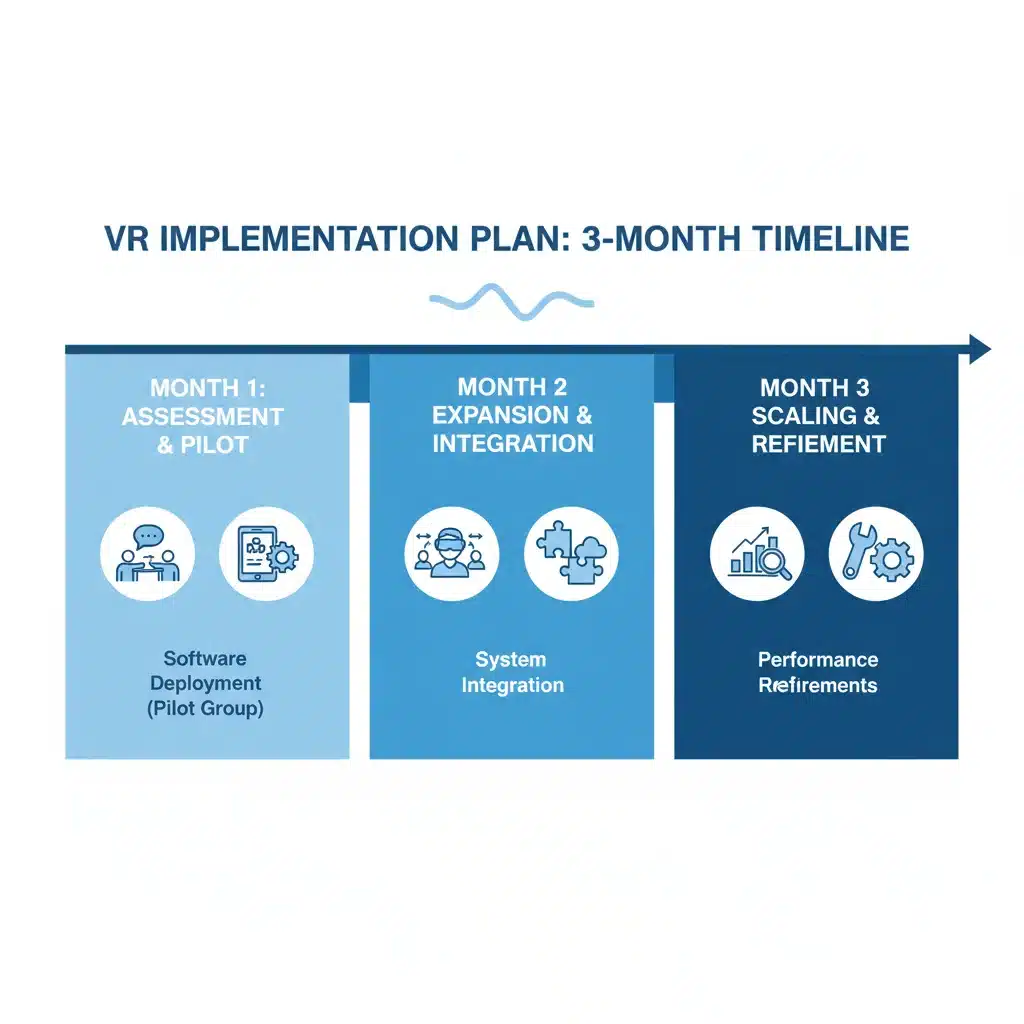
Month 1: Foundation and Pilot Program – Laying the Groundwork for VR Supply Chain Logistics
The first month is crucial for establishing a solid foundation for your VR supply chain logistics initiative. This phase focuses on internal assessment, vendor selection, and launching a targeted pilot program to demonstrate immediate value.
Week 1-2: Internal Assessment & Stakeholder Alignment
- Identify Key Pain Points: Conduct a thorough internal audit to pinpoint the most pressing challenges in your supply chain that VR can effectively address. Is it high training costs, frequent errors in order fulfillment, inefficient warehouse layouts, or difficulties in remote collaboration? Prioritize areas where VR can deliver the most significant impact quickly.
- Define Clear Objectives and KPIs: For each identified pain point, set measurable objectives. For example, if training is the focus, objectives might include "reduce training time by 20%" or "decrease operational errors by 15% in trained personnel." Establish Key Performance Indicators (KPIs) to track progress.
- Assemble a Cross-Functional Team: Create a dedicated VR implementation team comprising representatives from logistics, IT, operations, HR (for training aspects), and finance. This ensures diverse perspectives and secures buy-in across departments.
- Budget Allocation: Secure initial funding for hardware, software licenses, content development (if not using off-the-shelf solutions), and potential consulting services.
- Research and Vendor Shortlisting: Begin researching VR hardware (headsets like Meta Quest Pro, HTC VIVE XR Elite, etc.) and software platforms. Look for solutions specifically designed for enterprise use and VR supply chain logistics. Shortlist 2-3 vendors based on their capabilities, industry experience, and compatibility with your existing infrastructure.
Week 3-4: Vendor Selection & Pilot Program Kick-off
- Vendor Demos and Selection: Invite shortlisted vendors for detailed demonstrations. Evaluate their solutions against your defined objectives and KPIs. Consider factors like ease of use, scalability, integration capabilities, security, and ongoing support. Select the vendor(s) that best align with your needs and budget.
- Hardware Procurement: Place orders for the necessary VR headsets and associated equipment for your pilot program. Start with a manageable number to test the waters.
- Pilot Program Design: Choose a specific, contained area of your supply chain for the pilot. This could be a single warehouse section for training new forklift operators, a specific product line for virtual quality inspection, or a small team for remote collaboration on a new facility layout. The scope should be narrow enough to manage within a month but significant enough to demonstrate tangible benefits.
- Content Development/Adaptation: Work with your chosen vendor or internal teams to develop or adapt VR content for the pilot. For training, this might involve creating a virtual environment of your warehouse. For layout optimization, it could be a digital twin of a specific area.
- Initial User Training: Train the pilot program participants on how to use the VR hardware and software. Emphasize the benefits and address any initial skepticism.
- Launch Pilot Program: Deploy the VR solution to the pilot group. Begin collecting data on performance, user feedback, and any technical issues.
Key Deliverables for Month 1: Defined objectives and KPIs, cross-functional team assembled, vendor selected, hardware procured, pilot program initiated with initial data collection.
Month 2: Expansion and Integration – Scaling VR Beyond the Pilot
Building on the successes and lessons learned from the pilot, Month 2 focuses on expanding the VR supply chain logistics initiative and integrating it more deeply into your existing operations.
Week 5-6: Pilot Review & Refinement
- Comprehensive Pilot Review: Analyze the data collected from the pilot program. Did you meet your KPIs? What were the unexpected benefits or challenges? Gather detailed feedback from all participants.
- Technical Troubleshooting & Optimization: Address any technical glitches, connectivity issues, or performance bottlenecks identified during the pilot. Work closely with your VR vendor to resolve these.
- Content Refinement: Based on user feedback, refine the VR content. This might involve improving realism, adding more interactive elements, or simplifying user interfaces.
- Cost-Benefit Analysis Update: Update your initial cost-benefit analysis with real-world data from the pilot. This will be crucial for securing further investment.
Week 7-8: Strategic Expansion & Initial Integration
- Identify Next Expansion Areas: Based on the pilot’s success, identify 2-3 additional areas within your supply chain that could benefit from VR. These should be areas where the VR solution can deliver similar or even greater impact.
- Expanded Hardware Procurement: Order additional VR headsets and equipment to support the expanded deployment. Consider different types of headsets if new use cases require them (e.g., standalone vs. PC-tethered).
- Integrate with Existing Systems: Begin exploring and implementing integrations with your existing Enterprise Resource Planning (ERP), Warehouse Management Systems (WMS), or other logistics software. This could involve data exchange for performance tracking, inventory management, or order processing. For example, VR training data could feed into HR systems, or virtual layout changes could sync with WMS planning modules.
- Develop & Deploy New Content: Create or customize VR content for the new expansion areas. This might involve more advanced training modules, detailed digital twins of additional facilities, or complex route simulations.
- Broader User Training: Conduct training sessions for the new groups of users. Develop standardized training protocols and materials.
Week 9-10: Advanced Content Development & Internal Advocacy
- Advanced Content Development: Focus on creating more sophisticated VR applications. This could include multi-user collaborative environments for remote team meetings, advanced troubleshooting scenarios, or "what-if" simulations for disaster recovery planning within the supply chain.
- Internal Advocacy and Showcasing: Actively promote the successes of the VR initiative within the organization. Hold internal demonstrations for senior management and other departments. Highlight the ROI and strategic benefits. This builds momentum and secures continued executive support.
- Refine Data Collection & Analytics: Improve your data collection mechanisms to capture more granular insights into VR usage and its impact on operational metrics. Develop dashboards to visualize performance trends and ROI.
Key Deliverables for Month 2: Pilot review completed, VR solution expanded to new areas, initial system integrations established, new VR content deployed, broader user base trained.
Month 3: Scaling, Refinement & Long-Term Strategy – Solidifying VR’s Role
The final month of this rapid implementation plan focuses on scaling the VR supply chain logistics solution across the organization, refining processes, and developing a long-term strategy for sustained innovation.
Week 11-12: Full-Scale Deployment & Process Integration
- Wider Rollout: Begin rolling out VR solutions to all relevant departments and facilities identified in your expansion plan. This may involve phased deployment based on logistical capabilities.
- Standardize Best Practices: Document and standardize the best practices for VR usage, content creation, and maintenance. Create a central repository for VR resources and training materials.
- Deep Integration with Enterprise Systems: Further integrate VR data and functionalities with your core enterprise systems (ERP, WMS, CRM, HRIS). This creates a seamless flow of information and maximizes the value of your VR investment. For example, performance data from VR training could directly impact employee evaluation or certification processes.
- Establish Internal VR Support: Train an internal IT or operations team to provide first-line support for VR hardware and software. This reduces reliance on external vendors for day-to-day issues.
- Continuous Feedback Loop: Implement a continuous feedback mechanism for users. Regularly collect suggestions for improvement, new use cases, and content enhancements.
Week 13-14: Performance Monitoring & Strategic Planning
- Comprehensive Performance Review: Conduct a thorough review of the entire 3-month implementation. Compare current KPIs against initial objectives. Quantify the ROI in terms of cost savings, efficiency gains, error reduction, and improved safety.
- Identify New Use Cases: Based on the proven success and internal feedback, brainstorm and evaluate new potential applications for VR within your supply chain. This could extend to customer engagement (e.g., virtual tours of your facilities for clients), product design collaboration, or even advanced analytics visualization.
- Develop Long-Term VR Strategy: Formulate a multi-year strategy for the continued evolution and expansion of VR within your organization. This should include plans for future hardware upgrades, content development roadmaps, and integration with emerging technologies (e.g., Augmented Reality (AR), Artificial Intelligence (AI)).
- Budget for Ongoing Investment: Allocate budget for ongoing VR content development, hardware refresh cycles, software licenses, and potential R&D into new VR applications.
- Knowledge Sharing and Training Programs: Establish formal knowledge-sharing programs and advanced training modules to ensure that the expertise gained during implementation is retained and disseminated throughout the organization. Consider creating "VR champions" within different departments.
Measuring Success: Quantifying the ROI of VR in Logistics
To justify the investment and ensure sustained adoption, U.S. businesses must meticulously track the Return on Investment (ROI) of their VR supply chain logistics initiatives. The benefits extend beyond immediate cost savings and encompass improvements in efficiency, safety, and strategic agility.
Tangible Metrics to Track:
- Training Efficiency:
- Reduction in training time per employee.
- Decrease in training-related material costs.
- Improvement in skill acquisition and retention rates (measured through post-training assessments).
- Reduction in operational errors by newly trained personnel.
- Operational Efficiency:
- Improvement in warehouse picking accuracy and speed.
- Optimization of facility layout leading to reduced travel time for personnel/equipment.
- Reduced downtime for machinery due to predictive maintenance and virtual troubleshooting.
- Faster decision-making cycles in logistics planning and problem-solving.
- Cost Reduction:
- Lower travel expenses for remote inspections and collaborative meetings.
- Reduced costs associated with physical prototypes for warehouse design.
- Decreased accident rates due to enhanced safety training.
- Savings on fuel and transportation costs through optimized virtual route planning.
- Safety and Compliance:
- Reduction in workplace incidents and injuries.
- Improved adherence to safety protocols through immersive training.
- Enhanced compliance with industry regulations via virtual audit simulations.
- Employee Engagement and Retention:
- Higher employee satisfaction with training methods.
- Improved employee retention rates due to better skill development and engagement.
- Attraction of new talent interested in innovative technologies.
Strategic Benefits:
- Enhanced Agility: The ability to rapidly simulate "what-if" scenarios, test new layouts, or run through contingency plans provides an unparalleled level of agility in responding to market changes or disruptions.
- Competitive Differentiation: Early adoption of advanced technologies like VR positions your business as an innovator, attracting both customers and top talent.
- Data-Driven Decision Making: VR platforms generate valuable data on user performance, operational efficiency, and system bottlenecks, providing deeper insights for strategic decision-making.
- Sustainability: By optimizing routes, reducing physical travel, and minimizing waste from physical prototypes, VR can contribute to your company’s sustainability goals.
Regularly review these metrics throughout and after the 3-month implementation. Use the data to refine your VR strategy, justify further investment, and continuously improve your VR supply chain logistics operations.
Challenges and Mitigation Strategies
While the benefits of VR supply chain logistics are compelling, implementation is not without its challenges. Proactive planning and mitigation strategies are essential for a smooth rollout.
Potential Challenges:
- High Initial Investment: VR hardware and custom content development can be costly upfront.
- Technological Learning Curve: Employees may require significant training to become proficient with VR hardware and software.
- Integration Complexities: Integrating VR platforms with legacy ERP or WMS systems can be technically challenging.
- Content Development: Creating realistic and effective VR simulations requires specialized skills and time.
- User Acceptance: Resistance from employees who are unfamiliar or uncomfortable with new technology.
- Motion Sickness/Discomfort: Some users may experience motion sickness, though modern VR hardware has largely mitigated this.
- Data Security and Privacy: Ensuring the security of sensitive operational data within VR environments.
Mitigation Strategies:
- Phased Rollout & Pilot Programs: Start small with a well-defined pilot to prove ROI before scaling, justifying further investment. Explore "VR-as-a-Service" models to reduce upfront capital expenditure.
- Comprehensive Training & Support: Provide extensive, hands-on training for all users. Establish a dedicated support team and create easily accessible documentation and tutorials.
- API-First Approach: Prioritize VR solutions that offer robust APIs for seamless integration with existing enterprise systems. Consider middleware solutions if direct integration is too complex.
- Partner with Experts: Collaborate with experienced VR development studios or consultants for content creation, especially for complex simulations. Leverage off-the-shelf solutions where appropriate to save time and cost.
- Change Management & Advocacy: Communicate the benefits of VR clearly and frequently. Involve employees in the process, gather feedback, and highlight success stories. Appoint internal "VR champions."
- Hardware Selection & Comfort: Choose modern VR headsets with high refresh rates and comfortable designs. Offer breaks and guidance on proper usage to minimize discomfort.
- Robust Security Protocols: Implement strong data encryption, access controls, and regular security audits for all VR platforms and data. Ensure compliance with relevant data protection regulations.
The Future of Supply Chain: Beyond 3 Months
The 3-month implementation plan is merely the beginning of your journey with VR supply chain logistics. Beyond this initial phase, the possibilities for innovation are vast. Consider the following long-term strategic directions:
- Integration with AI and Machine Learning: Combine VR simulations with AI to create intelligent agents that can learn from virtual environments, predict outcomes, and suggest optimal strategies. AI could analyze VR training data to personalize learning paths or identify areas where human intervention is most critical.
- Augmented Reality (AR) Integration: While VR creates fully immersive environments, AR overlays digital information onto the real world. Integrating AR with VR can create a powerful hybrid solution, where VR is used for planning and training, and AR is used for real-time guidance during physical operations (e.g., AR glasses guiding workers through a warehouse for picking tasks).
- Digital Twins: Expand your use of digital twins – virtual replicas of physical assets, processes, or systems. VR can provide the interface to interact with these digital twins in an intuitive and immersive way, enabling real-time monitoring, predictive maintenance, and complex scenario planning for your entire supply chain network.
- Blockchain for Transparency: Explore how VR interfaces could visualize blockchain data, offering unprecedented transparency and traceability throughout the supply chain, from raw materials to final delivery.
- Customer & Partner Engagement: Use VR to offer immersive virtual tours of your facilities to prospective clients, demonstrate product capabilities, or collaborate with partners on new logistical solutions.
By continuously exploring and integrating these advanced technologies, U.S. businesses can ensure their supply chains remain at the forefront of innovation, resilient against disruptions, and optimized for future growth.
Conclusion: Seize the VR Opportunity in Logistics
The imperative for U.S. businesses to modernize their supply chains has never been greater. Amidst global uncertainties and escalating demands, the strategic adoption of Virtual Reality is no longer a luxury but a necessity. This 3-month implementation plan for VR supply chain logistics offers a clear, actionable roadmap to integrate this transformative technology rapidly and effectively.
From revolutionizing workforce training and optimizing physical layouts to enabling remote collaboration and predictive analytics, VR provides a powerful suite of tools to enhance efficiency, reduce costs, and build a more resilient and agile supply chain. The time-sensitive nature of this opportunity means that early adopters will gain a significant competitive edge, positioning themselves as leaders in a rapidly evolving market.
By diligently following the steps outlined – from meticulous planning and pilot programs in Month 1, through strategic expansion and integration in Month 2, to full-scale deployment and long-term strategy in Month 3 – U.S. businesses can unlock the full potential of VR. The investment, when managed strategically and measured rigorously, will yield substantial returns, not just in financial terms but also in operational excellence, employee empowerment, and future readiness.
Don’t let your business fall behind. Embrace the future of logistics with VR, and embark on a journey towards a more intelligent, efficient, and robust supply chain today.