VR Product Design Reviews: Cutting Development Cycles by 3 Months in 2026 (PRACTICAL SOLUTIONS)
The pace of innovation in product development is accelerating at an unprecedented rate. Companies are constantly seeking competitive advantages, not just in the quality of their products, but also in the speed at which they can bring those products to market. One of the most significant bottlenecks in the traditional product development lifecycle has always been the design review process. Iterative physical prototyping, geographical barriers, and subjective feedback often lead to prolonged cycles and increased costs. However, a revolutionary technology is poised to transform this landscape: Virtual Reality (VR).
By 2026, the integration of VR for product design reviews will not just be a luxury but a necessity for forward-thinking enterprises. This isn’t merely about creating flashy presentations; it’s about fundamentally altering how design teams collaborate, identify flaws, and refine concepts. The promise? A tangible reduction in development cycles, potentially by as much as three months, leading to faster time-to-market, significant cost savings, and ultimately, superior products. This article delves into the practical solutions for implementing VR product design reviews, exploring the ‘how,’ ‘what,’ and ‘why’ for businesses aiming to stay ahead.
The Current Landscape: Why Traditional Design Reviews Fall Short
Before we fully embrace the future, it’s crucial to understand the limitations of the present. Traditional product design reviews, while foundational, are often fraught with inefficiencies:
- Physical Prototyping Costs and Time: Creating physical prototypes is expensive and time-consuming. Each iteration requires material, labor, and often, specialized manufacturing processes. Delays in one prototype can ripple through the entire schedule.
- Geographical Dispersion: Modern product development teams are global. Coordinating design reviews across different time zones and locations often means relying on 2D screens, static images, or shipping physical models, none of which provide a truly collaborative or immersive experience.
- Subjective Interpretation: A 2D drawing or even a small-scale physical model can be open to varied interpretations. Critical details, ergonomic considerations, or assembly challenges might only become apparent much later in the development process, leading to costly redesigns.
- Limited Interaction: Stakeholders often struggle to fully grasp the scale, feel, and functionality of a product from static representations. This can lead to miscommunications and a lack of comprehensive feedback.
- Environmental Impact: The continuous production and disposal of physical prototypes contribute to waste, which is increasingly a concern for environmentally conscious companies.
These challenges collectively contribute to extended development timelines. Imagine a scenario where a critical design flaw is only discovered after the third physical prototype has been manufactured and shipped to a review team halfway across the world. The time and resources lost are immense. This is precisely where VR product design offers a compelling alternative.
The Transformative Power of VR Product Design Reviews
VR technology allows designers, engineers, and stakeholders to step inside a digital twin of their product, interacting with it as if it were physically present. This immersion unlocks a myriad of benefits that directly address the shortcomings of traditional methods, paving the way for significant reductions in development cycles.
Immersive and Collaborative Environment
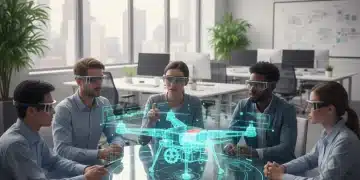
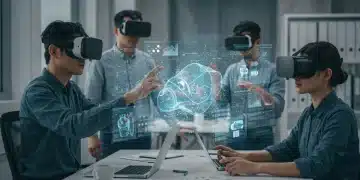
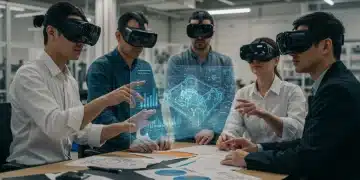
One of the most profound advantages of VR product design is the ability to create a truly immersive and collaborative environment. Teams, regardless of their geographical location, can simultaneously occupy the same virtual space, examine the same digital prototype, and provide real-time feedback. Imagine a design review where an engineer in Germany, a marketing specialist in the US, and a manufacturing expert in China can all stand ‘around’ a full-scale virtual car engine, pointing out potential issues, discussing assembly sequences, and testing maintenance procedures, all in real-time. This level of engagement is simply unattainable with traditional methods.
Early Error Detection and Iteration
The ability to identify design flaws early in the process is paramount to cutting development cycles. With VR, teams can detect ergonomic issues, spatial conflicts, accessibility problems, and manufacturing challenges long before a single physical component is produced. This rapid iteration capability means that design changes can be implemented and reviewed within hours or days, rather than weeks or months. This proactive approach significantly reduces the need for expensive physical prototypes and subsequent redesigns.
Enhanced Understanding and Communication
VR bridges the gap between abstract 2D drawings and tangible reality. Stakeholders who might struggle to visualize a complex assembly from blueprints can now experience it firsthand. This enhanced understanding leads to more informed decisions and clearer communication among cross-functional teams. Marketing can better understand product features, manufacturing can foresee assembly difficulties, and service teams can anticipate maintenance requirements – all before the product leaves the digital realm.
Cost and Time Savings
The most direct impact of VR product design is the reduction in costs and time. By minimizing the need for physical prototypes, companies save on material, labor, and shipping expenses. The accelerated iteration cycles translate directly into shorter development timelines. A reduction of three months in the overall development cycle can mean being first to market, capturing significant market share, and realizing revenue sooner.

Practical Solutions for Implementing VR Product Design in 2026
Implementing VR for product design reviews isn’t just about buying headsets; it requires a strategic approach. Here are practical steps and considerations for businesses aiming to integrate this technology effectively by 2026:
1. Investing in the Right Hardware and Software
- VR Headsets: While high-end tethered headsets (e.g., Varjo XR-3, HTC Vive Pro 2) offer superior visual fidelity and tracking, standalone headsets (e.g., Meta Quest Pro, Pico 4 Enterprise) are becoming increasingly capable and offer greater flexibility for distributed teams. The choice depends on the complexity of the models and the required level of detail.
- Powerful Workstations: Running complex CAD models in VR requires robust computing power, especially high-end GPUs.
- VR Collaboration Platforms: Specialized software like Autodesk VRED, Unity Reflect, Varjo Reality Cloud, or custom-built solutions are essential. These platforms enable multi-user sessions, real-time annotation, measurement tools, sectioning capabilities, and integration with existing CAD/PLM systems.
- Data Preparation Tools: CAD models often need optimization for VR environments. Tools that can efficiently tessellate, simplify, and convert CAD data into VR-ready formats are crucial to ensure smooth performance and visual accuracy.
2. Seamless Integration with Existing Workflows
For VR to be truly effective, it must integrate smoothly with current design and engineering workflows. This means:
- CAD/PLM System Connectivity: The VR platform should ideally offer direct plugins or robust APIs to connect with existing CAD (e.g., SolidWorks, CATIA, PTC Creo) and PLM (Product Lifecycle Management) systems. This ensures that changes made in VR can be easily reflected in the master CAD model and vice-versa, maintaining data integrity.
- Version Control: Implement robust version control practices to manage iterations of the VR model, similar to how CAD files are managed.
- Training and Adoption: Provide comprehensive training for designers, engineers, and project managers on how to effectively use VR tools. User adoption is critical for success.
3. Establishing Clear Use Cases and KPIs
Before diving in, define specific use cases where VR will provide the most value:
- Ergonomic Studies: Test human-product interaction, reachability, and comfort.
- Assembly and Disassembly Analysis: Identify potential manufacturing or maintenance challenges.
- Design Validation: Review aesthetics, material finishes, and overall form factor.
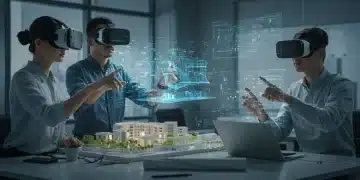
- Spatial Planning: For large products like vehicles, aircraft, or industrial machinery, assess spatial relationships and clearances.
- Customer Feedback: Involve key customers or focus groups in the VR review process to gather early feedback on concepts.
Establish Key Performance Indicators (KPIs) to measure the impact, such as:
- Reduction in physical prototype iterations.
- Decrease in design errors discovered late in the cycle.
- Percentage reduction in overall development time.
- Improved cross-functional collaboration scores.
4. Building a VR-Ready Design Culture
Technology alone isn’t enough. Foster a culture that embraces digital transformation and collaborative tools. Encourage experimentation and provide a safe space for teams to adapt to new ways of working. Leadership buy-in is crucial to drive this cultural shift.
5. Addressing Data Security and IP Protection
When dealing with sensitive product designs, data security is paramount. Ensure that VR platforms and cloud solutions adhere to strict security protocols. Implement robust access controls and consider on-premise solutions for highly confidential projects. Intellectual property (IP) protection must be a core consideration when selecting VR partners and platforms.
Case Studies and Future Outlook
Leading companies across various industries are already leveraging VR product design to great effect. Automotive giants use VR to design and review car interiors and exteriors, reducing the need for costly clay models. Aerospace companies perform virtual walkthroughs of aircraft cabins and engine bays for maintenance training and design validation. Medical device manufacturers visualize and test the ergonomics of new surgical tools and equipment. These early adopters are demonstrating the tangible benefits of VR product design.
By 2026, we can expect to see even more sophisticated VR capabilities, including:
- Haptic Feedback: More advanced haptic gloves and suits will allow users to ‘feel’ the texture, weight, and resistance of virtual objects, further enhancing the realism of design reviews.
- AI-Powered Design Analysis: AI could integrate with VR platforms to automatically flag potential design flaws, suggest optimizations, or predict manufacturing challenges based on historical data.
- Digital Twin Integration: Deeper integration with digital twin technology, allowing real-time performance data from physical products to inform virtual design iterations.
- Mixed Reality (MR) for On-site Reviews: Blending VR with augmented reality (AR) to overlay virtual designs onto real-world environments, facilitating on-site installation checks or factory layout planning.

Challenges and Mitigation Strategies
While the benefits are clear, implementing VR product design is not without its challenges:
- High Initial Investment: The cost of high-end hardware, software licenses, and specialized talent can be substantial. Mitigation: Start with pilot projects to demonstrate ROI, scale incrementally, and consider subscription-based software models.
- Technical Complexity: Setting up and maintaining VR systems, especially with large CAD models, requires technical expertise. Mitigation: Partner with experienced VR solution providers, invest in internal training, or hire specialized VR engineers.
- Motion Sickness: Some users may experience motion sickness in VR. Mitigation: Optimize VR experiences for smooth performance (high frame rates), provide comfortable headsets, and offer breaks.
- Data Optimization: Large CAD models often need significant optimization to run smoothly in VR without sacrificing detail. Mitigation: Utilize specialized data preparation software and workflows, and work closely with CAD teams to create VR-ready assets.
- Integration with Legacy Systems: Older CAD/PLM systems might not have straightforward integration paths. Mitigation: Plan for phased integration, use middleware, or consider upgrading legacy systems where feasible.
Overcoming these hurdles requires a clear strategy, strong leadership, and a willingness to invest in the future of product development. The return on investment, in terms of accelerated cycles and enhanced product quality, far outweighs the initial challenges.
The Economic Impact: Quantifying the 3-Month Advantage
Let’s consider the economic implications of cutting three months from a product development cycle. For many industries, this can translate into millions, if not tens of millions, of dollars. Faster time-to-market means:
- Increased Revenue: Products reach customers sooner, generating sales for an extended period before competitors catch up. This can significantly boost market share and profitability.
- Reduced Development Costs: Fewer physical prototypes, less travel for review meetings, and more efficient resource allocation directly contribute to lower operational expenses.
- Competitive Edge: Being first or among the first to introduce innovative products strengthens a company’s brand reputation and market leadership position.
- Agility and Responsiveness: Shorter cycles allow companies to respond more quickly to market trends, customer feedback, and competitive pressures, making them more agile and resilient.
- Improved Morale: Teams working on projects with clear, efficient progress tend to have higher morale and job satisfaction.
The three-month reduction is not an arbitrary number; it represents a significant strategic advantage that can redefine a company’s position in its respective industry. This is the core promise of adopting VR product design strategically.
Conclusion: Embracing VR for a Faster, Smarter Future
The future of product design reviews is undeniably virtual. By 2026, companies that have successfully implemented VR for product design will be operating with a distinct competitive advantage, characterized by significantly shorter development cycles, enhanced collaboration, and superior product quality. The transition requires careful planning, investment in the right technologies, and a commitment to cultural change, but the benefits are clear and compelling.
For businesses looking to cut development cycles by three months or more, VR offers a practical, powerful solution. It’s time to move beyond the limitations of 2D screens and physical prototypes and step into an immersive, collaborative future where innovation thrives at an accelerated pace. Embrace VR product design now to shape the products of tomorrow, today.