
Navigating the Latest OSHA Compliance for VR Industrial Training in 2026: What U.S. Businesses Need to Know (RECENT UPDATES)
In an era defined by rapid technological advancement, the industrial landscape is continually evolving. U.S. businesses are increasingly turning to innovative solutions like Virtual Reality (VR) for industrial training, recognizing its potential to enhance safety, efficiency, and skill development. However, as VR integration becomes more widespread, understanding and adhering to the latest OSHA compliance requirements for VR industrial training in 2026 is paramount. This comprehensive guide will delve into the critical updates, best practices, and strategic considerations for businesses aiming to leverage VR while maintaining stringent safety standards.
The Occupational Safety and Health Administration (OSHA) plays a pivotal role in ensuring safe and healthy working conditions for employees across the United States. As new technologies emerge, OSHA adapts its guidelines to encompass these innovations, ensuring that the fundamental principles of workplace safety remain at the forefront. For VR industrial training, this means a nuanced approach that balances technological benefits with regulatory responsibilities. Businesses that proactively address OSHA VR Compliance will not only avoid penalties but also foster a culture of safety and excellence.
The year 2026 marks a significant period for regulatory evolution. With the increasing sophistication of VR technology, OSHA is expected to refine its stance on how virtual environments are utilized for safety education, hazard recognition, and procedural training. This article aims to equip U.S. businesses with the knowledge to confidently navigate these changes, ensuring their VR training programs are not only effective but also fully compliant.
The Evolving Landscape of OSHA and VR Training
The adoption of VR in industrial settings is not just a trend; it’s a transformative shift. From manufacturing and construction to energy and logistics, companies are realizing the immense benefits of immersive training. VR allows employees to practice dangerous procedures in a risk-free environment, experience rare but critical events, and gain hands-on experience without the need for expensive physical equipment or interrupting live operations. This experiential learning significantly improves knowledge retention and practical application, directly contributing to a safer workforce.
However, the very nature of VR — its immersive quality and digital interface — presents unique considerations for OSHA. How do you validate the effectiveness of virtual training? What are the requirements for documenting VR training? How does it integrate with existing safety protocols? These are questions that OSHA VR Compliance seeks to answer, providing a framework for businesses to follow.
Historically, OSHA regulations have focused on traditional training methods, such as classroom instruction, on-the-job training, and simulations using physical equipment. As VR technology matured, OSHA began to acknowledge its potential, albeit with a cautious eye. The updates for 2026 are expected to provide clearer guidance on the equivalency of VR training to traditional methods, the specific elements required for a VR program to be considered compliant, and the documentation necessary to demonstrate adherence.
Key Areas of Focus for 2026 OSHA Updates
Several key areas are likely to see significant attention in the 2026 OSHA updates concerning VR industrial training. Businesses should prepare to address these points rigorously:
- Training Effectiveness and Validation: OSHA will likely emphasize the need for robust mechanisms to assess the effectiveness of VR training. This includes quantifiable metrics for skill acquisition, hazard recognition, and procedural adherence. Businesses will need to demonstrate that VR training outcomes are comparable to, or superior to, traditional methods.
- Content Accuracy and Realism: The virtual environments and scenarios must accurately reflect real-world industrial conditions and potential hazards. Any discrepancies could undermine the training’s validity and lead to non-compliance. Regular content reviews and updates will be crucial.
- Instructor Competency and Oversight: While VR offers self-paced learning, OSHA will still require competent instructors to oversee the training, provide feedback, and address individual learning needs. The role of the instructor might evolve but will remain essential for ensuring comprehensive understanding and application.
- Documentation and Record-Keeping: Detailed records of VR training completion, performance metrics, and competency assessments will be vital for demonstrating OSHA VR Compliance. This includes logging participant progress, identified weaknesses, and remedial actions taken.
- Accessibility and Equity: Ensuring that VR training is accessible to all employees, regardless of physical abilities or prior technological familiarity, will be a key consideration. This may involve providing alternative training methods or specialized VR interfaces.
- Hardware and Software Requirements: While OSHA typically doesn’t endorse specific technologies, guidelines may emerge regarding the minimum technical specifications for VR systems to ensure a sufficiently realistic and effective training experience. This includes display resolution, tracking accuracy, and latency.
Implementing Compliant VR Industrial Training Programs
For U.S. businesses, the transition to or enhancement of VR industrial training programs requires a strategic and methodical approach. Simply purchasing VR headsets and software is not enough; the program must be designed with OSHA VR Compliance at its core. Here’s a roadmap for successful implementation:
1. Conduct a Comprehensive Needs Assessment
Before diving into VR development, identify specific training gaps and high-risk areas within your operations. Which tasks are most dangerous? Which procedures have the highest incident rates? This assessment will guide the development of targeted VR modules that directly address OSHA concerns and improve safety outcomes.
2. Partner with Experienced VR Developers and Safety Experts
Creating effective and compliant VR training requires a blend of technical expertise and deep understanding of industrial safety. Collaborate with VR developers who specialize in industrial applications and safety consultants who are well-versed in OSHA regulations. This partnership ensures that the virtual environments are accurate, realistic, and aligned with regulatory standards.
3. Design for Realism and Accuracy
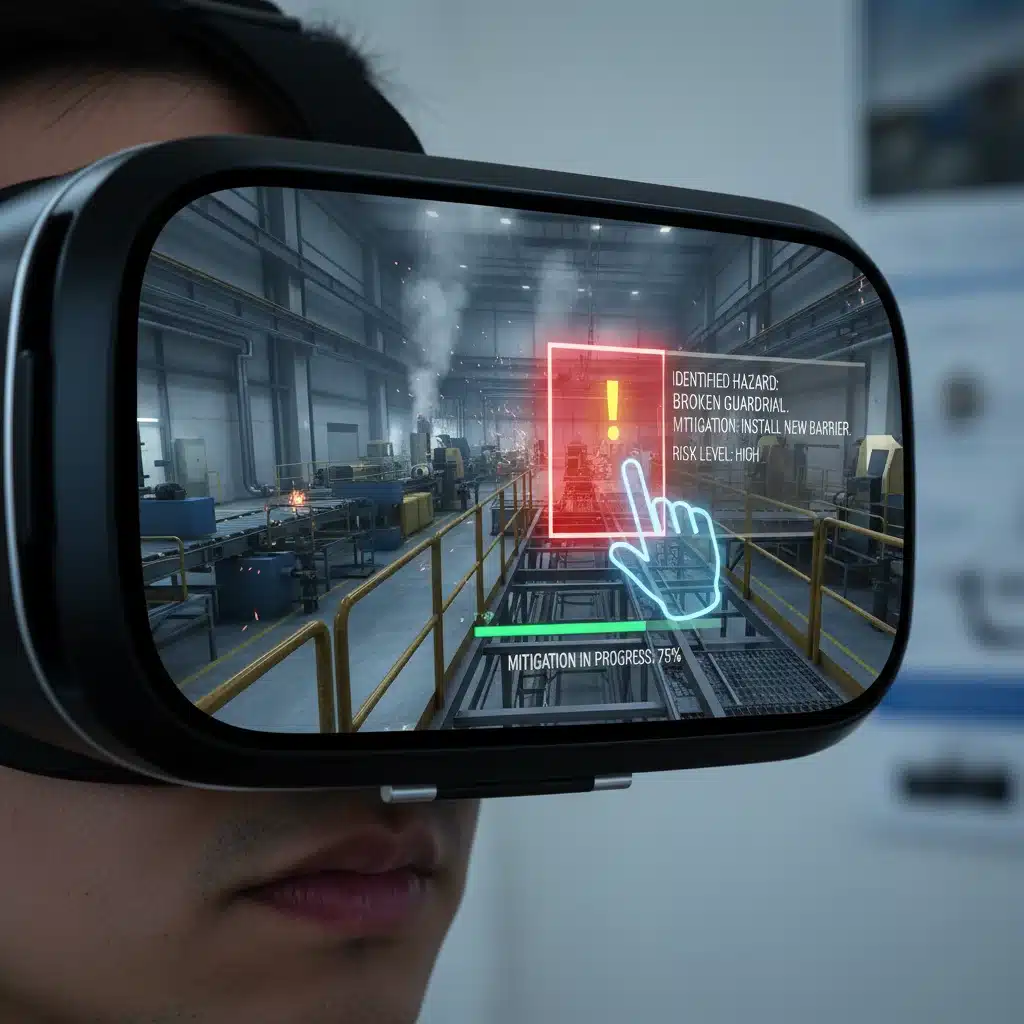
The efficacy of VR training hinges on its ability to accurately simulate real-world conditions. This includes precise replication of equipment, operational environments, and potential hazards. Ensure that the physics, visual fidelity, and interactive elements within the VR experience mirror actual industrial scenarios as closely as possible. This is crucial for meeting OSHA VR Compliance standards for effective training.
4. Integrate Performance Tracking and Assessment
A key advantage of VR is its ability to collect granular data on trainee performance. Implement robust tracking systems that record actions taken, decisions made, time to completion, and errors committed. This data is invaluable for assessing individual competency, identifying common weaknesses, and demonstrating the effectiveness of the training to OSHA. Performance metrics should directly correlate with real-world safety indicators.
5. Develop a Structured Curriculum and Instructor Guidelines
VR training should not be a standalone activity. It needs to be integrated into a broader, structured curriculum that includes pre-training instruction, post-training discussions, and practical application. Provide clear guidelines for instructors on how to facilitate VR sessions, interpret performance data, and provide constructive feedback. Their role in reinforcing safety principles and ensuring understanding is critical for OSHA VR Compliance.
6. Establish Regular Review and Update Protocols
Industrial processes, equipment, and OSHA regulations are subject to change. Your VR training content must evolve accordingly. Implement a schedule for regular review and updates of your VR modules to ensure they remain accurate, relevant, and compliant with the latest OSHA standards. This proactive approach prevents your training from becoming outdated and ineffective.
Specific OSHA Compliance Considerations for VR in 2026
While general principles of safety training apply, VR introduces specific nuances that businesses must consider for OSHA VR Compliance in 2026. These include:
Ergonomics and User Comfort
Extended use of VR headsets can lead to discomfort, eye strain, or motion sickness. OSHA may introduce guidelines regarding session duration, mandatory breaks, and ergonomic considerations for VR hardware. Businesses should prioritize comfortable and well-maintained equipment and implement protocols to prevent user fatigue.
Cybersecurity and Data Privacy
VR training platforms often collect sensitive performance data. Ensuring the cybersecurity of these platforms and protecting trainee data privacy will be increasingly important. Businesses must adhere to data protection regulations and implement robust security measures to safeguard information.
Emergency Procedures in VR
While VR is excellent for simulating emergencies, businesses must ensure that employees are also trained on real-world emergency procedures. The VR experience should complement, not replace, drills and practical exercises for evacuation, first aid, and emergency response. OSHA will likely emphasize the importance of blending virtual and physical emergency preparedness.
Certification and Competency Standards
For certain high-risk tasks, OSHA requires specific certifications. Businesses will need to demonstrate how VR training contributes to these certifications and how competency is formally assessed and validated within the VR environment. This might involve integrating VR performance data with official certification processes.
Benefits of Proactive OSHA VR Compliance
Adhering to OSHA VR Compliance is not merely about avoiding penalties; it offers a multitude of benefits that contribute to a more resilient, efficient, and safe business operation:
- Enhanced Worker Safety: The primary benefit is a significant improvement in worker safety. VR’s immersive nature allows for realistic hazard exposure and practice of safety protocols, leading to fewer accidents and injuries.
- Reduced Operational Costs: By preventing accidents, businesses save on workers’ compensation claims, medical expenses, and lost productivity. VR training itself can be more cost-effective than traditional methods for certain scenarios, reducing travel, equipment, and facility costs.
- Improved Employee Engagement and Retention: Modern, engaging training methods like VR can boost employee morale and satisfaction. A workforce that feels well-trained and safe is more likely to be engaged and loyal to the company.
- Stronger Regulatory Standing: Demonstrating proactive OSHA VR Compliance builds a strong reputation with regulatory bodies, potentially leading to fewer inspections and a more collaborative relationship.
- Competitive Advantage: Businesses that effectively leverage VR for compliant safety training can differentiate themselves in the market, attracting top talent and showcasing a commitment to innovation and safety.
- Data-Driven Safety Improvements: The analytical capabilities of VR training provide invaluable insights into training effectiveness and areas for improvement. This data can inform broader safety strategies, leading to continuous enhancement of workplace safety.

Future Outlook: VR, AI, and OSHA Compliance Beyond 2026
The integration of VR into industrial training is just the beginning. Looking beyond 2026, the convergence of VR with Artificial Intelligence (AI) and Machine Learning (ML) will further revolutionize safety training and OSHA VR Compliance. AI can personalize VR training experiences, adapt to individual learning styles, and provide real-time feedback that is even more sophisticated than current systems. ML algorithms can analyze vast amounts of performance data to predict potential safety risks and optimize training modules for maximum impact.
OSHA’s role will continue to evolve, likely focusing on performance-based standards that emphasize measurable safety outcomes rather than prescriptive methods. This shift will empower businesses to innovate with technologies like VR and AI, provided they can demonstrate tangible improvements in worker safety and health.
Businesses should therefore view OSHA VR Compliance not as a static set of rules, but as an ongoing commitment to leveraging the best available technologies to protect their workforce. Staying informed about emerging technologies and their potential impact on safety regulations will be crucial for long-term success.
Practical Steps for U.S. Businesses to Prepare
To ensure your business is well-prepared for the latest OSHA compliance requirements for VR industrial training in 2026, consider these practical steps:
- Form an Internal Task Force: Assemble a cross-functional team including safety managers, HR, IT, and operational leaders to oversee VR training implementation and compliance.
- Stay Updated on OSHA Communications: Regularly monitor OSHA’s official website, publications, and announcements for any new guidelines, interpretations, or proposed rules related to VR and advanced training technologies.
- Invest in Quality VR Content and Platforms: Prioritize investments in high-fidelity, accurate, and engaging VR content developed by reputable providers. The quality of your VR training directly impacts its effectiveness and compliance.
- Pilot Programs and Feedback Loops: Before full-scale deployment, run pilot VR training programs with a subset of employees. Gather feedback, identify areas for improvement, and refine your approach based on real-world user experiences.
- Train the Trainers: Ensure that your instructors and supervisors are not only proficient in industrial safety but also comfortable and competent in facilitating VR training sessions. Provide them with adequate training on the VR system and how to interpret performance data.
- Legal Review: Consult with legal counsel specializing in labor law and OSHA regulations to review your VR training programs and documentation, ensuring full compliance and mitigating legal risks.
- Budget Allocation: Allocate sufficient resources for not just the initial VR setup, but also for ongoing content updates, hardware maintenance, and continuous compliance monitoring.
By taking these proactive measures, U.S. businesses can confidently navigate the complexities of OSHA VR Compliance in 2026 and beyond, transforming their safety training programs into powerful tools for risk reduction and operational excellence.
Conclusion
The year 2026 presents an exciting yet challenging landscape for U.S. businesses integrating VR into their industrial training programs. The emphasis on OSHA VR Compliance underscores the critical importance of ensuring that technological innovation goes hand-in-hand with an unwavering commitment to worker safety. By understanding the evolving regulatory environment, designing robust and realistic VR training content, implementing effective assessment and documentation protocols, and fostering a culture of continuous improvement, businesses can unlock the full potential of virtual reality.
Ultimately, the goal is not just to comply with regulations but to create safer, more efficient, and highly skilled workforces. VR industrial training, when implemented thoughtfully and compliantly, is a powerful catalyst for achieving these objectives, paving the way for a future where advanced technology and workplace safety are inextricably linked.
Stay informed, stay proactive, and embrace the future of industrial safety with confidence. Your commitment to OSHA VR Compliance will not only protect your employees but also strengthen your business’s foundation for years to come.