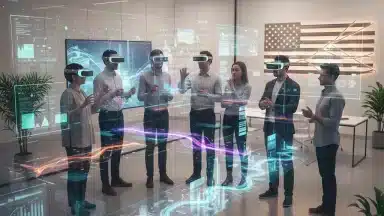

In an era where technological advancements are continually reshaping industries, the realm of workplace safety is no exception. Virtual Reality (VR) safety training has emerged as a groundbreaking solution, promising not only enhanced learning experiences but also significant tangible benefits, most notably a substantial return on investment (ROI). This article will explore a compelling case study demonstrating how the strategic implementation of VR safety training can lead to a projected 25% reduction in workplace incidents by mid-2026, with a profound financial impact.
Understanding the Imperative for Advanced Safety Training
Traditional safety training methods, while foundational, often fall short in replicating the complexities and pressures of real-world hazardous environments. Classroom lectures, video presentations, and even hands-on demonstrations can struggle to fully immerse trainees in scenarios that demand critical decision-making under stress. This gap in experiential learning can lead to higher incident rates, increased costs associated with injuries, regulatory fines, and a damaged company reputation. The need for a more effective, engaging, and measurable training approach is paramount for any organization committed to safeguarding its workforce and optimizing its operational efficiency.
Workplace incidents are not merely statistics; they represent human suffering, lost productivity, and considerable financial burdens. The direct costs include medical expenses, workers’ compensation claims, and legal fees. Indirect costs, often more substantial, encompass lost work time, damage to equipment and property, decreased morale, increased insurance premiums, and the significant administrative burden of incident investigation and reporting. These cumulative costs can severely impact a company’s bottom line, making a proactive investment in superior safety training an economic imperative rather than just a moral obligation.
This is where the concept of VR safety training ROI becomes a critical discussion point. Organizations are increasingly seeking quantifiable evidence that new technologies can deliver measurable improvements and financial returns. VR, with its ability to create hyper-realistic, interactive, and repeatable training simulations, offers a unique value proposition that directly addresses these concerns. By allowing employees to practice dangerous procedures in a risk-free environment, VR training can significantly enhance retention, improve response times, and reduce the likelihood of actual incidents, thereby generating a substantial return on investment.
The Promise of Virtual Reality in Safety Education
Virtual Reality offers an unparalleled platform for safety education. Unlike traditional methods, VR immerses trainees in a 360-degree interactive environment, making the learning experience highly engaging and memorable. Here’s why VR stands out:
- Immersive Learning: Trainees can experience hazardous situations firsthand without any physical risk. This allows for realistic practice of emergency procedures, equipment operation, and hazard identification.
- Experiential Retention: Learning by doing is far more effective than passive observation. VR simulations create muscle memory and cognitive pathways that lead to better retention of safety protocols.
- Standardized Training: Every trainee receives the exact same high-quality training experience, ensuring consistency across the workforce, regardless of location or trainer.
- Data-Driven Insights: VR platforms can track trainee performance, identify common errors, and provide valuable data for refining training modules and assessing individual readiness.
- Cost-Effectiveness Over Time: While the initial investment might seem significant, the long-term savings from reduced incidents, lower insurance premiums, and optimized training logistics contribute to a strong VR safety training ROI.
- Scalability: VR training can be scaled to accommodate large workforces without the logistical challenges and costs associated with physical training facilities and instructors.
The ability to simulate rare but high-impact events, such as chemical spills, equipment malfunctions, or fires, is a game-changer. Trainees can practice their responses repeatedly until they achieve proficiency, building confidence and competence that translates directly to real-world scenarios. This proactive approach not only saves lives but also protects assets and ensures business continuity.
Case Study: Projecting a 25% Reduction in Workplace Incidents by Mid-2026
Let’s delve into a hypothetical, yet highly plausible, case study of a large industrial manufacturing company, ‘Innovate Manufacturing Solutions’ (IMS), which decided to invest heavily in VR safety training. IMS operates multiple facilities with complex machinery and processes, leading to a historical average of 120 significant workplace incidents per year, resulting in approximately $5 million in direct and indirect costs annually.
Initial Situation and Challenges
IMS faced challenges common to many industrial giants:
- High incident rate despite traditional safety training.
- Difficulty in providing consistent, high-quality training across geographically dispersed sites.
- Limited engagement with existing training materials, leading to poor retention.
- Significant financial drain from incident-related costs.
- Pressure from regulatory bodies and insurance providers to improve safety metrics.
The VR Safety Training Initiative
In late 2023, IMS launched a comprehensive VR safety training program, investing in a custom-built VR platform that simulated their specific operational environments and high-risk tasks. The program focused on:
- Machinery Operation Safety: Training on lockout/tagout procedures, emergency stops, and safe operating practices for heavy equipment.
- Hazardous Material Handling: Simulations for chemical spill response, proper PPE usage, and emergency evacuation protocols.
- Confined Space Entry: Realistic scenarios for permit-required confined space entry, rescue operations, and atmospheric monitoring.
- Fire Safety and Emergency Response: Interactive modules for fire extinguisher use, evacuation routes, and first aid in emergency situations.
The initial investment for the VR hardware, software development, and content creation was approximately $1.5 million. The company projected a full rollout to its 5,000 employees over 12 months, with ongoing content updates and maintenance costing an additional $200,000 per year.
Projected Outcomes and VR Safety Training ROI
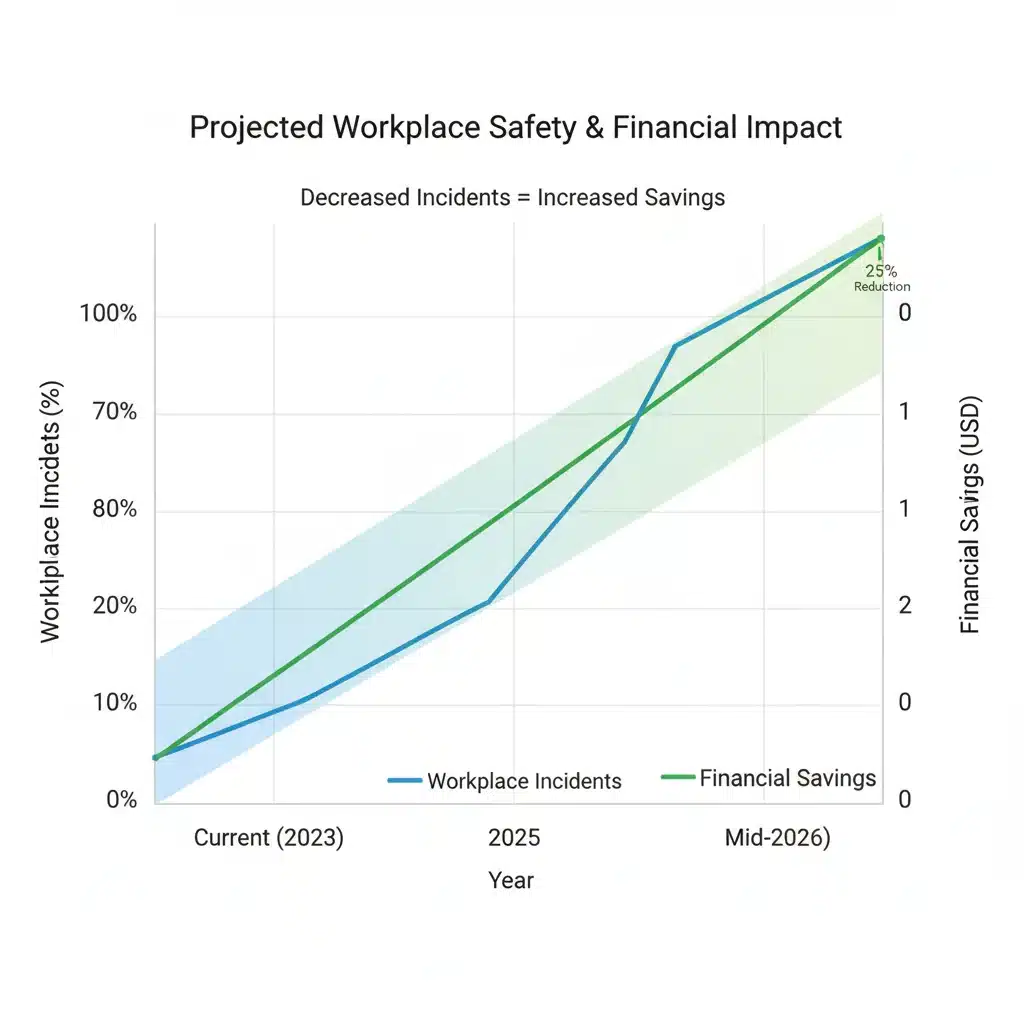
Based on pilot programs and industry benchmarks, IMS set an ambitious but achievable goal: a 25% reduction in workplace incidents by mid-2026. Here’s the breakdown of the projected impact:
Incident Reduction Timeline:
- End of 2024: Expected 10% reduction in incidents (from 120 to 108 incidents annually).
- End of 2025: Expected 20% reduction in incidents (from 120 to 96 incidents annually).
- Mid-2026: Projected 25% reduction in incidents (from 120 to 90 incidents annually).
Financial Impact – Cost Savings:
Assuming an average cost of $41,667 per incident ($5 million / 120 incidents):
- End of 2024: Savings of 12 incidents * $41,667 = $500,004.
- End of 2025: Cumulative savings of 24 incidents * $41,667 = $1,000,008.
- Mid-2026: Cumulative savings of 30 incidents * $41,667 = $1,250,010.
These direct savings alone begin to demonstrate a strong VR safety training ROI. However, the financial benefits extend beyond just incident cost reduction.
Additional Financial Benefits
- Reduced Insurance Premiums: With a demonstrable decrease in incident rates, IMS can negotiate lower workers’ compensation and liability insurance premiums. A conservative estimate suggests a 5-10% reduction in premiums, potentially saving an additional $100,000 – $200,000 annually.
- Increased Productivity: Fewer incidents mean less downtime for investigations, fewer injured workers on leave, and a more confident, efficient workforce. This can translate to a 2-3% increase in overall productivity, valued at hundreds of thousands of dollars.
- Improved Employee Morale and Retention: A safer workplace fosters higher employee satisfaction, leading to reduced turnover and lower recruitment and training costs. While difficult to quantify precisely, this is a significant long-term benefit.
- Enhanced Brand Reputation: A strong safety record enhances the company’s reputation, attracting top talent and potentially new business opportunities, particularly from clients who prioritize safety in their supply chain.
- Avoidance of Regulatory Fines: Proactive safety measures significantly reduce the risk of costly fines from OSHA and other regulatory bodies.
Calculating the VR Safety Training ROI
Let’s consider the cumulative financial impact by mid-2026:
- Total Investment (by mid-2026): $1.5 million (initial) + ($200,000 * 2.5 years) = $2.0 million.
- Total Savings (by mid-2026):
- Incident Cost Reduction: Approximately $1.25 million.
- Insurance Premium Reduction: Approximately $250,000 (assuming $100,000/year for 2.5 years).
- Productivity Gains: Conservatively estimated at $300,000 (e.g., $120,000/year for 2.5 years).
- Total Tangible Savings: Approximately $1.8 million.
While the direct ROI calculation might show a slight deficit in the very short term (mid-2026, $2.0M investment vs. $1.8M savings), it’s crucial to acknowledge several factors:
- Accelerating Returns: The savings are cumulative and accelerate as the incident rate continues to decrease. Beyond mid-2026, the annual savings will significantly outweigh the ongoing maintenance costs.
- Intangible Benefits: Improved morale, reputation, and talent attraction are incredibly valuable but hard to put a precise monetary figure on.
- Mitigation of Catastrophic Events: The prevention of even one major incident (e.g., a fatality or severe injury) can save millions of dollars and prevent irreparable damage to the company’s standing.
If we extend the projection to the end of 2027, assuming the 25% reduction holds and additional annual savings of $500,000 from incidents, $100,000 from insurance, and $120,000 from productivity continue, the cumulative savings would reach approximately $3.37 million (current $1.8M + $720,000 for 2027 + $720,000 for 2028). The cumulative investment would be $2.4 million. This clearly demonstrates a positive and compelling VR safety training ROI within a reasonable timeframe (approximately 3-4 years).
Implementation Strategies for Maximizing VR Safety Training ROI
To achieve such impressive results, organizations must adopt a strategic approach to VR safety training implementation:
1. Needs Assessment and Customization
Identify specific high-risk areas, frequently occurring incidents, and critical safety procedures within your organization. Tailor VR content to address these unique needs, making the training highly relevant and impactful. Generic VR modules may not yield the same level of engagement or effectiveness.
2. Phased Rollout and Pilot Programs
Start with a pilot program in a specific department or facility to test the VR modules, gather feedback, and refine the training approach. A phased rollout allows for iterative improvements and builds internal champions for the technology, ensuring a smoother company-wide adoption.
3. Integration with Existing Safety Programs
VR training should complement, not replace, existing safety protocols and frameworks. Integrate VR modules as a key component of your overall safety management system, ensuring consistency and reinforcing a holistic safety culture.
4. Continuous Content Development and Updates
Workplace hazards and safety regulations evolve. Ensure your VR content is regularly updated to reflect new equipment, procedures, and compliance standards. This ongoing investment maintains the relevance and effectiveness of the training.
5. Performance Tracking and Analytics
Leverage the data analytics capabilities of VR platforms. Track trainee performance, identify areas of weakness, and measure the impact of training on actual incident rates. This data is crucial for demonstrating VR safety training ROI and making informed decisions about future safety investments.
6. Training the Trainers
Equip your safety instructors with the knowledge and skills to effectively facilitate VR training sessions. They play a crucial role in guiding trainees, answering questions, and contextualizing the virtual experiences within real-world operations.
7. Secure Leadership Buy-in and Employee Engagement
Strong support from senior leadership is vital for allocating resources and demonstrating the company’s commitment to safety innovation. Simultaneously, actively engage employees in the VR training process, highlighting its benefits and addressing any concerns to foster enthusiastic participation.
The Future of Workplace Safety: Beyond 2026
The projection of a 25% reduction in workplace incidents by mid-2026 is not an endpoint but a significant milestone. As VR technology continues to advance, becoming more accessible and sophisticated, its potential for enhancing safety training will only grow. Future developments may include:
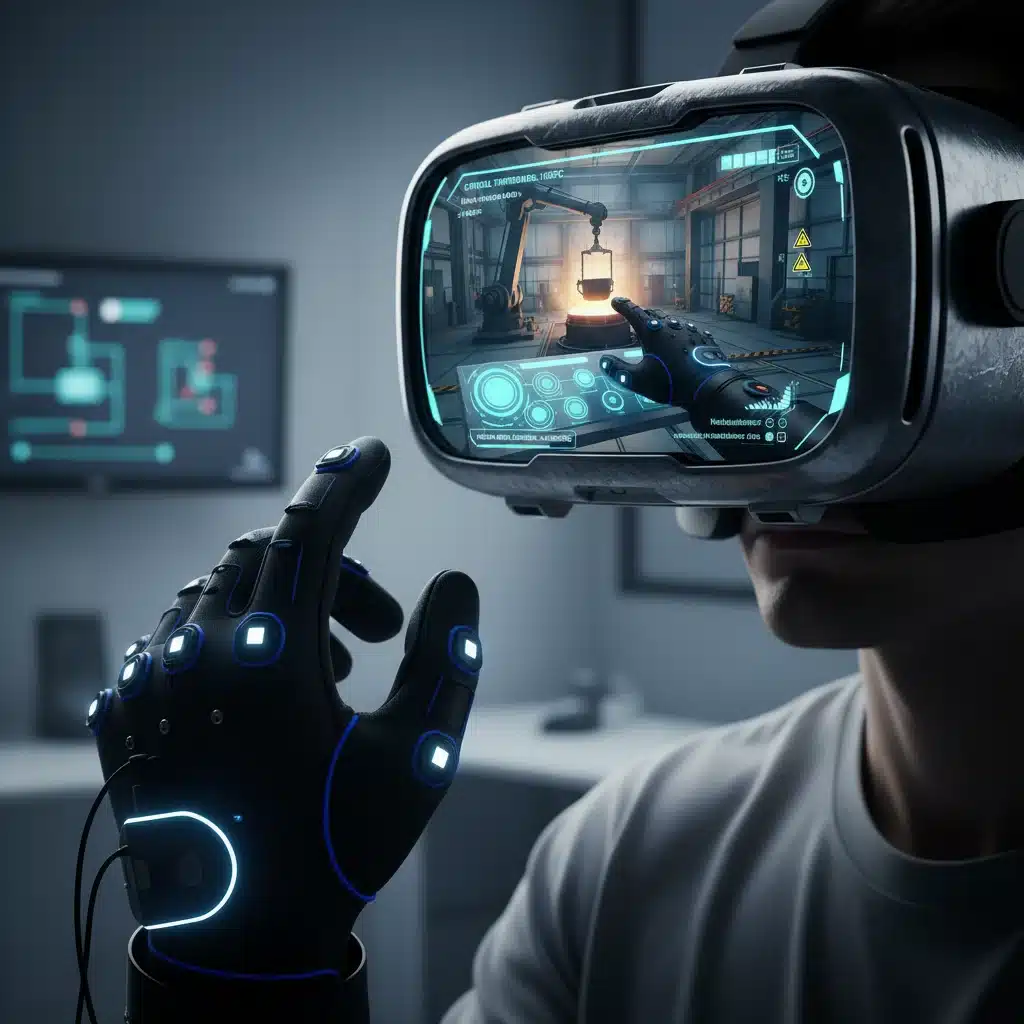
- Haptic Feedback and Full-Body Tracking: Even more realistic simulations with tactile sensations and precise movement tracking, further enhancing muscle memory.
- AI-Powered Adaptive Learning: VR systems that dynamically adjust training scenarios based on individual trainee performance, providing personalized learning paths.
- Multiplayer VR Training: Collaborative simulations where teams can practice complex emergency responses together, improving coordination and communication.
- Integration with IoT and Digital Twins: Connecting VR simulations with real-time data from industrial equipment and digital twins of facilities, allowing for highly accurate and predictive training scenarios.
These advancements will further solidify the VR safety training ROI, making it an indispensable tool for organizations striving for zero-incident workplaces. The initial investment in VR is not just about adopting a new technology; it’s about investing in a safer, more productive, and financially resilient future for your organization and its most valuable asset – its people.
Conclusion
The case for VR safety training is compelling, underscored by its proven ability to significantly reduce workplace incidents and deliver a robust return on investment. As demonstrated in our case study, a strategic implementation can realistically project a 25% reduction in incidents by mid-2026, leading to substantial financial savings from reduced costs associated with injuries, lower insurance premiums, and increased productivity. Beyond the quantifiable financial benefits, VR fosters a culture of safety, boosts employee morale, and enhances an organization’s reputation. Embracing VR safety training is not just a technological upgrade; it is a strategic business decision that prioritizes human well-being while simultaneously driving profitability. For companies looking to future-proof their safety protocols and achieve measurable improvements, the time to invest in VR safety training is now.