Optimizing Supply Chain Logistics with VR Simulation: Case Studies from U.S. Manufacturing in 2026
The landscape of global manufacturing is in a perpetual state of flux, driven by technological advancements and an ever-increasing demand for efficiency and resilience. In 2026, one technology stands out as a pivotal game-changer for U.S. manufacturing supply chains: Virtual Reality (VR) simulation. This isn’t just about immersive gaming; it’s about creating digital twins of complex logistical networks, allowing companies to predict, optimize, and mitigate risks in ways previously unimaginable. The era of reactive supply chain management is rapidly fading, replaced by a proactive, data-driven approach powered by advanced simulation capabilities.
The COVID-19 pandemic starkly illuminated the vulnerabilities within traditional supply chains, prompting an urgent re-evaluation of strategies across industries. For U.S. manufacturers, this meant a renewed focus on domestic resilience, agility, and the adoption of cutting-edge technologies to maintain a competitive edge. VR simulation has emerged as a frontrunner in this technological revolution, offering an unparalleled environment for experimentation, training, and strategic planning without the significant costs and risks associated with real-world trials.
This article delves into the transformative impact of VR supply chain optimization within U.S. manufacturing, presenting compelling case studies from 2026. We will explore how leading companies are leveraging VR to redesign warehouse layouts, optimize transportation routes, train personnel, and preemptively identify bottlenecks, ultimately driving unparalleled operational efficiency and cost savings.
The Imperative for VR in Supply Chain Logistics
Before diving into specific examples, it’s crucial to understand why VR simulation has become an indispensable tool for modern supply chain management. Traditional methods of planning and optimization, often relying on spreadsheets, 2D diagrams, and physical prototypes, are inherently limited. They struggle to capture the dynamic, multi-faceted complexities of real-world logistics, leading to costly errors, suboptimal designs, and a reactive posture when disruptions occur.
VR simulation, on the other hand, offers a fully immersive, 3D environment where every aspect of a supply chain – from factory floor layouts to global distribution networks – can be meticulously replicated. This digital twin approach allows for:
- Risk-Free Experimentation: Test new layouts, processes, or technologies without disrupting live operations or incurring significant capital expenditure.
- Enhanced Visualization: Experience the supply chain from multiple perspectives, identifying inefficiencies that might be invisible in 2D plans.
- Predictive Analytics: Run countless scenarios to predict outcomes of various decisions, from demand fluctuations to geopolitical events.
- Improved Training: Train employees in realistic virtual environments, reducing the learning curve and improving safety.
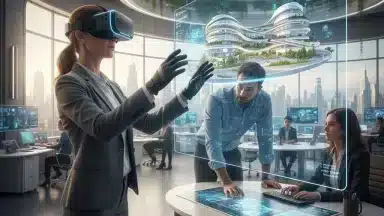
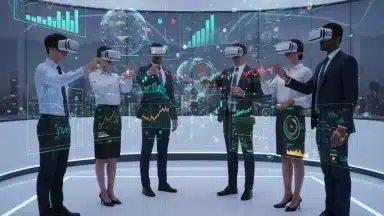
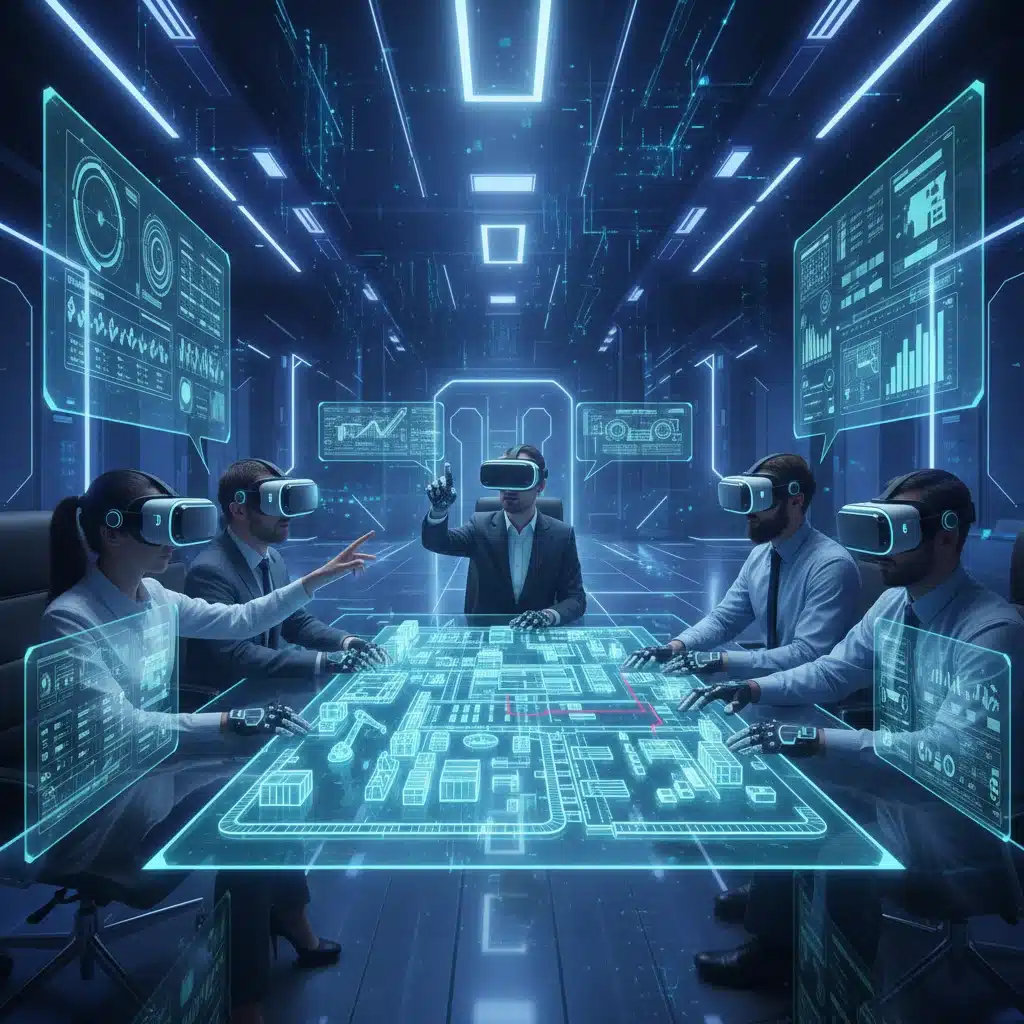
- Collaborative Planning: Enable geographically dispersed teams to collaborate in a shared virtual space, fostering better communication and faster decision-making.
The integration of VR with other Industry 4.0 technologies, such as Artificial Intelligence (AI), Machine Learning (ML), and the Internet of Things (IoT), further amplifies its power. IoT sensors feed real-time data into VR simulations, while AI and ML algorithms analyze this data to suggest optimal configurations and predict future trends, creating a truly intelligent and adaptive supply chain.
Case Study 1: Automotive Manufacturing & Warehouse Redesign
One of the most prominent sectors benefiting from VR supply chain optimization is automotive manufacturing. In 2026, ‘AutoCorp Innovations,’ a leading U.S. automotive manufacturer, faced significant challenges with its primary parts distribution center (PDC). The existing layout, designed decades ago, was struggling to keep pace with increased SKU variety, higher throughput demands, and the introduction of autonomous material handling equipment. Bottlenecks were frequent, leading to delays in production lines and increased operational costs.
The Challenge
AutoCorp needed to redesign its 500,000 sq ft PDC without halting operations. The goal was to optimize storage density, improve picking efficiency, integrate a new fleet of AGVs (Automated Guided Vehicles), and reduce the average order fulfillment time by 20%.
The VR Solution
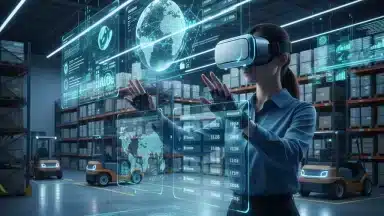
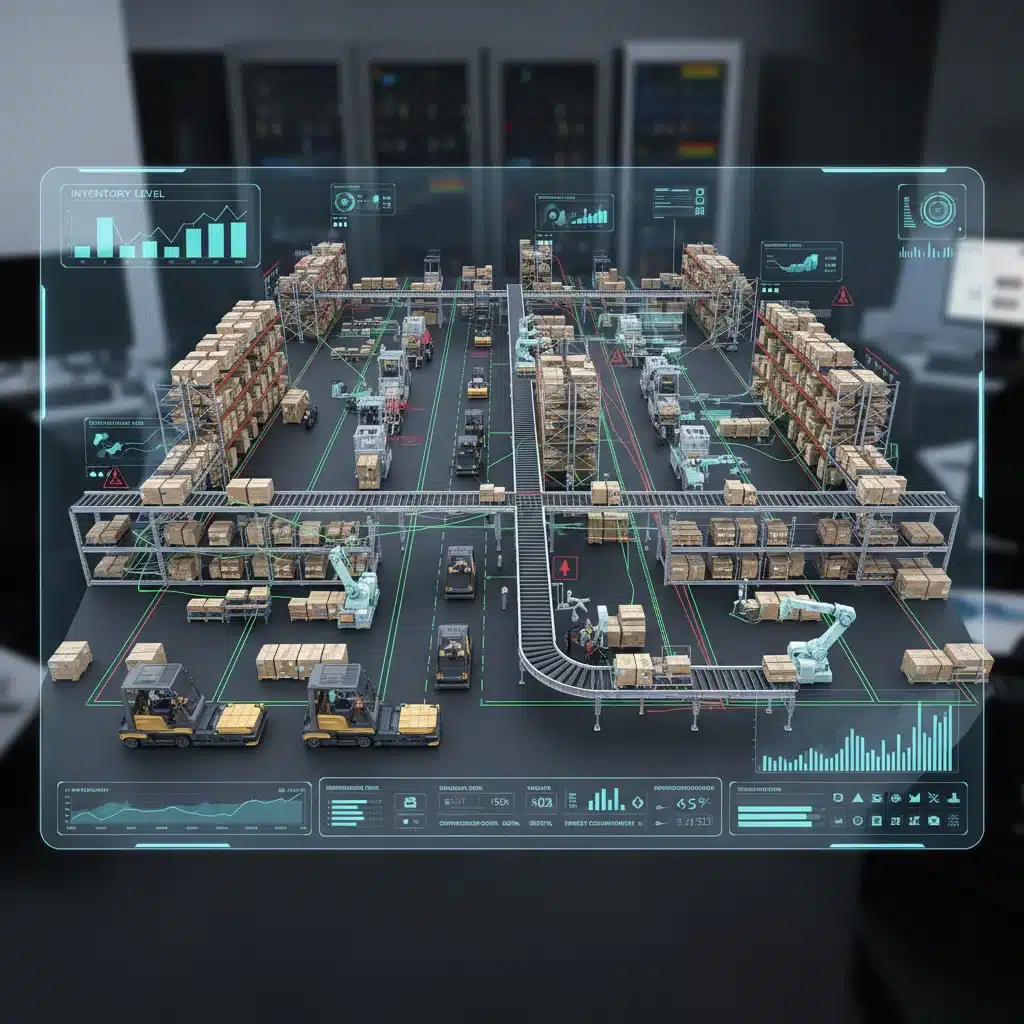
AutoCorp partnered with a specialized VR simulation firm to create a high-fidelity digital twin of their entire PDC. This virtual environment included detailed models of every rack, conveyor belt, workstation, and piece of equipment. Using real-time data from their WMS (Warehouse Management System) and IoT sensors, the simulation accurately replicated current operational flows and identified key bottlenecks.
The logistics and engineering teams, wearing VR headsets, could virtually walk through the existing warehouse, observing material flow, identifying congested areas, and even simulating equipment failures. They then began experimenting with new layouts. In the VR environment, they:
- Tested various racking configurations to increase storage capacity.
- Simulated different AGV routes and traffic management systems to prevent collisions and optimize travel times.
- Designed new picking zones and put-away strategies, instantly seeing the impact on worker efficiency and throughput.
- Ran stress tests by simulating peak demand periods and unexpected equipment breakdowns to assess the resilience of proposed designs.
The Results
Through iterative VR simulations, AutoCorp was able to finalize a new PDC layout that achieved a 25% increase in storage density and a 30% reduction in average order fulfillment time, exceeding their initial goals. The VR simulation also identified potential safety hazards with the new AGV routes that were resolved before any physical implementation, saving significant time and resources. The entire redesign process, from conceptualization to final blueprint, was completed in half the time compared to traditional methods, with an estimated cost saving of $5 million by avoiding physical prototyping and minimizing operational disruptions.
Case Study 2: Aerospace & Complex Assembly Line Optimization
The aerospace industry, characterized by its intricate supply chains, high-value components, and stringent quality requirements, is another prime candidate for VR supply chain optimization. ‘AeroDynamics Corp,’ a major U.S. aerospace manufacturer, faced challenges in its final assembly line for commercial aircraft. The sequential nature of assembly, coupled with the variability in component delivery from global suppliers, often led to delays and costly rework.
The Challenge
AeroDynamics sought to improve the synchronization between its global component suppliers and its assembly line, reduce work-in-progress (WIP) inventory, and minimize the impact of supply chain disruptions on assembly schedules. The goal was to achieve a 15% reduction in assembly time and a 10% decrease in WIP inventory.
The VR Solution
A comprehensive VR digital twin of AeroDynamics’ entire assembly process was created, extending from critical supplier interfaces to the final quality control checks. This simulation incorporated real-time data from supplier ERP systems, shipping logistics, and internal production schedules. The VR environment allowed engineers and logistics planners to:
- Visualize the flow of thousands of individual components from various global locations to the assembly line.
- Simulate the impact of supplier delays or quality issues on the overall assembly timeline.
- Experiment with different buffer stock strategies for critical components.
- Optimize the sequencing of assembly tasks to minimize idle time and maximize resource utilization.
- Train assembly line workers on new procedures and equipment in a risk-free, virtual environment before physical implementation.
The Results
By leveraging VR simulation, AeroDynamics was able to identify critical path components and optimize their delivery schedules with key suppliers. They implemented a dynamic buffer stock system, guided by VR insights, which reduced WIP inventory by 12% while maintaining production continuity. Crucially, the VR simulations allowed them to pre-emptively identify and mitigate potential delays from a new wing supplier, saving an estimated three weeks in the final assembly schedule. Overall, assembly time was reduced by 17%, exceeding their initial goal, and the company reported a significant improvement in supply chain resilience.
Case Study 3: Food & Beverage and Cold Chain Logistics
The food and beverage industry presents unique supply chain challenges, particularly concerning cold chain logistics, shelf-life management, and regulatory compliance. ‘FreshBites Inc.,’ a leading U.S. producer of perishable goods, struggled with optimizing its distribution network for fresh produce across multiple states, dealing with varying transit times, temperature controls, and demand fluctuations.
The ChallengeFreshBites aimed to reduce spoilage rates by 5%, optimize delivery routes to minimize fuel consumption and transit times, and enhance compliance with stringent food safety regulations. They needed a solution that could model dynamic conditions and provide actionable insights for their complex cold chain.
The VR SolutionFreshBites deployed a VR-enabled digital twin of its entire cold chain, encompassing processing plants, refrigerated warehouses, distribution centers, and transportation routes. This sophisticated simulation integrated real-time data from IoT temperature sensors in trucks and warehouses, GPS tracking, and predictive demand forecasting models.
Using VR, FreshBites’ logistics team could:
- Visualize temperature fluctuations along specific delivery routes and identify weak points in their cold chain infrastructure.
- Experiment with different truck loading configurations to optimize space utilization and maintain consistent temperatures.
- Simulate the impact of traffic congestion, weather events, and vehicle breakdowns on delivery schedules and product quality.
- Optimize routing algorithms by virtually testing thousands of route permutations, factoring in variables like road conditions, delivery windows, and fuel efficiency.
- Train warehouse staff on best practices for handling perishable goods and managing inventory in a temperature-controlled environment.
The Results
The VR simulation allowed FreshBites to pinpoint inefficiencies in their existing cold chain that were contributing to spoilage. By optimizing truck loading patterns and implementing dynamic routing based on real-time traffic and weather data, they achieved a 7% reduction in spoilage rates, exceeding their target. Fuel consumption across their fleet was reduced by 10%, leading to significant cost savings and a reduced carbon footprint. Furthermore, the ability to visualize and test compliance protocols in VR helped them maintain a perfect record in their food safety audits, demonstrating the power of VR supply chain optimization in even the most sensitive logistics environments.
Challenges and Considerations in VR Supply Chain Implementation
While the benefits of VR simulation are clear, its successful implementation is not without challenges. U.S. manufacturers considering this technology must address several key factors:
- Data Integration: VR simulations are only as good as the data feeding them. Integrating disparate data sources (ERP, WMS, TMS, IoT, etc.) into a cohesive digital twin requires robust data infrastructure and integration capabilities.
- Cost of Development: Creating high-fidelity VR simulations, especially for complex supply chains, can be a significant initial investment in terms of software, hardware, and expert personnel.
- Technical Expertise: Companies need access to skilled VR developers, data scientists, and simulation engineers to build, maintain, and interpret the simulations effectively.
- Scalability: Ensuring the VR solution can scale with the company’s growth and evolving supply chain needs is crucial.
- User Adoption: Training employees to effectively use VR tools and integrate them into daily workflows requires a change management strategy.
- Cybersecurity: Protecting sensitive supply chain data within the VR environment is paramount.
Despite these challenges, the return on investment (ROI) for VR simulation in supply chain optimization is proving to be substantial for early adopters, justifying the initial outlay.
The Future of VR in U.S. Manufacturing Supply Chains
Looking beyond 2026, the integration of VR simulation with other advanced technologies will only deepen. We can anticipate:
- Hyper-Realistic Digital Twins: VR environments will become even more indistinguishable from reality, incorporating advanced physics engines and AI-driven autonomous agents to mimic human behavior and equipment dynamics with greater precision.
- Augmented Reality (AR) Integration: Blending VR simulations with AR overlays in physical environments will create powerful hybrid solutions for real-time decision support and on-the-job training. Imagine a warehouse manager seeing virtual projections of optimal picking routes overlaid onto their real-world view.
- Decentralized VR Simulations: Blockchain technology could enable secure, decentralized VR simulations, allowing multiple supply chain partners to collaborate on shared digital twins with enhanced transparency and trust.
- AI-Driven Optimization: AI will play an even larger role in automatically generating and evaluating millions of simulation scenarios, identifying optimal solutions and predicting unforeseen risks with minimal human intervention.
- Haptic Feedback: The incorporation of haptic feedback will allow users to ‘feel’ virtual objects and interactions, enhancing the immersive training experience for tasks requiring fine motor skills.
Conclusion
The case studies from U.S. manufacturing in 2026 unequivocally demonstrate the transformative power of VR supply chain optimization. From automotive giants redesigning vast distribution centers to aerospace manufacturers synchronizing complex assembly lines and food producers perfecting cold chain logistics, VR simulation is proving to be an indispensable tool for achieving unprecedented levels of efficiency, resilience, and cost savings.
As technology continues to evolve and the global supply chain becomes even more interconnected and complex, the ability to virtually model, test, and optimize every facet of logistical operations will no longer be a competitive advantage but a fundamental requirement for survival and growth. U.S. manufacturers that embrace VR simulation today are not just adopting a new tool; they are investing in a future where their supply chains are smarter, more agile, and infinitely more capable of navigating the unpredictable challenges of tomorrow’s global economy.
The journey towards fully optimized, VR-powered supply chains is ongoing, but the significant strides made by U.S. manufacturers by 2026 paint a clear picture: virtual reality is no longer just a vision of the future; it is the present reality of advanced supply chain logistics.