Augmented Reality Training: How US Manufacturing Boosted Efficiency by 15% in 2026
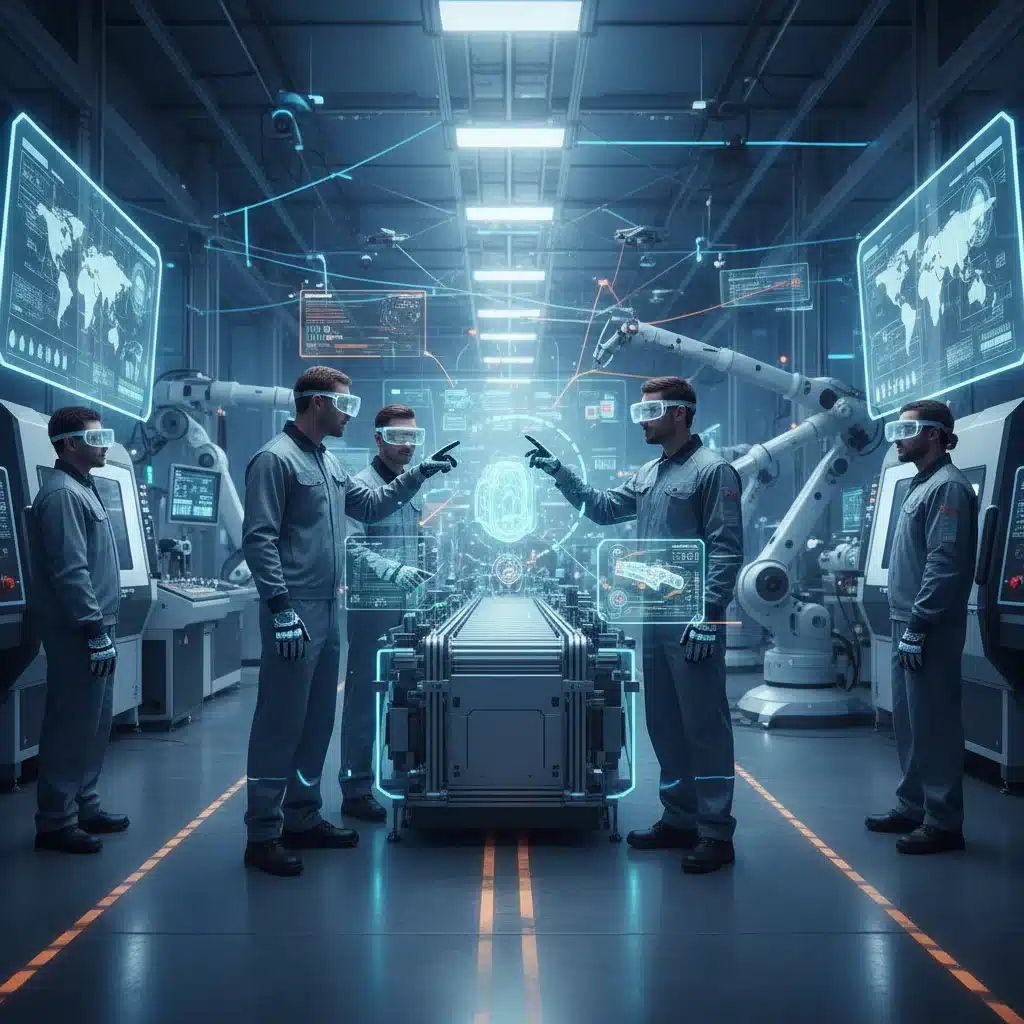
The landscape of US manufacturing is undergoing a profound transformation, driven by the relentless pursuit of efficiency, precision, and innovation. In this era of Industry 4.0, one technology stands out as a pivotal enabler: Augmented Reality (AR) training. Far from being a futuristic gimmick, AR is now a tangible tool revolutionizing how manufacturing employees learn, perform, and interact with complex machinery and processes. Projections indicate that by 2026, the strategic implementation of AR in US manufacturing training will contribute to a remarkable 15% boost in overall efficiency, marking a new chapter in industrial productivity and workforce development.
This article delves deep into the mechanisms through which AR training achieves such significant gains, exploring its multifaceted benefits, real-world applications, challenges, and the exciting future it promises for the American manufacturing sector. We will uncover how AR is not just a training tool, but a catalyst for a more skilled, safer, and ultimately more productive workforce.
The Dawn of a New Training Paradigm: Understanding Augmented Reality in Manufacturing
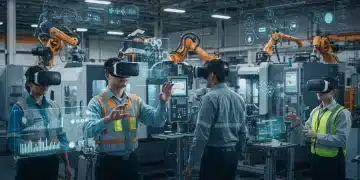
Augmented Reality (AR) superimposes digital information onto a user’s view of the real world. Unlike Virtual Reality (VR), which creates an entirely artificial environment, AR enhances the existing physical environment, making it an ideal solution for manufacturing settings where interaction with real equipment is paramount. In training, AR provides interactive, context-aware instructions directly on the machinery or workstation where the task needs to be performed. This “learning by doing” approach, augmented with digital guidance, is proving to be exceptionally effective.
Historically, manufacturing training has relied on a combination of classroom instruction, manuals, and on-the-job shadowing. While these methods have their merits, they often suffer from limitations such as high costs, time consumption, safety risks during initial hands-on practice, and inconsistencies in knowledge transfer. AR training directly addresses these shortcomings by offering a dynamic, immersive, and highly personalized learning experience.
The core principle behind AR’s success in boosting AR manufacturing efficiency lies in its ability to bridge the gap between theoretical knowledge and practical application. By presenting digital instructions, 3D models, performance metrics, and safety warnings directly within the worker’s field of vision, AR reduces cognitive load, minimizes errors, and accelerates the learning curve. This isn’t just about making training “cooler”; it’s about fundamentally rethinking how industrial skills are acquired and maintained in a rapidly evolving technological landscape.
Key Drivers of 15% Efficiency Gain Through AR Manufacturing Training
The projected 15% increase in efficiency by 2026 is not an arbitrary figure; it’s a conservative estimate based on the compounding effects of several key benefits delivered by AR manufacturing training. Let’s break down these drivers:
1. Accelerated Skill Acquisition and Onboarding
Traditional onboarding for new manufacturing employees can be a lengthy and resource-intensive process. New hires often spend weeks, if not months, shadowing experienced colleagues or poring over complex technical manuals. This can lead to slow productivity ramp-up and inconsistent skill levels across the workforce.
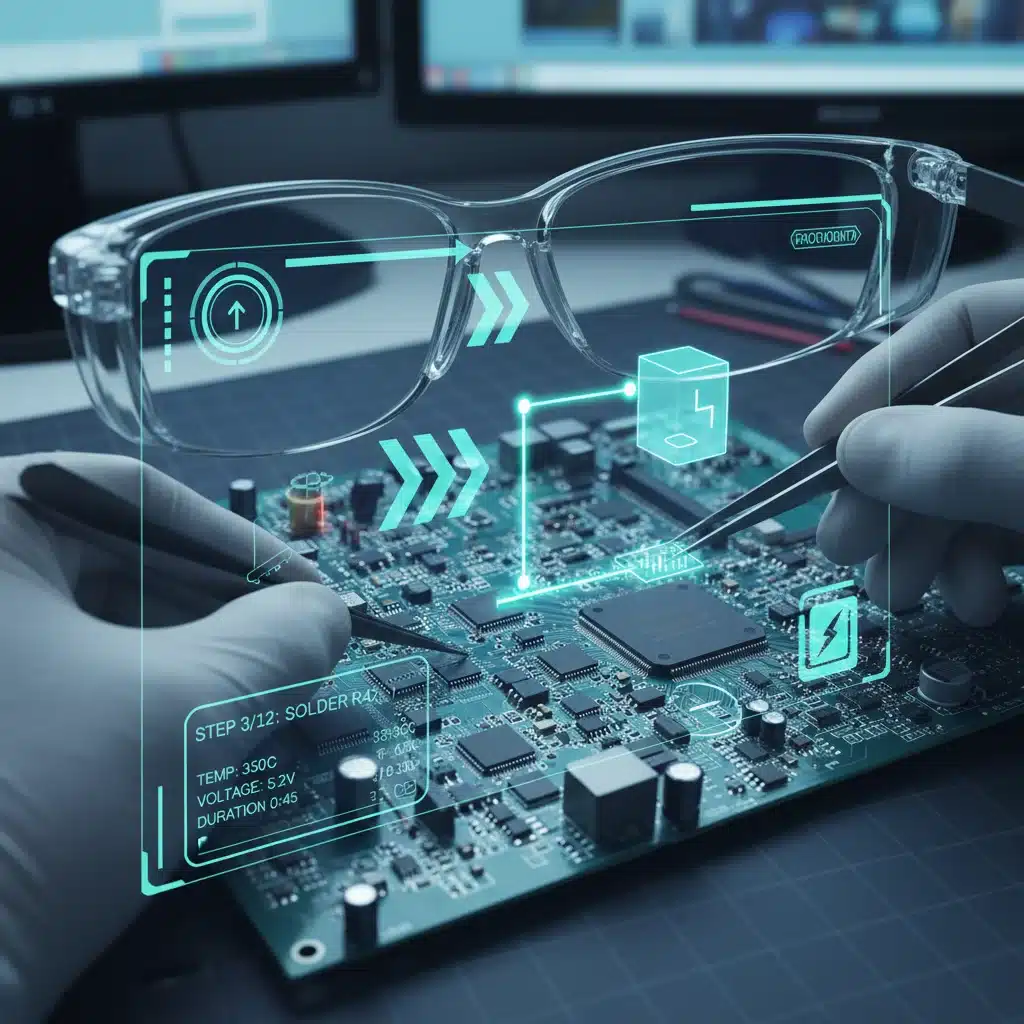
AR training drastically cuts down this time. New employees can receive step-by-step visual instructions overlaid on real equipment, guiding them through assembly, maintenance, or operational procedures. This hands-on, guided approach allows them to become proficient much faster. For instance, instead of reading how to calibrate a machine, they see the exact steps highlighted on the machine itself, complete with animated guides and real-time feedback. This rapid skill acquisition directly translates to quicker integration into the production line and faster contribution to output, thereby boosting AR manufacturing efficiency.
2. Reduced Errors and Rework
Human error is an inevitable part of any complex manufacturing process, leading to costly reworks, scrap material, and production delays. Misinterpretations of instructions, incorrect tool usage, or missed steps can significantly impact efficiency and quality.
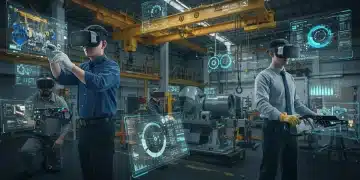
AR systems minimize these errors by providing precise, unambiguous guidance. Imagine a technician performing a complex repair: AR can highlight the exact component to remove, show the correct torque settings for bolts, and even overlay a virtual X-ray view of internal parts. This “augmented guidance” acts as a digital co-pilot, ensuring tasks are performed correctly the first time. The reduction in errors not only saves material and time but also prevents bottlenecks in the production flow, directly contributing to higher AR manufacturing efficiency.
3. Enhanced Safety Protocols and Compliance
Manufacturing environments can be inherently hazardous. Ensuring workers adhere to safety protocols is paramount, but traditional training methods can sometimes fall short in conveying the gravity and specificity of safety procedures in real-time.
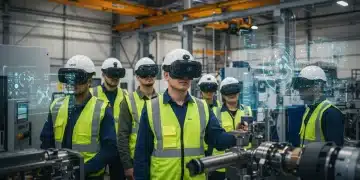
AR training transforms safety education. Workers can be trained on hazardous procedures in a simulated, risk-free environment before interacting with real machinery. When on the job, AR can provide real-time safety warnings, highlight dangerous areas, or guide workers through lockout/tagout procedures. For example, an AR overlay might visually block access to a machine part if a safety guard is not correctly engaged, or display warnings about high-voltage components. This proactive approach to safety not only reduces accidents but also minimizes downtime associated with incidents and investigations, thereby enhancing overall AR manufacturing efficiency.
4. Improved Maintenance and Troubleshooting
Machine downtime is one of the biggest detractors from manufacturing efficiency. Diagnosing and repairing complex machinery often requires highly specialized knowledge, leading to delays when expert technicians are unavailable or when issues are particularly intricate.
AR empowers frontline workers to perform more advanced maintenance and troubleshooting tasks. By overlaying schematics, diagnostic data, and repair instructions directly onto the machine, AR guides workers through complex procedures they might not have been able to handle independently. Furthermore, remote assistance capabilities allow off-site experts to “see” what the on-site technician sees through their AR headset, providing real-time visual guidance and annotations. This significantly reduces mean time to repair (MTTR) and minimizes costly downtime, directly boosting AR manufacturing efficiency.
5. Flexibility and Adaptability to Production Changes
Modern manufacturing is characterized by increasing product customization and shorter product lifecycles. This demands a workforce that can quickly adapt to new production lines, machinery, and processes. Retraining the entire workforce for every change can be a logistical nightmare.
AR training offers unparalleled flexibility. New procedures or machine configurations can be rapidly digitized and deployed as AR training modules. Workers can then learn these new tasks on demand, directly on the shop floor, without needing to attend off-site training sessions or consult updated manuals. This agility ensures that the workforce remains highly adaptable and productive even as production requirements shift, maintaining and improving AR manufacturing efficiency.
Real-World Impact: Case Studies and Evidence
The theoretical benefits of AR training are increasingly being validated by real-world implementations across various US manufacturing sectors:
- Aerospace: Major aerospace companies have reported significant reductions in assembly time and error rates using AR for complex wiring harnesses and component installation. One notable case saw a 30% reduction in time for first-time fix rates on critical repairs.
- Automotive: Automotive giants are leveraging AR for quality control inspections, guided assembly, and technician training. This has led to faster production cycles and fewer defects per vehicle, directly impacting AR manufacturing efficiency.
- Heavy Machinery: Manufacturers of heavy industrial equipment use AR to train field service technicians on maintenance and repair of large, intricate machines. This has resulted in faster service times and reduced travel costs for expert technicians.
- Electronics: In electronics manufacturing, where precision is paramount, AR assists workers in micro-assembly and quality checks, ensuring minute components are placed correctly and quickly.
These examples underscore a consistent theme: AR training leads to measurable improvements in productivity, quality, and safety – all contributing factors to enhanced AR manufacturing efficiency. The 15% efficiency gain by 2026 is not just an aspiration but a trajectory already being observed and accelerated by early adopters.
Challenges and Considerations for Widespread Adoption
While the benefits of AR manufacturing training are compelling, widespread adoption is not without its challenges. Addressing these considerations is crucial for realizing the full potential of this technology:
1. Initial Investment and ROI Justification
Implementing AR solutions requires an initial investment in hardware (headsets, smart glasses), software platforms, and content creation. Companies need to carefully evaluate the return on investment (ROI) and build a strong business case. However, as hardware costs decrease and AR content creation tools become more user-friendly, the barrier to entry is continuously lowering. The long-term gains in efficiency, reduced errors, and improved safety often far outweigh the upfront costs, solidifying the case for AR manufacturing efficiency.
2. Content Creation and Integration
Developing effective AR training content – 3D models, animated sequences, interactive guides – can be complex and requires specialized skills. Integration with existing enterprise systems (e.g., PLM, MES, ERP) is also essential for seamless data flow and contextual relevance. Manufacturers are increasingly relying on specialized AR solution providers or developing in-house capabilities to overcome this hurdle.
3. Workforce Acceptance and Training
Introducing new technology always comes with the need for change management. Workers might initially be hesitant or uncomfortable with wearing AR devices. Proper training on how to use the AR tools, clear communication of the benefits, and involving employees in the adoption process are vital for successful integration and to ensure the technology genuinely contributes to AR manufacturing efficiency.
4. Data Security and Privacy
AR systems often process sensitive operational data and user information. Ensuring robust data security and privacy protocols is paramount, especially in highly regulated industries. Manufacturers must work with AR providers who prioritize cybersecurity and adhere to industry standards.
5. Hardware Limitations and Evolution
While AR hardware has advanced significantly, challenges remain regarding field of view, battery life, comfort, and ruggedness for industrial environments. However, rapid advancements in AR headset technology are continuously addressing these limitations, making devices more suitable for prolonged industrial use and further enhancing the potential for AR manufacturing efficiency.
The Future of AR in US Manufacturing: Beyond 2026
The 15% efficiency boost by 2026 is just the beginning. The trajectory of AR integration in US manufacturing points towards even more transformative changes in the years to come:
1. Hyper-Personalized Training Paths
Future AR systems will leverage AI to create highly personalized training paths for individual workers, adapting to their learning pace, skill gaps, and job roles. This will optimize learning outcomes and ensure every employee reaches their full potential, maximizing AR manufacturing efficiency.
2. Seamless Integration with AI and IoT
The convergence of AR with Artificial Intelligence (AI) and the Internet of Things (IoT) will unlock new levels of efficiency. AR devices will receive real-time data from IoT sensors on machines, allowing for predictive maintenance, proactive quality control, and intelligent operational guidance. AI will analyze this data to offer even more precise and timely AR assistance, boosting AR manufacturing efficiency further.
3. Collaborative AR Experiences
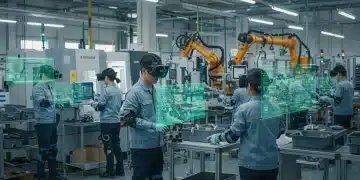
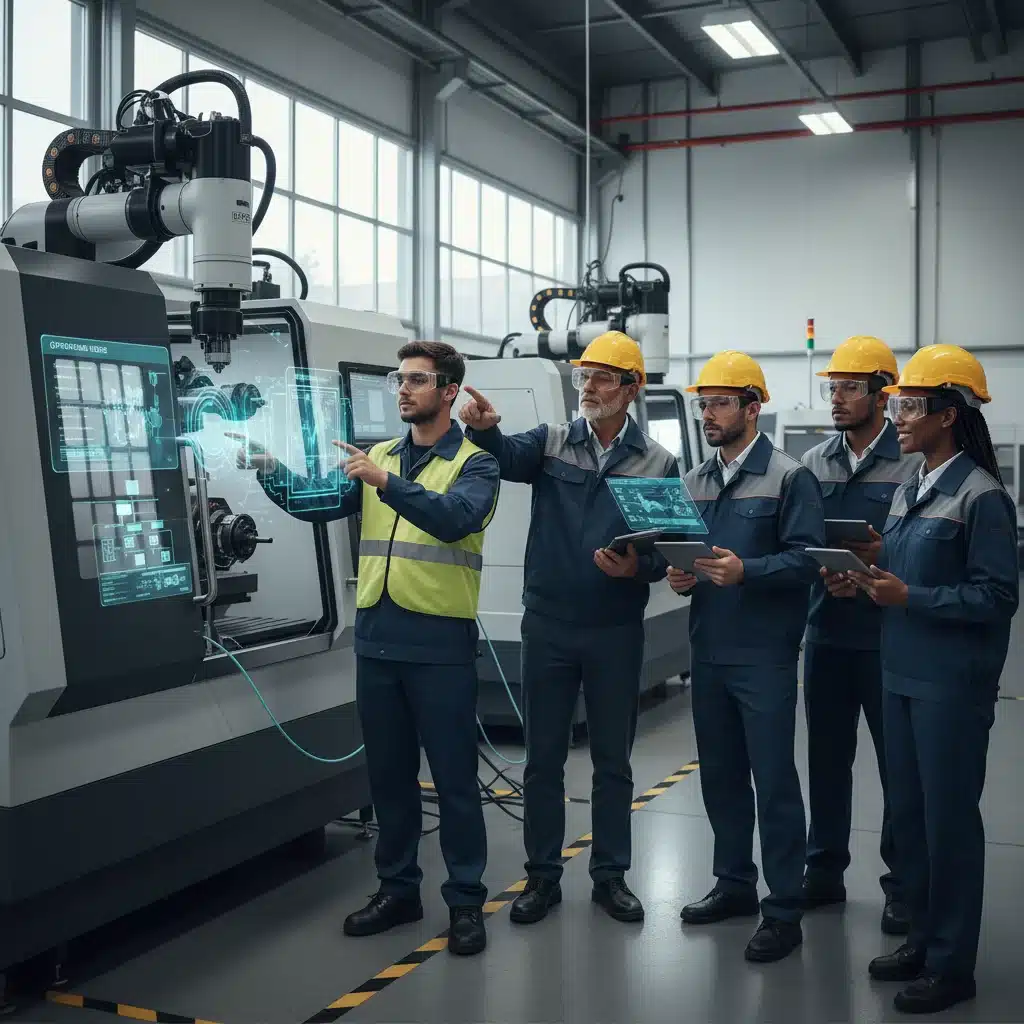
Multi-user AR experiences will become more common, allowing teams to collaborate on complex tasks, repairs, or design reviews in a shared augmented space. This will enhance teamwork, facilitate knowledge transfer among peers, and enable faster problem-solving.
4. Digital Twins and AR for Predictive Operations
The integration of AR with digital twin technology will allow workers to interact with virtual replicas of physical assets. This means they can simulate repairs, test new configurations, and train on future machinery in a digital realm before implementing changes in the real world, leading to unprecedented levels of operational foresight and AR manufacturing efficiency.
5. Remote Work and Distributed Expertise
AR will continue to break down geographical barriers, enabling remote experts to provide hands-on guidance to technicians anywhere in the world. This will democratize access to specialized knowledge, reduce travel costs, and ensure that critical issues can be resolved swiftly, regardless of location.
Conclusion: A Smarter, More Efficient Manufacturing Future
The US manufacturing sector stands at the precipice of a new era of productivity, largely propelled by the intelligent application of Augmented Reality training. The projected 15% boost in AR manufacturing efficiency by 2026 is a testament to AR’s power to transform workforce development, streamline operations, enhance safety, and drive innovation.
By investing in AR solutions, manufacturers are not just adopting a new technology; they are investing in their people, their processes, and their competitive edge. The ability to rapidly upskill employees, minimize errors, accelerate maintenance, and adapt to change quickly are no longer luxuries but necessities in today’s dynamic global economy.
As AR technology continues to mature and integrate with other Industry 4.0 pillars, its impact will only grow. The manufacturing plants of tomorrow will be smarter, safer, and significantly more efficient, largely thanks to the immersive and intuitive learning experiences provided by Augmented Reality. For US manufacturing, the future is not just augmented; it’s optimized, and it’s happening now.