Top 7 AR Training Platforms for US Industries in 2026: An Expert Analysis
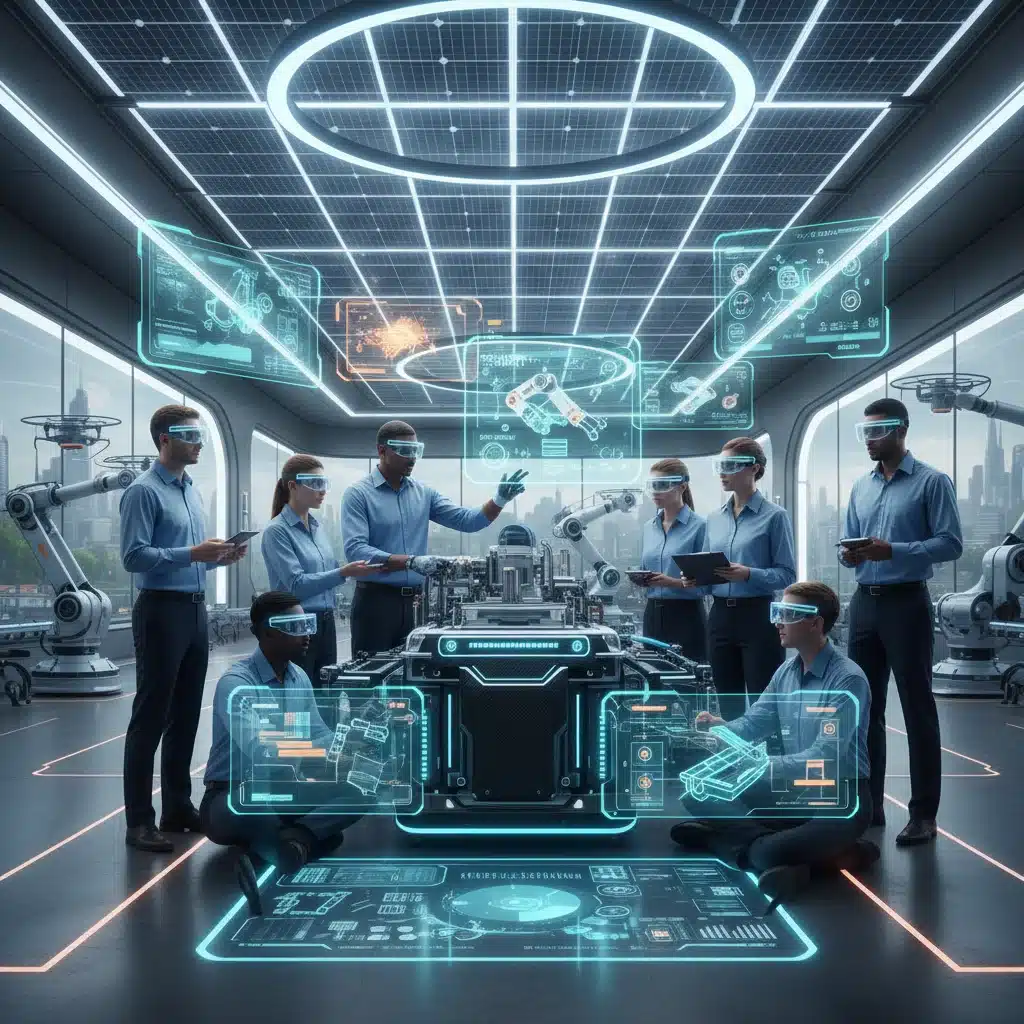
The landscape of industrial training is undergoing a profound transformation, driven by the rapid advancements in augmented reality (AR) technology. As we look towards 2026, AR is no longer a futuristic concept but a vital tool for workforce development, operational efficiency, and safety across various US industries. From manufacturing and healthcare to logistics and energy, companies are increasingly leveraging AR training platforms to provide immersive, hands-on, and highly effective learning experiences. This expert analysis delves into the seven most impactful AR training platforms that are set to redefine how US industries train their personnel in the coming years.
The integration of AR into training methodologies addresses several critical challenges faced by modern industries: the need for highly skilled workers, the complexity of new machinery and processes, and the demand for flexible, scalable, and cost-effective training solutions. Traditional training methods, often reliant on manuals, classroom sessions, or expensive physical simulators, are proving insufficient in an era of rapid technological change. AR, with its ability to overlay digital information onto the real world, offers an unparalleled opportunity to create dynamic learning environments where employees can practice complex tasks, receive real-time feedback, and learn at their own pace, all while minimizing risks and maximizing knowledge retention.
Our selection of the top 7 AR training platforms for 2026 is based on several key criteria, including technological innovation, industry adoption, scalability, user-friendliness, integration capabilities, and overall impact on learning outcomes. These platforms represent the vanguard of AR in enterprise training, offering robust solutions that cater to the diverse needs of US industries. As we explore each platform, we will highlight their unique strengths, target industries, and the specific ways they are shaping the future of workforce education.
The Rise of AR in Industrial Training: A Paradigm Shift
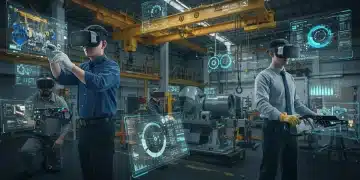
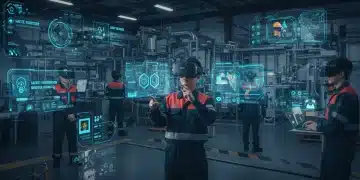
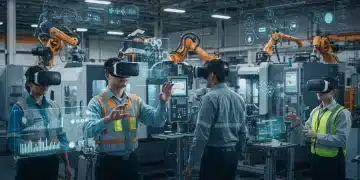
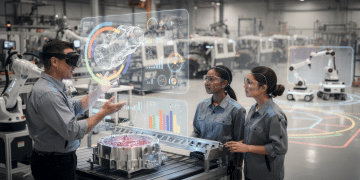
Augmented reality has moved beyond niche applications and into the mainstream of industrial operations. The ability to superimpose digital content—such as 3D models, instructional videos, and performance data—onto a user’s view of the real world creates a powerful learning environment. This immersive approach allows trainees to interact with virtual objects as if they were real, providing context-rich learning that is both engaging and highly effective. For US industries, this means faster onboarding, reduced errors, improved safety, and a more skilled workforce capable of adapting to new technologies and processes.
The benefits of adopting AR training platforms are multifaceted. Firstly, they offer unparalleled realism. Instead of imagining how a piece of machinery works, trainees can see its internal components in 3D, manipulate virtual controls, and perform simulated maintenance tasks without the risk of damaging expensive equipment or causing injury. Secondly, AR training is highly interactive. Learners are not passive recipients of information; they are active participants, guided by step-by-step instructions and immediate feedback. This active engagement significantly boosts knowledge retention and skill acquisition.
Furthermore, AR platforms provide scalability and flexibility. Training modules can be easily updated and deployed across multiple locations, ensuring consistency and reducing the logistical challenges associated with traditional training. Remote workers can access the same high-quality training as their on-site counterparts, fostering a more inclusive and adaptable workforce. The data collected from AR training sessions also offers valuable insights into trainee performance, allowing for personalized learning paths and continuous improvement of training programs. These advantages collectively make AR an indispensable tool for any US industry striving for excellence in workforce development.
1. PTC Vuforia Expert Capture: Streamlining Complex Procedures
PTC’s Vuforia Expert Capture stands out as a leading AR training platform, particularly for industries dealing with complex assembly, maintenance, and operational procedures. Its core strength lies in its ability to quickly and easily document expert knowledge and then disseminate it to frontline workers via AR. Experts can record their actions and voice instructions while performing a task, which is then transformed into step-by-step AR work instructions. This process significantly reduces the time and cost associated with creating training content.
Targeted industries include manufacturing, aerospace, automotive, and heavy equipment. Vuforia Expert Capture empowers new employees to learn intricate tasks faster and more accurately, reducing reliance on direct supervision and minimizing errors. For seasoned workers, it serves as a valuable on-the-job aid, ensuring compliance with standardized procedures and providing instant access to critical information. The platform’s intuitive interface and robust integration capabilities with other enterprise systems make it a powerful solution for improving operational efficiency and knowledge transfer within large organizations. Its impact on reducing training times and improving first-time fix rates is particularly noteworthy, making it a cornerstone for future industrial training in the US.
2. Microsoft Dynamics 365 Guides: Interactive Learning at Scale
Microsoft Dynamics 365 Guides leverages the power of Microsoft’s ecosystem, particularly the HoloLens 2, to deliver highly interactive and guided AR experiences. This platform allows companies to create holographic work instructions that guide employees through procedures with visual cues, arrows, and 3D models overlaid directly onto physical objects. The hands-free nature of HoloLens 2, combined with voice commands, makes it ideal for tasks requiring manual dexterity.
Dynamics 365 Guides is gaining significant traction in manufacturing, healthcare, and field service industries. It enables organizations to standardize training, reduce human error, and accelerate skill development. Trainees can manipulate virtual objects, follow precise steps, and even collaborate with remote experts who can see what the trainee sees and provide real-time guidance. The platform’s integration with other Dynamics 365 applications provides a seamless workflow, allowing businesses to connect training directly to operational data and processes. Its scalability and enterprise-grade security make it a top contender for large US corporations seeking a comprehensive AR training solution.
3. Scope AR WorkLink: Remote Assistance and Training Combined
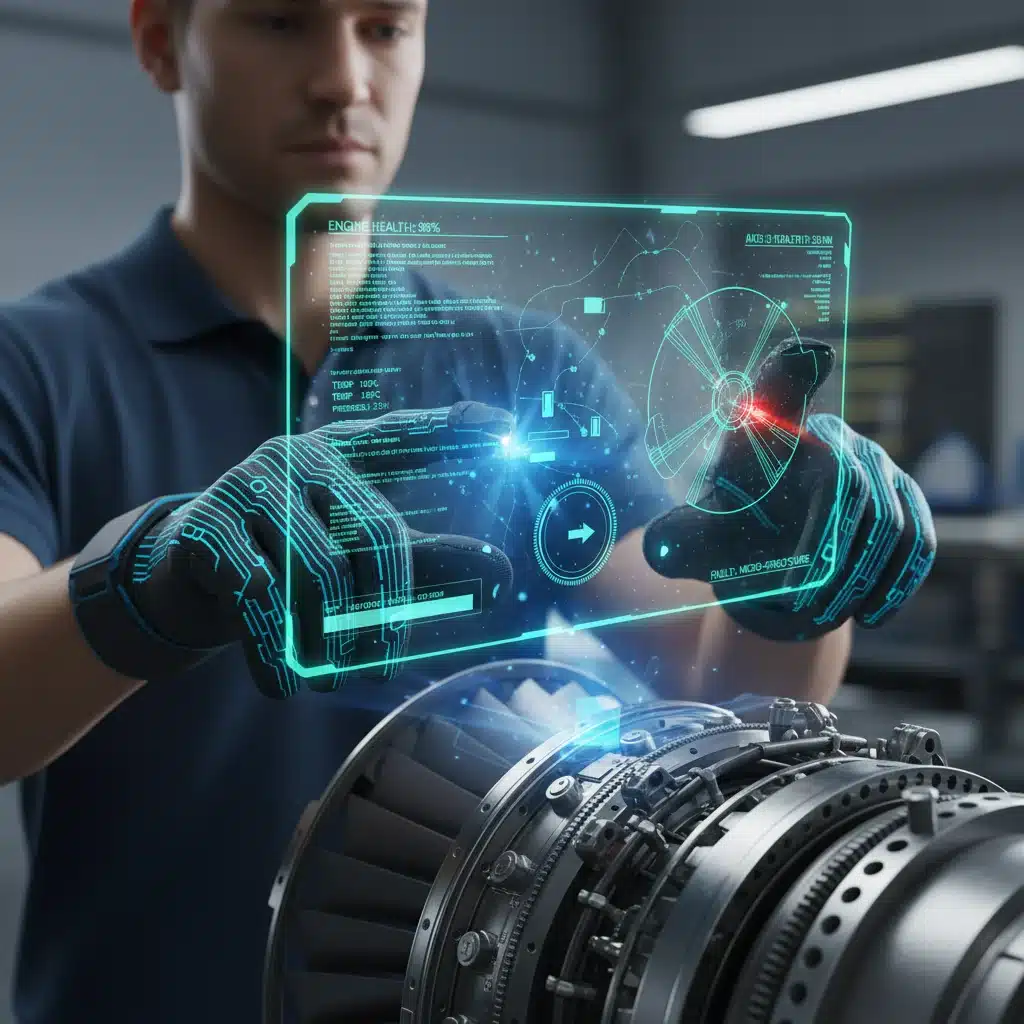
Scope AR’s WorkLink platform offers a dual advantage: it provides both comprehensive AR work instructions for self-guided training and powerful remote assistance capabilities. This combination is particularly valuable for industries where expertise is scarce or geographically dispersed. Workers can access interactive 3D models and digital overlays to perform tasks independently, and if they encounter an issue, they can instantly connect with a remote expert via live video, who can then annotate the real-world view with AR instructions.
Industries such as oil and gas, utilities, and complex machinery maintenance are benefiting immensely from WorkLink. The platform reduces downtime by enabling faster troubleshooting and repairs, minimizes the need for expert travel, and significantly improves first-time fix rates. For training, WorkLink allows for the creation of rich, interactive content that can be easily updated and deployed. Its emphasis on both proactive learning and reactive support makes it a highly versatile and impactful AR training platform for ensuring operational continuity and upskilling the workforce in critical situations.
4. Librestream Onsight: Digital Transformation for Frontline Workers
Librestream Onsight provides an integrated knowledge platform that combines AR, AI, and remote expert assistance to empower frontline workers. While not exclusively an AR training platform, its capabilities for guided work and remote collaboration make it a powerful tool for on-the-job learning and skill development. Onsight enables workers to access digital work instructions, collaborate with experts in real-time using AR annotations, and even leverage AI-powered visual search to identify parts or troubleshoot issues.
Onsight is widely adopted in industries like aviation, defense, energy, and manufacturing. Its impact stems from its ability to connect workers with the information and expertise they need, precisely when and where they need it. For training, this means that new hires can learn by doing, with immediate access to guidance and support. The platform also facilitates the capture of tribal knowledge, transforming expert insights into digital assets that can be used for future training. By bridging the gap between information and action, Librestream Onsight significantly accelerates the learning curve and enhances operational efficiency across complex industrial environments.
5. Atheer Frontline Guidance: Enhancing Worker Productivity and Safety
Atheer Frontline Guidance is an AR platform designed to improve the productivity, safety, and compliance of frontline workers. It provides a suite of tools for creating, deploying, and managing AR-driven work instructions, checklists, and remote assistance sessions. The platform supports a wide range of AR devices, including smart glasses, tablets, and smartphones, making it highly accessible and adaptable to different industrial settings.
Key industries benefiting from Atheer include automotive, heavy industry, logistics, and field services. Atheer’s strength lies in its comprehensive approach to frontline worker enablement, which naturally extends to training. New employees can follow visual, step-by-step guides to perform tasks correctly from the outset, reducing errors and safety incidents. The platform also allows for the easy creation of ‘training modules’ from existing operational procedures, ensuring that training is always relevant and up-to-date. Its focus on reducing human error and improving operational workflows positions it as a critical AR training platform for US industries prioritizing efficiency and worker well-being.
6. Upskill Skylight: Connecting Workers with Digital Information
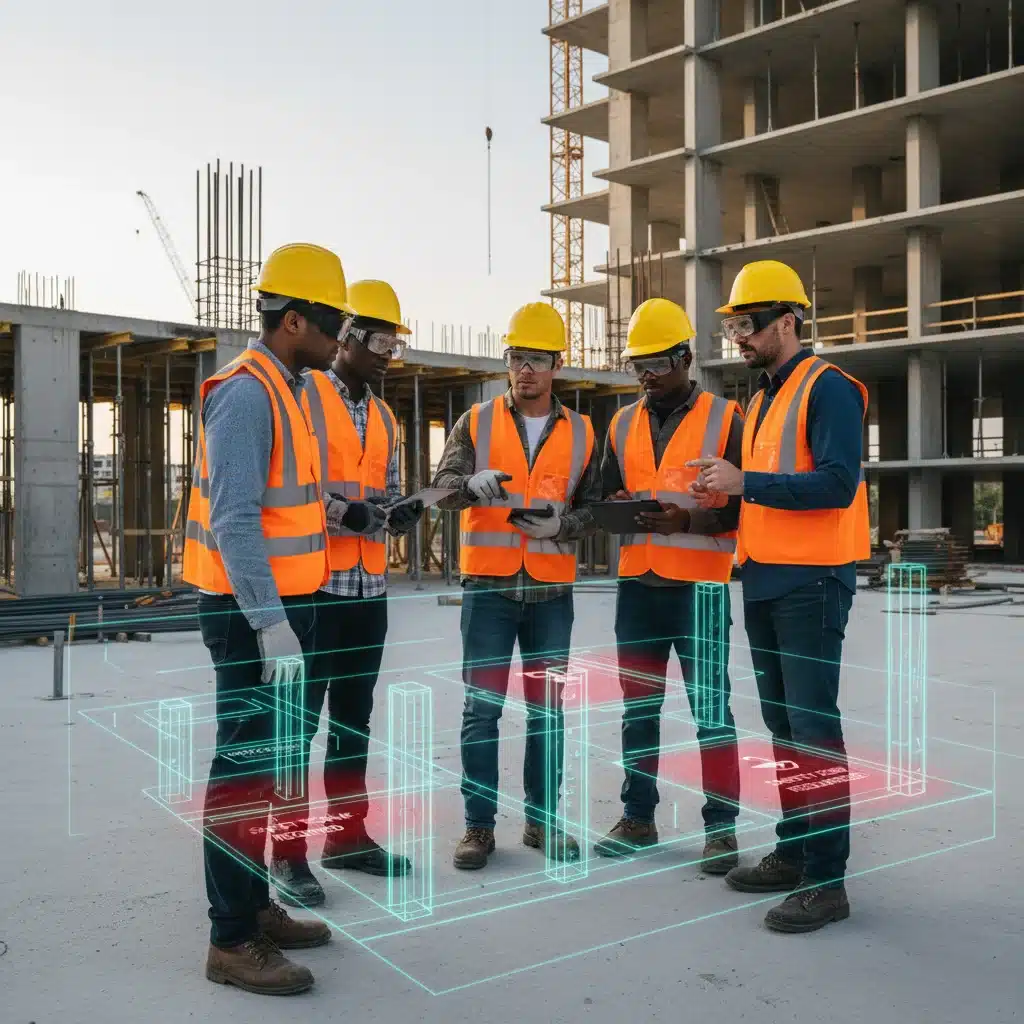
Upskill Skylight is an enterprise AR platform designed to connect industrial workers with the information and expertise they need to do their jobs more effectively. It enables companies to deliver actionable insights and guidance directly to workers’ smart glasses or mobile devices, transforming how tasks are performed and learned. Skylight focuses on integrating with existing enterprise systems to pull relevant data and present it in an intuitive AR overlay.
Industries such as manufacturing, logistics, and warehousing find Skylight particularly beneficial. For training purposes, Skylight allows for the creation of dynamic work instructions that adapt to the specific context of the worker. This means trainees can receive real-time guidance on assembly, inspection, or picking tasks, with digital overlays highlighting relevant components or data. The platform’s ability to streamline workflows and reduce cognitive load on workers makes the learning process more efficient and less prone to errors. Upskill Skylight is proving instrumental in accelerating the onboarding of new employees and ensuring consistent performance across diverse operational roles.
7. RE’FLEKT ONE: Customizable and Scalable AR Solutions
RE’FLEKT ONE is a versatile AR content creation and deployment platform that empowers businesses to develop their own customized AR applications for training, maintenance, and operations. Its no-code/low-code approach allows subject matter experts to create interactive AR experiences without extensive programming knowledge. This democratizes AR content creation, enabling companies to rapidly develop tailored training modules.
RE’FLEKT ONE is ideal for a wide range of industries, including automotive, machinery, and utilities, particularly those with unique equipment or proprietary processes. For training, it means that companies can design highly specific AR simulations and guides that precisely match their operational needs. Trainees can practice tasks in a safe, virtual environment, gaining confidence and proficiency before working on actual machinery. The platform’s scalability ensures that these custom AR training solutions can be deployed across an entire workforce, making it a powerful tool for fostering innovation and specialized skill development within US industries.
The Future Impact of AR Training Platforms on US Industries
The trajectory for AR training platforms in US industries is one of continuous growth and increasing sophistication. By 2026, these platforms will likely be even more integrated with AI, offering predictive analytics for training needs, adaptive learning paths, and even more intelligent real-time assistance. The data collected from AR training sessions will become a goldmine for optimizing operational procedures, identifying skill gaps, and personalizing the learning experience for each employee.
Furthermore, the convergence of AR with other emerging technologies, such as the Industrial Internet of Things (IIoT) and 5G connectivity, will unlock new possibilities. Imagine AR training scenarios where digital twins of machinery are accessible in real-time, allowing trainees to interact with virtual representations that mirror the exact state of physical assets. The low latency of 5G will enable seamless, high-fidelity AR experiences, even in remote or complex industrial environments, further expanding the reach and effectiveness of AR training.
The long-term benefits for US industries are profound: a highly skilled, adaptable, and safe workforce that can navigate the complexities of modern manufacturing, service, and logistics. Reduced training costs, faster time-to-competency, fewer errors, and improved safety records will become standard outcomes. Companies that embrace these advanced AR training platforms will not only gain a significant competitive advantage but also foster a culture of continuous learning and innovation, crucial for thriving in the rapidly evolving global economy.
Choosing the Right AR Training Platform for Your Industry
Selecting the optimal AR training platform requires careful consideration of several factors. First, assess your specific industry needs and the complexity of the tasks for which training is required. Some platforms excel in detailed, step-by-step guidance for assembly, while others are stronger in remote collaboration or content creation flexibility. Second, evaluate the platform’s integration capabilities with your existing enterprise systems, such as ERP, MES, or PLM, to ensure a seamless workflow and data exchange.
Third, consider the scalability of the platform and its ability to grow with your organization’s needs. A platform that can support a small pilot project and then expand to thousands of users across multiple sites is ideal. User-friendliness for both content creators and end-users is also paramount; an intuitive interface will drive faster adoption and greater training effectiveness. Finally, evaluate the total cost of ownership, including hardware requirements, software licenses, implementation support, and ongoing maintenance. Investing in the right AR training platform is not just a technological upgrade; it’s a strategic investment in your workforce’s future and your company’s long-term success.
Conclusion: AR as the Cornerstone of Future Workforce Development
The seven AR training platforms analyzed—PTC Vuforia Expert Capture, Microsoft Dynamics 365 Guides, Scope AR WorkLink, Librestream Onsight, Atheer Frontline Guidance, Upskill Skylight, and RE’FLEKT ONE—represent the cutting edge of augmented reality in industrial training. Each offers unique strengths and capabilities, but all share a common goal: to revolutionize how US industries educate, empower, and retain their workforce.
As we move towards 2026, the adoption of these platforms will accelerate, becoming an integral part of talent development strategies across various sectors. The ability to provide immersive, interactive, and context-aware learning experiences will be a key differentiator for companies striving for operational excellence and a competitive edge. By embracing these innovative AR training platforms, US industries are not just investing in technology; they are investing in the human capital that will drive their success in the years to come, ensuring a future where skilled workers are always ready to meet the challenges of an increasingly complex industrial landscape.