Eye Tracking VR: Revolutionizing User Interaction in US Applications by 2026
The landscape of virtual reality (VR) is on the cusp of a profound transformation, driven by the rapid integration of advanced technologies. Among these, eye tracking VR stands out as a pivotal innovation poised to redefine how users interact with digital environments. By 2026, the United States is expected to witness a significant surge in the adoption and sophistication of VR hardware equipped with eye-tracking capabilities, opening up unprecedented opportunities for enhanced user interaction across a myriad of applications. This comprehensive exploration delves into the mechanics, benefits, challenges, and future prospects of integrating eye-tracking technology in VR hardware, specifically focusing on its impact on US applications.
The Dawn of Intuitive Interaction: What is Eye Tracking VR?
At its core, eye tracking VR involves the use of specialized sensors embedded within a VR headset to monitor and record the precise movements and gaze patterns of a user’s eyes. This data, processed in real-time, provides invaluable insights into user attention, intentions, and cognitive processes. Unlike traditional VR interfaces that primarily rely on head movements and hand controllers, eye tracking offers a more natural and intuitive mode of interaction, mimicking how humans naturally perceive and engage with the real world.
Imagine navigating complex menus, selecting objects, or even communicating non-verbally within a virtual space, all with the subtle glance of an eye. This is the promise of eye tracking VR. The technology works by projecting infrared light onto the user’s eyes and then capturing the reflections with miniature cameras. Algorithms then analyze these reflections to determine the exact point of gaze, pupil dilation, and other ocular metrics. This precise data is then fed back into the VR system, enabling a new layer of interactivity and responsiveness.
The integration of eye tracking is not merely an incremental improvement; it represents a paradigm shift. It moves beyond explicit input methods to encompass implicit cues, making VR experiences more seamless, immersive, and personalized. For US applications, this translates into significant competitive advantages in various sectors, from entertainment and education to healthcare and industrial training.
Key Technological Advancements Driving Eye Tracking VR Adoption
The rapid evolution of several underlying technologies is propelling eye tracking VR into the mainstream. Miniaturization of sensors, increased processing power, and sophisticated AI algorithms are converging to make eye-tracking solutions more compact, accurate, and affordable. These advancements are crucial for widespread adoption in consumer and enterprise VR hardware.
Improved Sensor Technology and Calibration
Modern eye-tracking sensors are becoming incredibly sophisticated, capable of capturing high-fidelity data even under varying lighting conditions and for users with different eye shapes or corrective lenses. Calibration processes, once cumbersome, are now often automated and quick, allowing users to jump into VR experiences with minimal setup. This ease of use is vital for widespread consumer acceptance and ensures that the technology is accessible to a broader demographic in the US market.
Advanced Algorithms for Gaze Prediction and Interpretation
Beyond simply detecting where a user is looking, advanced algorithms are now capable of predicting gaze pathways and interpreting user intent. This means that VR applications can anticipate user actions, offer context-aware information, and even adapt the virtual environment based on where the user’s attention is focused. Such predictive capabilities are particularly impactful for dynamic environments like VR gaming or complex operational simulations.
Enhanced Processing Power in VR Headsets
The processing demands of real-time eye tracking, especially when combined with high-resolution VR graphics, are substantial. However, the continuous improvement in mobile processors and specialized VR chips means that headsets can now handle these computational loads efficiently without sacrificing performance or battery life. This allows for seamless integration of eye tracking VR without adding noticeable latency or bulk to the hardware.
Transformative Benefits of Eye Tracking VR for User Interaction
The integration of eye tracking VR brings a wealth of benefits that fundamentally enhance user interaction, making VR experiences more natural, efficient, and inclusive. These benefits are particularly pertinent for the diverse and demanding US market.
1. Unparalleled Immersion and Realism
By allowing users to interact with virtual objects and characters using their gaze, eye tracking fosters a deeper sense of presence and immersion. Actions that once required deliberate hand movements can now be performed subtly, mirroring real-world interactions. This subtle yet powerful shift makes the virtual world feel more responsive and alive, blurring the lines between the physical and digital.
2. Intuitive and Faster Navigation
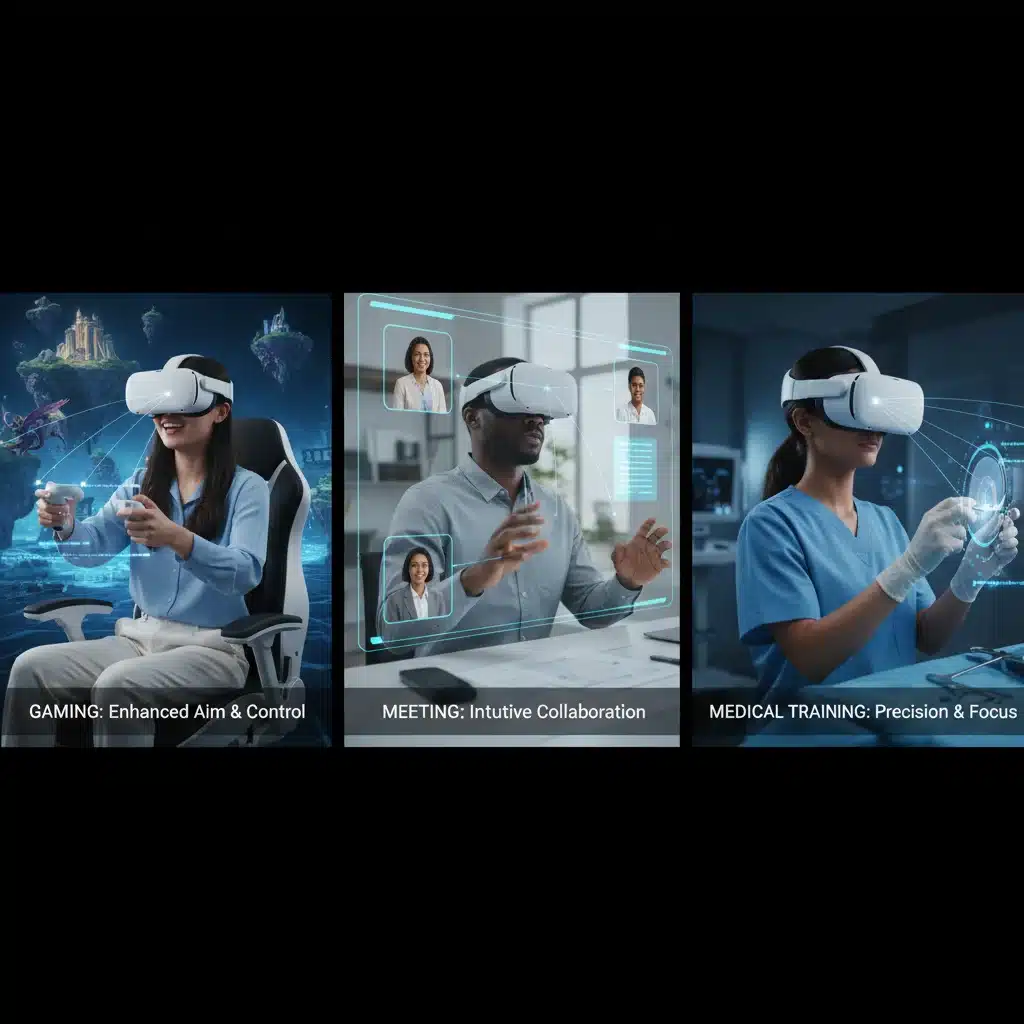
Navigating menus, selecting options, or focusing on specific elements within a VR environment becomes significantly faster and more intuitive with eye tracking. Users can simply glance at an item to highlight it, confirm selection with a blink, or initiate an action. This reduces cognitive load and improves overall usability, especially in scenarios where quick decisions are critical.
3. Foveated Rendering: Optimizing Performance and Visual Fidelity
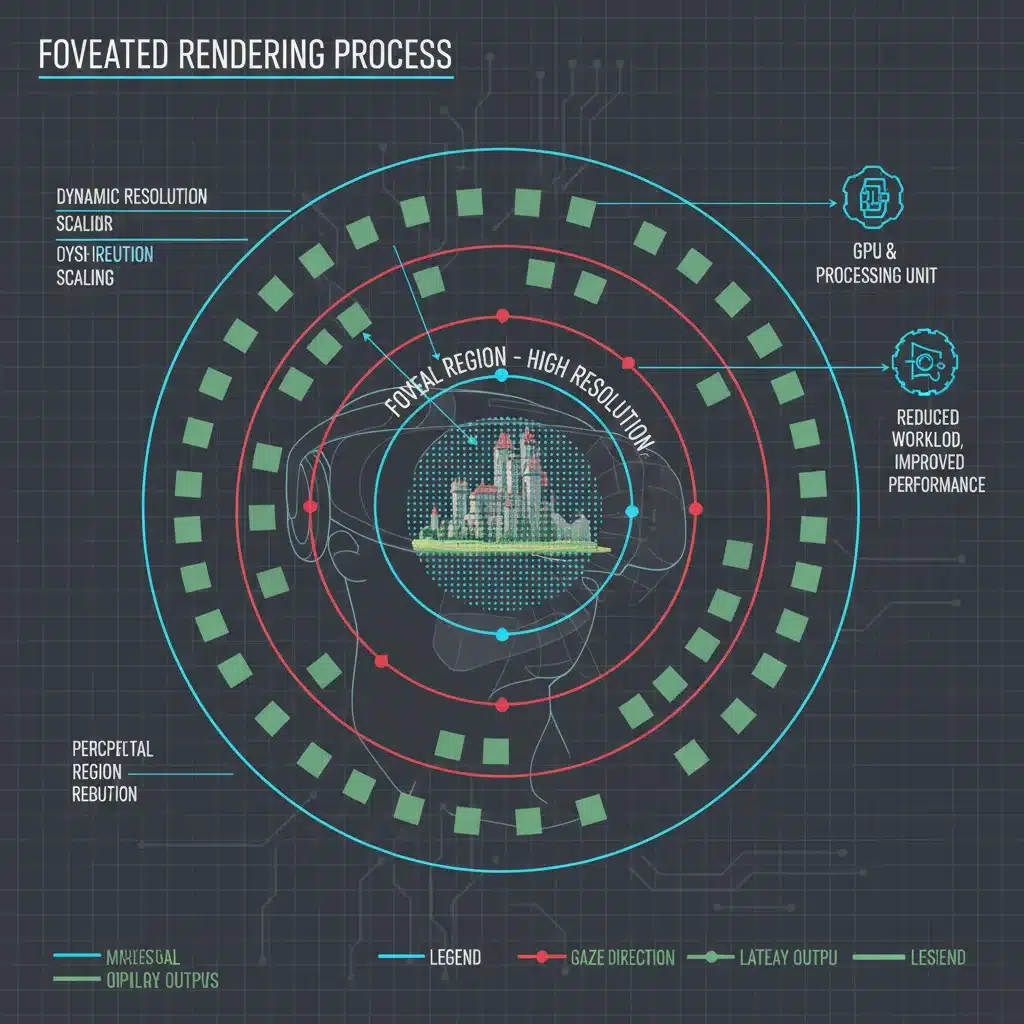
Perhaps one of the most significant technical advantages of eye tracking VR is foveated rendering. This technique leverages the fact that human vision is sharpest only in the fovea (the central part of the retina). With eye tracking, the VR system can render the area where the user is looking (the foveated region) at maximum resolution, while progressively reducing the resolution in the peripheral vision. This dramatically reduces the computational power required to render high-quality graphics, leading to smoother frame rates, higher visual fidelity in the area of interest, and potentially smaller, lighter headsets.
4. Enhanced Accessibility and Inclusivity
Eye tracking opens up VR experiences to individuals with motor impairments who may struggle with traditional hand controllers. By enabling gaze-based interaction, VR becomes a more accessible platform, fostering greater inclusivity in gaming, education, and professional training. This is a crucial aspect for the US, a market increasingly focused on accessible technology solutions.
5. Deeper Analytics and User Insights
For developers and businesses, eye tracking VR provides an unprecedented level of data on user behavior. Gaze heatmaps, dwell times, and pupil dilation can reveal where users are looking, what captures their attention, and even their emotional responses. This data is invaluable for optimizing user interfaces, designing more engaging content, and understanding consumer preferences in detail.
Eye Tracking VR in US Applications: Opportunities by 2026
The year 2026 is set to be a landmark for eye tracking VR in the United States, as the technology matures and finds its way into a wide array of sectors. The opportunities are vast and varied, promising significant disruption and innovation.
Gaming and Entertainment
In gaming, eye tracking will enable more intuitive targeting, dynamic difficulty adjustments based on player attention, and even character interactions that respond to a player’s gaze. Imagine a non-player character (NPC) making eye contact with you, or a horror game where jump scares are triggered by your averted gaze. The entertainment industry will leverage eye tracking for personalized narratives and more engaging cinematic VR experiences.
Education and Training
For educational institutions and corporate training programs in the US, eye tracking offers powerful tools for assessing learning, understanding engagement, and providing personalized feedback. Instructors can see exactly where students are focusing during a virtual lesson, ensuring they grasp critical concepts. In surgical simulations or complex machinery operation training, eye tracking can monitor trainee attention and identify areas of weakness, leading to more effective and safer learning outcomes.
Healthcare and Therapy
In healthcare, eye tracking VR is already showing promise in diagnostics and therapy. It can be used to assess neurological conditions, aid in rehabilitation for stroke patients, and even help individuals with autism practice social interactions in a controlled environment. By 2026, we can expect more sophisticated applications, including pain management through distraction and advanced diagnostic tools.
Design and Engineering
Architects, product designers, and engineers can use eye tracking to gather user feedback on virtual prototypes. By tracking where potential users look and linger, designers can optimize layouts, identify usability issues, and create more intuitive products before physical production. This accelerates design cycles and reduces costs, a significant advantage for US manufacturing and innovation.
Marketing and Retail
The retail sector will benefit immensely from eye tracking data. Virtual showrooms and online shopping experiences can track consumer gaze to understand product appeal, shelf placement effectiveness, and advertisement impact. This provides actionable insights far beyond traditional analytics, leading to highly optimized marketing strategies and personalized shopping experiences.
Challenges and Considerations for Widespread Adoption
Despite the immense potential, the journey towards widespread adoption of eye tracking VR is not without its hurdles. Addressing these challenges will be crucial for its success in the US market.
Cost and Hardware Integration
While costs are decreasing, integrating eye-tracking sensors adds to the overall price of VR headsets. For mass consumer adoption, the balance between features and affordability must be carefully managed. Hardware manufacturers are actively working on more cost-effective solutions without compromising performance.
Privacy Concerns and Data Security
Eye-tracking data is highly personal, revealing not just where someone is looking but potentially their emotional state, cognitive load, and even health indicators. Ensuring robust data privacy and security protocols will be paramount to building user trust. Regulations like GDPR and emerging US data privacy laws will heavily influence how this data is collected, stored, and used.
Standardization and Interoperability
As various manufacturers develop their own eye-tracking solutions, there’s a need for standardization to ensure interoperability across different VR platforms and applications. A fragmented ecosystem could hinder widespread development and adoption. Industry collaborations and open standards will be vital.
Calibration and Accuracy for All Users
While calibration has improved, ensuring accurate eye tracking for every user, regardless of their unique eye characteristics, glasses, or contact lenses, remains a challenge. Robust algorithms that can adapt to a wider range of physiological differences are continuously being developed.
Developer Tooling and Content Creation
The success of eye tracking VR heavily depends on the availability of intuitive developer tools and the creation of compelling content that leverages its unique capabilities. Developers need accessible SDKs and robust documentation to incorporate eye tracking effectively into their applications. As the technology matures, a rich ecosystem of eye-tracking-enabled content will naturally follow.
The Economic Impact of Eye Tracking VR in the US by 2026
The economic implications of eye tracking VR in the United States are substantial. By 2026, the technology is expected to contribute significantly to economic growth through various channels:
- Job Creation: The increased demand for VR hardware, software, and content will spur job creation in engineering, design, development, research, and sales.
- Increased Productivity: In enterprise and industrial settings, eye-tracking VR can lead to more efficient training, faster design cycles, and improved operational workflows, directly boosting productivity.
- New Market Opportunities: The accessibility features of eye tracking will open up VR to new demographics, expanding the overall market size and fostering new business models.
- Innovation and R&D Investment: The competitive landscape will drive further investment in research and development, pushing the boundaries of what’s possible with VR and eye tracking.
- Enhanced Consumer Spending: More immersive and intuitive VR experiences will likely lead to increased consumer spending on VR hardware, software, and accessories.
The US, with its strong technological infrastructure and innovative spirit, is well-positioned to be a global leader in the development and deployment of eye tracking VR solutions. Government initiatives, private sector investments, and academic research will collectively drive this growth.
The Future of User Interaction: Beyond 2026
Looking beyond 2026, the potential for eye tracking VR continues to expand. We can anticipate even more sophisticated integrations, leading to truly mind-bending user experiences.
Cognitive State Detection
Future advancements might allow VR systems to infer a user’s cognitive state – whether they are confused, engaged, or frustrated – based on nuanced eye movements and pupil dilation. This could lead to adaptive VR experiences that dynamically adjust content and difficulty in real-time to optimize learning or entertainment.
Seamless Blending with Other Biometrics
Eye tracking will likely be combined with other biometric data, such as heart rate, galvanic skin response, and brain activity (EEG), to create a holistic understanding of the user’s physical and emotional state. This multi-modal input will enable unprecedented levels of personalization and responsiveness in VR.
Augmented Reality (AR) Integration
The principles of eye tracking are equally applicable to augmented reality. In AR, eye tracking could enable precise holographic interaction, dynamic information overlays based on gaze, and even social cues in mixed reality environments. The convergence of VR and AR with advanced eye tracking promises a future where our digital and physical worlds are seamlessly intertwined.
Conclusion: Eye Tracking VR – A Glimpse into the Future of Interaction
The integration of eye tracking VR into hardware represents a pivotal moment for virtual reality. By 2026, this technology will not only enhance immersion and efficiency but also foster greater accessibility and provide invaluable insights into user behavior across a spectrum of US applications. While challenges related to cost, privacy, and standardization remain, the benefits far outweigh the hurdles. As sensor technology improves, algorithms become more intelligent, and processing power increases, eye tracking will solidify its position as an indispensable component of next-generation VR systems.
The future of user interaction in VR is gazing directly at us, and it’s powered by our own eyes. Prepare for a more intuitive, immersive, and personalized virtual experience as eye tracking VR takes center stage in the technological landscape of the United States.