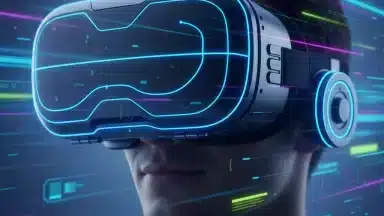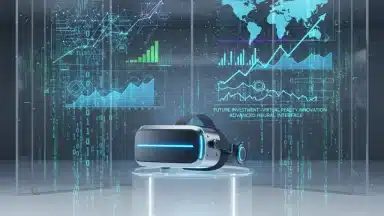
The year is 2026, and the landscape of virtual reality (VR) is undergoing a profound transformation. What was once a niche technology is now on the cusp of mainstream adoption, largely propelled by revolutionary advancements in VR display technology. For years, the ‘screen door effect,’ motion sickness, and limited field of view have been significant hurdles. However, the relentless pursuit of perfection by engineers and scientists has led to breakthroughs that promise to redefine our perception of virtual worlds. This deep dive will explore the cutting-edge of VR display technology, focusing on the pivotal roles of Micro-LED and QLED hardware advancements, and what they mean for the future of immersive experiences.
The Evolution of VR Displays: A Historical Perspective
To truly appreciate the innovations of 2026, it’s essential to look back at where VR display technology began. Early VR headsets, often clunky and low-resolution, relied on readily available smartphone screens or modified LCD panels. These displays suffered from low pixel density, leading to the infamous ‘screen door effect’ where individual pixels were visible, breaking immersion. Refresh rates were often insufficient, contributing to motion sickness, and response times were too slow, causing motion blur. OLED panels, with their self-emissive pixels and superior contrast, offered a significant improvement, becoming the standard for high-end VR for a time. However, even OLED had its limitations, particularly in brightness, lifespan, and susceptibility to burn-in, especially when pushed to the extreme requirements of VR.
The journey from those rudimentary beginnings to the sophisticated displays of today has been marked by a relentless drive for higher resolution, faster refresh rates, wider fields of view (FOV), and improved color accuracy. Each generation of VR hardware has brought incremental improvements, but 2026 marks a turning point where theoretical advancements are finally becoming tangible realities, primarily through the maturation of Micro-LED and QLED technologies.
Micro-LED: The Pinnacle of Pixel Perfection in VR
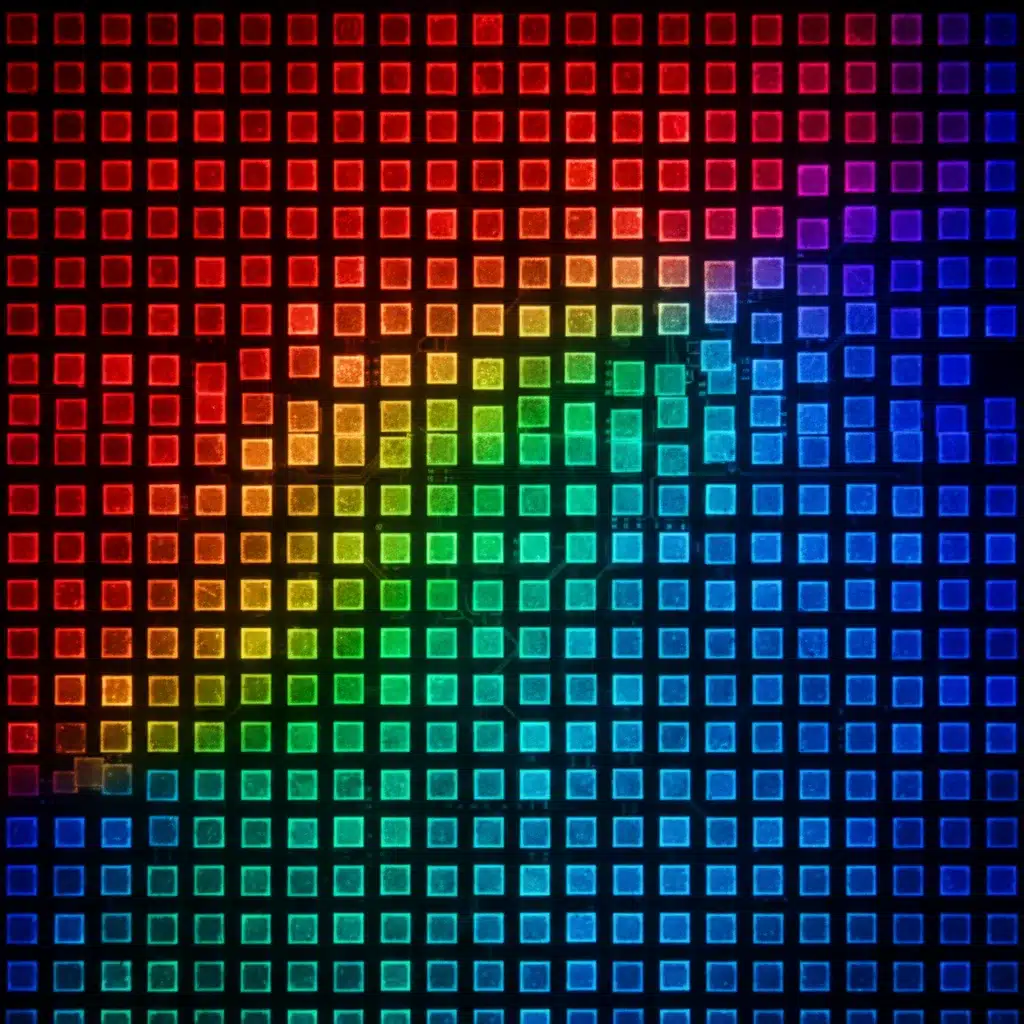
Micro-LED is arguably the most exciting development in VR display technology. Imagine a display where each pixel is its own microscopic LED, capable of emitting light independently. This isn’t just a dream; it’s the core principle of Micro-LED, and by 2026, it’s making significant inroads into high-end VR. Unlike traditional LCDs that require a backlight or OLEDs that use organic materials, Micro-LEDs are inorganic and incredibly small, typically less than 100 micrometers in size.
Unmatched Brightness and Contrast
One of Micro-LED’s most compelling advantages for VR display technology is its ability to achieve incredibly high brightness levels. This is crucial for VR, as powerful optics can often dim the perceived image. With Micro-LED, VR headsets can deliver stunningly bright visuals, enhancing realism and making outdoor or brightly lit virtual scenes feel more authentic. Coupled with perfect blacks (as each pixel can be turned off individually), Micro-LED offers an infinite contrast ratio, leading to unparalleled visual depth and vibrancy.
Eliminating the ‘Screen Door Effect’ and Enhancing Pixel Density
The small size of Micro-LEDs allows for an unprecedented pixel density. This is the holy grail for VR, as it effectively eliminates the ‘screen door effect.’ With resolutions now reaching 4K or even 8K per eye in some prototypes, the virtual world appears seamless and incredibly detailed, indistinguishable from reality in many instances. This leap in pixel density is a game-changer for immersion, making text sharper and distant objects clearer, reducing eye strain and increasing comfort during extended VR sessions.
Superior Lifespan and Energy Efficiency
Unlike OLED, Micro-LEDs are inorganic, making them far more durable and resistant to burn-in. This translates to a longer lifespan for VR headsets, a significant factor given the high cost of advanced displays. Furthermore, Micro-LEDs are remarkably energy-efficient. Because they only illuminate the pixels that are needed, they consume less power than traditional displays, which is vital for battery-powered standalone VR headsets. This efficiency not only extends playtime but also reduces heat generation, contributing to a more comfortable user experience.
Ultra-Fast Response Times and High Refresh Rates
Motion sickness in VR is often linked to latency and motion blur. Micro-LEDs boast incredibly fast response times, measured in nanoseconds. This near-instantaneous pixel switching dramatically reduces motion blur, making fast-paced movements in VR feel smoother and more natural. Combined with refresh rates that are now routinely exceeding 120Hz, and even pushing 200Hz in high-end models, Micro-LED significantly mitigates motion sickness, making VR accessible to a wider audience.
QLED Advancements: Bridging the Gap and Pushing Boundaries
While Micro-LED represents the ultimate in pixel technology, Quantum Dot Light Emitting Diode (QLED) technology has also made tremendous strides, particularly in addressing some of the shortcomings of traditional OLED and LCD panels. By 2026, QLED isn’t just a marketing term; it signifies a robust and highly competitive VR display technology that offers a compelling alternative or complement to Micro-LED.
Enhanced Color Volume and Accuracy
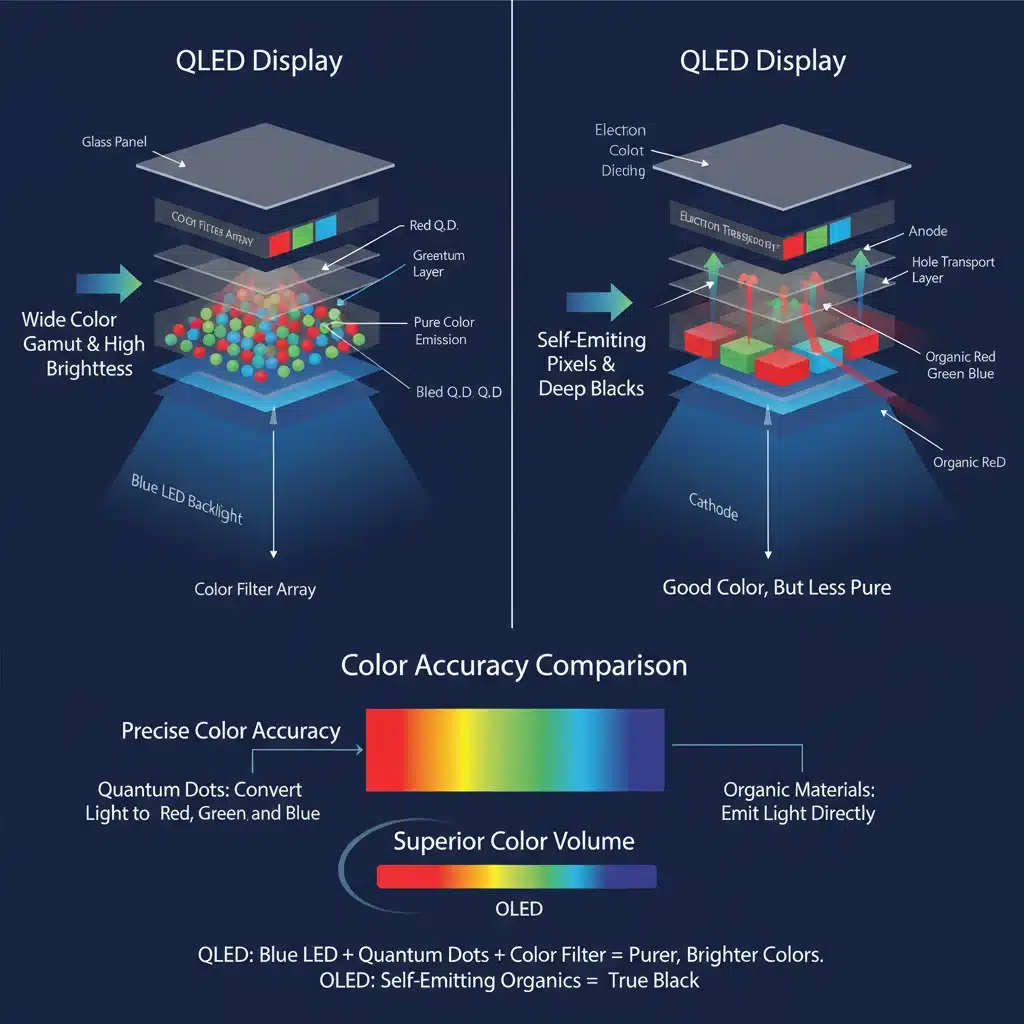
QLED displays leverage quantum dots, nanocrystals that emit specific colors when exposed to light. This allows QLED panels to achieve an astonishingly wide color gamut and exceptional color accuracy. For VR, this means virtual environments can render colors with a vibrancy and realism that was previously unattainable. From the subtle hues of a sunset to the intense glow of a neon sign, QLED brings virtual worlds to life with breathtaking fidelity. This enhanced color volume is particularly important for photorealistic VR experiences, where subtle color gradients and accurate representation of light are critical for immersion.
Improved Brightness and Durability Over OLED
While not reaching the peak brightness of Micro-LED, QLED significantly surpasses traditional OLED in this regard. This is due to the quantum dot layer’s ability to convert light efficiently, allowing for brighter overall images without sacrificing color purity. Furthermore, QLED panels are more durable than OLED, being less susceptible to burn-in, which was a concern for static elements in VR interfaces. This increased durability makes QLED a more practical choice for many commercial and consumer VR applications.
Cost-Effectiveness and Scalability
One of QLED’s key advantages in the 2026 market is its relative cost-effectiveness compared to Micro-LED. While Micro-LED manufacturing is still complex and expensive, QLED benefits from more mature manufacturing processes, making it a more scalable solution for mass-market VR headsets. This allows manufacturers to offer high-quality VR experiences at more accessible price points, driving wider adoption of VR display technology.
Hybrid Approaches: QD-OLED and Beyond
The innovation doesn’t stop at pure QLED. By 2026, hybrid technologies like QD-OLED (Quantum Dot-OLED) are also gaining traction in VR. These displays combine the self-emissive properties of OLED pixels with a quantum dot color converter layer. This marriage offers the best of both worlds: the perfect blacks and infinite contrast of OLED, combined with the superior color volume and brightness of quantum dots. QD-OLED represents a powerful intermediate step, offering a premium VR experience that balances performance and cost.
Beyond Pixels: The Holistic VR Display Experience
While Micro-LED and QLED are revolutionizing the pixel level, the overall VR display technology experience encompasses much more than just the panel itself. Several other hardware advancements are working in concert to create truly immersive virtual worlds.
Optics: The Unsung Heroes of Clarity
No matter how advanced the display panel, poor optics can ruin the VR experience. In 2026, significant progress has been made in lens design. Fresnel lenses, once common, are being replaced by pancake lenses and other advanced optical systems that offer wider fields of view, reduced chromatic aberration, and a larger ‘sweet spot’ for optimal viewing. These new optics are also thinner and lighter, contributing to more compact and comfortable VR headsets. The goal is to make the lenses disappear, allowing the user to feel as though they are looking directly into the virtual world without any visual artifacts.
Eye Tracking and Foveated Rendering
Eye tracking has become a standard feature in high-end VR headsets by 2026. This technology not only enhances social presence in virtual environments by allowing avatars to make eye contact but also enables a crucial optimization technique: foveated rendering. With foveated rendering, the display hardware only renders the area where the user is looking (the fovea) at full resolution, while the peripheral vision is rendered at a lower resolution. This dramatically reduces the computational load on the GPU, allowing for higher frame rates and more complex virtual worlds without sacrificing perceived visual quality. This intelligent use of display resources is vital for pushing the boundaries of what’s possible in VR display technology.
Variable Refresh Rate and Dynamic Tone Mapping
Advanced display controllers now incorporate variable refresh rate (VRR) technology, similar to what’s found in high-end gaming monitors. VRR dynamically adjusts the display’s refresh rate to match the frame rate output by the GPU, eliminating screen tearing and reducing latency. This results in a smoother and more fluid VR experience, especially in demanding applications. Dynamic tone mapping, another key advancement, optimizes the display’s brightness and contrast on a frame-by-frame basis, ensuring that HDR (High Dynamic Range) content looks as stunning and realistic as possible, extracting every bit of visual information from the display’s capabilities.
Challenges and the Road Ahead for VR Display Technology
Despite the incredible progress, the journey for VR display technology is far from over. Several challenges remain, and ongoing research and development are crucial for overcoming them.
Manufacturing Scalability and Cost
While QLED has achieved a good balance of performance and cost, Micro-LED manufacturing remains complex and expensive. Reducing manufacturing costs and improving yield rates for Micro-LED panels is a primary focus for widespread adoption. As production processes mature and economies of scale kick in, we can expect Micro-LED VR headsets to become more accessible to consumers.
Power Consumption and Battery Life
Even with the efficiency of Micro-LED, pushing resolutions to 8K per eye and beyond, coupled with high refresh rates, demands significant power. For standalone VR headsets, optimizing power consumption and extending battery life remains a critical challenge. Innovations in battery technology, alongside further display efficiency improvements, will be key.
Form Factor and Weight Reduction
Current high-end VR headsets, while more comfortable than their predecessors, can still be bulky and heavy. The goal is to create lightweight, sleek VR glasses that can be worn for extended periods without discomfort. Advancements in display miniaturization, thinner optics, and lighter materials are all contributing to this goal, with Micro-LED’s compact nature playing a significant role.
Addressing Vergence-Accommodation Conflict (VAC)
One of the fundamental challenges in VR is the vergence-accommodation conflict (VAC). In the real world, our eyes naturally adjust focus (accommodation) and angle inward (vergence) to look at objects at different depths. In current VR, the display is at a fixed focal distance, while virtual objects can appear at varying depths, leading to a mismatch between vergence and accommodation. This can cause eye strain and discomfort. Researchers are actively working on solutions like varifocal displays, which dynamically adjust the focal plane of the display to match the virtual depth of objects. While still in early stages for commercial products, 2026 sees significant progress in research and prototype development of these advanced optical systems.
The Impact on VR Experiences and Industries
The advancements in VR display technology, particularly Micro-LED and QLED, are not just about better visuals; they are about fundamentally changing how we interact with and utilize virtual reality. The implications span across numerous industries:
- Gaming and Entertainment: Gamers will experience unparalleled immersion, with photorealistic graphics and seamless interactions. Entertainment will evolve with virtual concerts, movies, and interactive stories that blur the lines between reality and simulation.
- Training and Simulation: Industries like aviation, medicine, and manufacturing will benefit from highly realistic training simulations, reducing costs and improving safety. The clarity and precision offered by new displays make complex procedures easier to learn and practice.
- Design and Engineering: Architects, product designers, and engineers can visualize and iterate on their creations in a fully immersive 3D space with incredible detail, accelerating design cycles and improving collaboration.
- Education: Virtual classrooms and field trips will offer students immersive learning experiences that were previously impossible, bringing subjects to life with vivid detail and interactive environments.
- Social VR and Communication: With enhanced visual fidelity, social interactions in VR will become more natural and engaging, making virtual meetings and gatherings feel more like face-to-face encounters.
Conclusion: A New Era for VR Display Technology
As we stand in 2026, the future of VR display technology has never looked brighter – both literally and figuratively. The maturation of Micro-LED and QLED hardware is delivering on promises of unparalleled resolution, color accuracy, brightness, and comfort. These advancements are not merely incremental improvements; they are foundational shifts that are unlocking the true potential of virtual reality. The ‘screen door effect’ is becoming a relic of the past, motion sickness is being minimized, and the virtual worlds we inhabit are becoming increasingly indistinguishable from our physical reality.
While challenges in manufacturing, cost, and advanced optical solutions like varifocal displays still exist, the trajectory is clear. The collaborative efforts of display scientists, hardware engineers, and software developers are rapidly pushing the boundaries of what’s possible. The coming years will undoubtedly bring even more astonishing innovations, but 2026 stands as a pivotal year, marking the moment when VR display technology truly came into its own, ready to transport us to experiences previously confined to the realm of science fiction. Get ready for a new era of immersion; the virtual world awaits, sharper, brighter, and more real than ever before.