
VR in Healthcare Training: Best Practices for U.S. Hospitals to Improve Surgical Outcomes by 5% in 2026
The landscape of healthcare is perpetually evolving, driven by an unyielding quest for improved patient outcomes, enhanced efficiency, and continuous professional development. In this relentless pursuit, U.S. hospitals are increasingly turning to cutting-edge technologies to revolutionize their training methodologies. Among these, Virtual Reality (VR) stands out as a transformative force, offering immersive, interactive, and highly effective platforms for medical education and skill acquisition. The integration of VR healthcare training is not merely a technological upgrade; it represents a strategic imperative for institutions aiming to significantly elevate the quality and safety of patient care, particularly in complex surgical procedures. Our ambitious yet achievable goal is to explore how U.S. hospitals can leverage best practices in VR healthcare training to improve surgical outcomes by a remarkable 5% by the year 2026.
The stakes in surgery are incredibly high. Every incision, every suture, every decision can have profound implications for a patient’s life and recovery. Traditional surgical training, while foundational, often faces limitations such as access to cadavers, operating room time constraints, and the inherent risks associated with learning on live patients. This is where VR healthcare training emerges as a game-changer. By providing a risk-free, repeatable, and realistic environment, VR allows surgeons and residents to hone their skills, practice intricate procedures, and prepare for rare complications without jeopardizing patient safety. The ability to simulate diverse clinical scenarios, receive immediate feedback, and refine techniques repeatedly can lead to a substantial reduction in errors and a notable improvement in surgical proficiency.
This comprehensive guide will delve into the multifaceted aspects of implementing successful VR healthcare training programs in U.S. hospitals. We will cover everything from foundational principles to advanced integration strategies, emphasizing practical solutions and measurable outcomes. Our focus will be on actionable insights that hospital administrators, surgical department heads, and medical educators can utilize to design, deploy, and optimize VR training initiatives. The ultimate aim is to empower healthcare institutions to embrace this powerful technology, not just as a novelty, but as a core component of their ongoing commitment to excellence in surgical care and patient safety.
The Imperative for VR in Modern Surgical Training
The demands on modern surgeons are immense. They must possess not only exceptional technical skills but also critical thinking, adaptability, and the ability to perform under pressure. Traditional training models, while valuable, often fall short in providing the breadth and depth of experience required to master these complex competencies. The apprenticeship model, where residents learn by observing and assisting, is constrained by the availability of experienced mentors, the unpredictable nature of surgical cases, and ethical considerations regarding patient safety during a trainee’s learning curve.
Bridging the Gap with Immersive Learning
VR healthcare training bridges this critical gap by offering an immersive learning environment that transcends the limitations of traditional methods. Imagine a surgical resident practicing a highly specialized procedure, such as a complex laparoscopic cholecystectomy, dozens of times in a virtual operating room before ever stepping into a real one. This repetitive, deliberate practice, coupled with objective performance metrics provided by VR platforms, allows trainees to achieve a level of mastery that was previously unattainable or required significantly more time and resources.
Enhanced Skill Acquisition and Retention
Research consistently demonstrates that VR-trained individuals show superior performance compared to those trained through conventional methods. This is attributed to several factors:
- Repetitive Practice: VR allows for unlimited repetition of procedures, fostering muscle memory and procedural fluency.
- Immediate Feedback: Most VR platforms provide instant, objective feedback on performance, highlighting errors and areas for improvement.
- Risk-Free Environment: Trainees can make mistakes and learn from them without any consequences to real patients.
- Exposure to Rare Cases: VR can simulate rare or complex surgical scenarios that might not be encountered frequently in real-world practice.
- Reduced Stress: Learning in a low-stakes virtual environment can reduce anxiety and enhance the learning process.
By integrating VR healthcare training, U.S. hospitals can significantly accelerate the learning curve for new surgeons and residents, ensuring they are better prepared, more confident, and ultimately, safer practitioners. This translates directly into improved patient outcomes, a reduction in surgical complications, and a more efficient use of operating room time.
Key Best Practices for Implementing VR Healthcare Training
Successful integration of VR healthcare training requires a strategic, multi-faceted approach. It’s not enough to simply purchase VR headsets; hospitals must develop a comprehensive plan that addresses technology, curriculum, personnel, and evaluation. Here are key best practices:
1. Define Clear Objectives and Metrics
Before embarking on any VR initiative, hospitals must clearly define what they aim to achieve. Are you looking to reduce surgical complications in a specific procedure? Improve trainee proficiency in a particular skill set? Shorten the learning curve for new residents? Establishing measurable objectives, such as a "5% reduction in post-operative infection rates for appendectomies by 2026" or a "10% improvement in residents’ scores on simulated laparoscopic tasks," will guide the entire program and allow for objective evaluation of its success.
2. Select the Right VR Platforms and Content
The market for VR healthcare training solutions is rapidly expanding. Hospitals need to carefully evaluate platforms based on several criteria:
- Realism and Fidelity: How accurately does the simulation replicate real-world anatomy, instruments, and physiological responses?
- Procedural Coverage: Does the platform offer simulations relevant to the hospital’s specific surgical specialties and training needs?
- Haptic Feedback: Does it incorporate haptic technology to provide realistic tactile sensations, crucial for developing fine motor skills?
- Analytics and Performance Tracking: Does the system provide detailed data on trainee performance, progress, and areas for improvement?
- Scalability and Integration: Can the platform be easily scaled to accommodate more users and integrate with existing learning management systems?
- Vendor Support and Updates: What level of technical support and content updates does the vendor provide?
Investing in high-quality, evidence-based VR content is paramount. Collaborating with medical societies and academic institutions can help identify validated and reputable VR training modules.
3. Develop a Structured Curriculum and Integration Plan
VR healthcare training should not be a standalone activity but rather an integrated component of the overall surgical curriculum. This involves:
- Curriculum Mapping: Align VR modules with specific learning objectives and stages of surgical training.
- Pre- and Post-Simulation Briefings: Prepare trainees for the VR experience and debrief them afterward to reinforce learning and facilitate reflection.
- Supervised Practice: Ensure that VR sessions are supervised by experienced faculty who can provide guidance and answer questions.
- Blended Learning Approach: Combine VR training with traditional methods (lectures, cadaver labs, OR experience) for a holistic learning experience.
- Mandatory vs. Optional: Determine which VR modules are mandatory for specific competency attainment and which are optional for supplementary practice.
4. Establish Dedicated VR Training Facilities
While some VR setups can be portable, establishing dedicated VR simulation labs within the hospital or medical school can significantly enhance the effectiveness and accessibility of training. These facilities should be:
- Quiet and Distraction-Free: To maximize immersion and focus.
- Equipped with Appropriate Hardware: High-performance VR headsets, powerful computers, and haptic devices.
- Technically Supported: On-site or readily available technical support to troubleshoot issues.
- Accessible: Available for residents and surgeons to use during off-hours or scheduled training blocks.
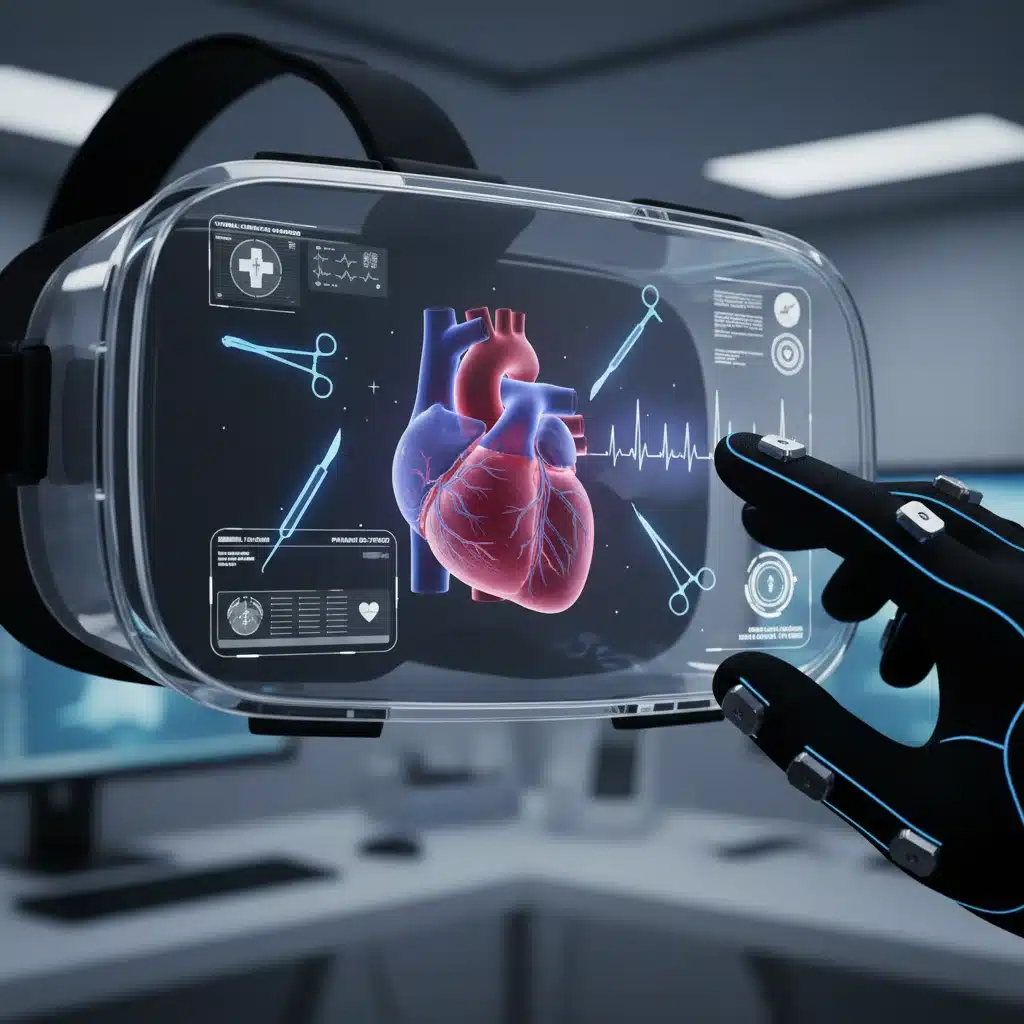
5. Train the Trainers and Champions
Faculty engagement is crucial for the success of any new training initiative. Hospitals must invest in training their surgical faculty on how to effectively utilize VR platforms, interpret performance data, and provide constructive feedback. Identifying and empowering "VR champions" among the surgical staff can help drive adoption and advocate for the program’s benefits. These champions can share their positive experiences, mentor colleagues, and contribute to the continuous improvement of the VR curriculum.
6. Implement Robust Data Collection and Performance Analytics
One of the most powerful advantages of VR healthcare training is its ability to generate objective, quantifiable data on trainee performance. Hospitals must establish systems to collect, analyze, and interpret this data. Key metrics to track include:
- Completion Rates: How many trainees are completing the VR modules?
- Skill Proficiency Scores: Tracking improvement in specific surgical skills over time.
- Time to Completion: Efficiency in performing virtual procedures.
- Error Rates: Number and type of errors committed during simulations.
- Transfer of Skills: Correlating VR performance with actual operating room performance and patient outcomes.
Regular review of this data will allow hospitals to identify areas where training needs to be adjusted, recognize high-performing trainees, and ultimately demonstrate the return on investment of their VR program in terms of improved surgical outcomes.
Practical Solutions for Achieving a 5% Improvement in Surgical Outcomes by 2026
Achieving a 5% improvement in surgical outcomes by 2026 through VR healthcare training is an ambitious but attainable target. This requires a focused and sustained effort across several key areas:
1. Targeted Procedure-Specific Training
Instead of a generic approach, focus VR training on specific surgical procedures that have a higher incidence of complications or where there is a significant learning curve. For example, if a hospital identifies a higher-than-average complication rate in laparoscopic appendectomies, dedicated VR modules for this procedure can be implemented to allow surgeons and residents to repeatedly practice critical steps, refine instrument handling, and manage potential intraoperative challenges. This targeted approach ensures that VR resources are deployed where they can have the most immediate and significant impact on patient safety and outcomes.
2. Pre-Operative Planning and Rehearsal
VR healthcare training can extend beyond general skill acquisition to specific case preparation. Advanced VR platforms can import patient-specific imaging data (CT, MRI) to create a 3D virtual model of an individual patient’s anatomy. Surgeons can then "walk through" the upcoming surgery in VR, identifying potential anatomical variations, planning incision sites, and rehearsing complex maneuvers. This pre-operative rehearsal can significantly reduce surprises in the operating room, leading to smoother procedures, reduced operating time, and fewer complications. This personalized approach to surgical preparation is a powerful differentiator for hospitals committed to optimal patient care.
3. Team Training and Communication
Surgical success is a team effort. While much of the focus of VR has been on individual surgeon skills, multi-user VR environments are emerging that allow entire surgical teams (surgeons, nurses, anesthesiologists) to train together in simulated operating rooms. This facilitates communication protocols, crisis management, and coordination of roles, which are critical for preventing errors and improving overall team performance. Training as a cohesive unit in a virtual environment can iron out kinks in communication and workflow before they impact a real patient.
4. Continuous Professional Development and Recertification
VR healthcare training is not just for residents. Experienced surgeons can use VR to learn new techniques, practice advanced procedures, and maintain their skills. As new surgical technologies and approaches emerge, VR provides a safe and efficient way for practicing surgeons to update their expertise without the need for extensive travel or time away from patient care. Furthermore, VR can be integrated into ongoing credentialing and recertification processes, providing objective evidence of continued competency.
5. Leveraging AI and Machine Learning in VR
The next frontier in VR healthcare training involves the integration of Artificial Intelligence (AI) and Machine Learning (ML). AI can analyze trainee performance data from VR simulations to identify subtle patterns, predict areas of difficulty, and provide personalized feedback loops. ML algorithms can adapt the VR environment in real-time based on a trainee’s performance, offering more challenging scenarios as skills improve or providing additional guidance when struggles are detected. This intelligent tutoring system can optimize the learning process, making it even more efficient and effective.
6. Economic Justification and ROI
While the initial investment in VR technology can seem substantial, U.S. hospitals must recognize the long-term economic benefits. Improved surgical outcomes lead to:
- Reduced Complications: Fewer readmissions, reoperations, and extended hospital stays, all of which are costly.
- Enhanced Patient Satisfaction: Leading to better reputation and patient loyalty.
- Increased Efficiency: Faster surgical times and better utilization of operating rooms.
- Reduced Malpractice Claims: A direct result of improved patient safety.
- Attraction and Retention of Talent: Hospitals with cutting-edge training technologies are more attractive to top surgical talent.
Quantifying these benefits and presenting a clear return on investment (ROI) will be crucial for securing leadership buy-in and sustained funding for VR healthcare training programs.

Measuring Success: Tracking the 5% Improvement
To confidently claim a 5% improvement in surgical outcomes by 2026, hospitals must establish robust mechanisms for data collection and analysis. This involves:
Baseline Data Collection
Before implementing or significantly expanding VR healthcare training, hospitals need to establish a clear baseline of current surgical outcomes. This includes metrics such as:
- Surgical site infection rates
- Readmission rates within 30 or 90 days
- Post-operative complication rates (e.g., hemorrhage, nerve damage)
- Length of hospital stay
- Operating room time for specific procedures
- Patient satisfaction scores related to surgical care
This baseline will serve as the benchmark against which future improvements will be measured.
Continuous Monitoring and Reporting
Once VR healthcare training is in full swing, continuous monitoring of these key performance indicators (KPIs) is essential. Hospitals should:
- Integrate Data Systems: Link VR performance data with electronic health records (EHR) and quality improvement databases.
- Regular Reporting: Generate regular reports (monthly, quarterly) on surgical outcomes, correlating them with VR training participation and performance.
- Statistical Analysis: Employ appropriate statistical methods to identify significant changes and attribute them, where possible, to the VR intervention.
- Peer Review and Audit: Incorporate VR performance data into existing peer review processes and surgical audits.
Feedback Loops and Program Adjustment
The data collected should not just be for reporting; it must inform continuous program improvement. If certain surgical outcomes are not improving as expected, the VR curriculum or implementation strategy may need adjustment. This iterative process of data collection, analysis, feedback, and refinement is critical for maximizing the impact of VR healthcare training and achieving the targeted 5% improvement.
Challenges and Considerations
While the benefits of VR healthcare training are compelling, hospitals must also be prepared to address potential challenges:
- Cost: Initial investment in hardware, software, and infrastructure can be substantial.
- Technological Obsolescence: Rapid advancements in VR technology mean platforms can become outdated quickly.
- Faculty Resistance: Some faculty members may be hesitant to adopt new technologies or change established training methods.
- Curriculum Development: Creating high-quality, relevant VR content requires significant expertise and resources.
- Maintenance and Support: Ongoing technical support and maintenance of VR equipment are necessary.
- Ethical Considerations: Ensuring data privacy and responsible use of performance analytics.
Proactive planning, securing adequate funding, engaging stakeholders early, and fostering a culture of innovation can help mitigate these challenges and pave the way for successful VR integration.
Conclusion: A Vision for the Future of Surgical Excellence
The journey towards a 5% improvement in surgical outcomes by 2026 through VR healthcare training is an ambitious yet entirely achievable vision for U.S. hospitals. By strategically implementing best practices—from defining clear objectives and selecting appropriate platforms to developing structured curricula and robust data analytics—hospitals can harness the transformative power of virtual reality to elevate surgical education and patient care to unprecedented levels.
VR healthcare training is more than just a tool; it is a paradigm shift in how medical professionals learn, practice, and refine their life-saving skills. It offers a future where every surgeon is meticulously prepared, every procedure is meticulously planned, and every patient receives the highest standard of care. By embracing this technology with a clear vision and a commitment to continuous improvement, U.S. hospitals can not only meet but exceed the goal of a 5% improvement in surgical outcomes, ultimately saving lives and enhancing the well-being of countless individuals across the nation. The time to invest in this future is now, cementing a legacy of innovation and excellence in healthcare for generations to come.