
The landscape of industrial training is undergoing a profound transformation, largely driven by the advancements in virtual reality (VR) technology. As we look towards 2026, the question for many enterprises isn’t whether to adopt VR, but rather how to effectively implement it, especially when catering to 100+ users. Choosing the right VR headset for industrial training is paramount to the success of any large-scale deployment. This comprehensive guide will delve into the critical hardware specifications, deployment considerations, and strategic insights necessary to make informed decisions in this rapidly evolving field.
Choosing the Right VR Headset for Industrial Training: A 2026 Guide to Hardware Specifications for 100+ Users
In the competitive industrial sector, efficiency, safety, and continuous skill development are non-negotiable. Traditional training methods, while foundational, often fall short in providing the immersive, risk-free, and repeatable experiences that modern industrial operations demand. This is where virtual reality steps in, offering a powerful alternative that can simulate complex machinery, hazardous environments, and intricate procedures without any real-world danger or downtime. For organizations planning to deploy VR solutions for a large workforce – specifically 100 or more users – the selection of appropriate hardware becomes a monumental task. The right VR headset for industrial training can significantly impact training efficacy, user adoption, and return on investment. The wrong choice, however, can lead to costly inefficiencies, technical hurdles, and a failure to meet training objectives.
By 2026, the VR hardware market will have matured considerably, offering a diverse array of devices tailored for various applications. However, industrial training presents unique challenges that consumer-grade headsets often cannot address. Enterprises require robust, reliable, and scalable solutions that can withstand rigorous use, integrate seamlessly with existing IT infrastructures, and provide consistent performance across a large user base. This article aims to cut through the noise, providing a focused analysis of the essential criteria for selecting the optimal VR headset for industrial training, ensuring your investment yields maximum benefit for your workforce.
Understanding the Core Needs of Industrial VR Training
Before diving into specific hardware, it’s crucial to define the core requirements of industrial VR training. These needs often differ significantly from those of gaming or casual VR experiences. For large-scale deployments, the focus shifts towards ruggedness, ease of use, hygiene, and manageability. The environment in which these headsets will be used – be it a factory floor, a construction site, or a maintenance workshop – dictates many design considerations. Dust, humidity, temperature fluctuations, and the potential for accidental drops are all factors that consumer headsets are rarely designed to withstand. Therefore, a key aspect of selecting a VR headset for industrial training involves assessing its durability and build quality. Industrial-grade headsets often feature more robust materials, better sealing against environmental elements, and designs that prioritize longevity over sleek aesthetics. This resilience directly translates to lower total cost of ownership (TCO) by reducing replacement rates and maintenance overhead, a critical factor when equipping hundreds of users.
Beyond physical resilience, the nature of industrial training content demands specific performance capabilities. Simulations often involve highly detailed 3D models of machinery, complex operational procedures, and realistic physics engines. This necessitates VR headsets with powerful processing capabilities, high-resolution displays, and precise tracking systems to ensure an immersive and accurate training experience. Lagging visuals or imprecise interactions can detract from the learning outcome and even introduce negative training habits. Therefore, understanding the computational demands of your specific training modules is a prerequisite for selecting a headset that can deliver the required performance without compromise.
Key Hardware Specifications for Enterprise-Grade VR Headsets in 2026
When evaluating a VR headset for industrial training, several hardware specifications stand out as particularly critical. These factors directly influence the quality of the training experience, the comfort of the user, and the overall feasibility of large-scale deployment.
Display Resolution and Field of View (FoV)
For industrial training, visual fidelity is paramount. Trainees need to clearly discern small details on virtual dashboards, read labels on machinery, and accurately perceive distances and spatial relationships. A higher display resolution minimizes the ‘screen door effect’ and provides sharper, more realistic visuals. By 2026, expect to see standard resolutions of 4K per eye or higher for premium industrial headsets, offering unparalleled clarity. Coupled with resolution, a wide Field of View (FoV) is essential for immersion. An FoV of 100 degrees or more is generally recommended to ensure trainees feel truly present in the simulated environment, reducing peripheral distractions and enhancing spatial awareness. The combination of high resolution and wide FoV contributes significantly to the realism of the training simulation, which is vital for effective skill transfer.
Tracking Systems: Inside-Out vs. Outside-In
Accurate and reliable tracking is fundamental to any VR experience, but especially so in industrial training where precise interaction is often required. Two primary tracking methodologies dominate: inside-out and outside-in. Inside-out tracking, which uses cameras and sensors on the headset itself to map the environment, is generally preferred for large-scale enterprise deployments due to its ease of setup and portability. It eliminates the need for external base stations, simplifying deployment across multiple training rooms or even on a factory floor. This makes it ideal for a VR headset for industrial training for 100+ users, as it drastically reduces infrastructure requirements. Outside-in tracking, while often offering slightly superior precision in controlled environments, becomes cumbersome to manage and calibrate for a large number of users and varied training locations.
Processing Power: Standalone vs. PC-Tethered
The choice between standalone and PC-tethered VR headsets is a critical decision for industrial deployments. Standalone headsets, like the Meta Quest Pro or Pico 4 Enterprise, integrate all computing power directly into the headset, offering unparalleled freedom of movement and simplified deployment. This makes them highly attractive for large-scale VR industrial training scenarios where wires can be a tripping hazard or limit mobility. By 2026, standalone chipsets will be powerful enough to run highly complex industrial simulations with impressive fidelity. However, for the absolute highest graphical fidelity and most demanding simulations (e.g., extremely complex engineering models), PC-tethered systems might still offer an edge, leveraging the power of high-end graphics cards. The trade-off is increased cost, complexity, and reduced mobility. For most VR industrial training applications, standalone devices are becoming the preferred choice due to their balance of performance, portability, and ease of management.
Ergonomics and Comfort for Extended Use
Training sessions can last for extended periods, making comfort a non-negotiable factor. A poorly designed headset can cause discomfort, leading to reduced training efficacy and user fatigue. Key ergonomic considerations include weight distribution, adjustability, and the design of facial interfaces. Headsets with balanced weight distribution reduce strain on the neck and face. Adjustable straps and headbands ensure a secure and comfortable fit for a diverse range of head sizes. Furthermore, the material of the facial interface is crucial for hygiene, especially when headsets are shared among many users. Easily cleanable, replaceable, and breathable materials are essential for maintaining sanitary conditions and preventing skin irritation. Some advanced headsets are even incorporating active cooling systems to prevent overheating during intensive use. Prioritizing comfort in a VR headset for industrial training will significantly boost user adoption and engagement.
Hygiene and Maintenance
When deploying VR headsets to 100+ users, hygiene and maintenance move from a minor consideration to a top priority. Headsets will be shared, and ensuring they remain clean and sanitary is vital for user health and device longevity. Look for headsets with easily removable and washable facial interfaces. Materials that can be disinfected quickly and effectively without degrading are also crucial. Some manufacturers offer specialized hygiene kits and UV-C sanitization stations designed for large-scale deployments. Robust designs that can withstand frequent cleaning and handling are paramount. Investing in proper hygiene protocols and easily maintainable hardware will protect your investment and ensure a positive user experience, making it a critical aspect of selecting a VR headset for industrial training.
Connectivity and Integration for Large-Scale Deployments
Beyond the headset itself, the ecosystem surrounding it plays a vital role in successful large-scale VR industrial training. Seamless connectivity and robust integration capabilities are essential for managing a fleet of devices and delivering content efficiently.
Wi-Fi 6E and Beyond
High-bandwidth, low-latency wireless connectivity is crucial for streaming complex training content and enabling multi-user VR experiences. By 2026, Wi-Fi 6E will be standard, providing dedicated spectrum and increased throughput, significantly improving the performance of wireless VR. Future iterations, potentially Wi-Fi 7, will offer even greater capabilities, reducing bottlenecks and ensuring smooth, responsive interactions even with many devices operating simultaneously. Reliable wireless connectivity is a cornerstone for widespread VR adoption in industrial settings, allowing for flexible training environments without the constraints of physical tethers. This is particularly important when considering a VR headset for industrial training where trainees need to move freely.
Device Management and MDM Solutions
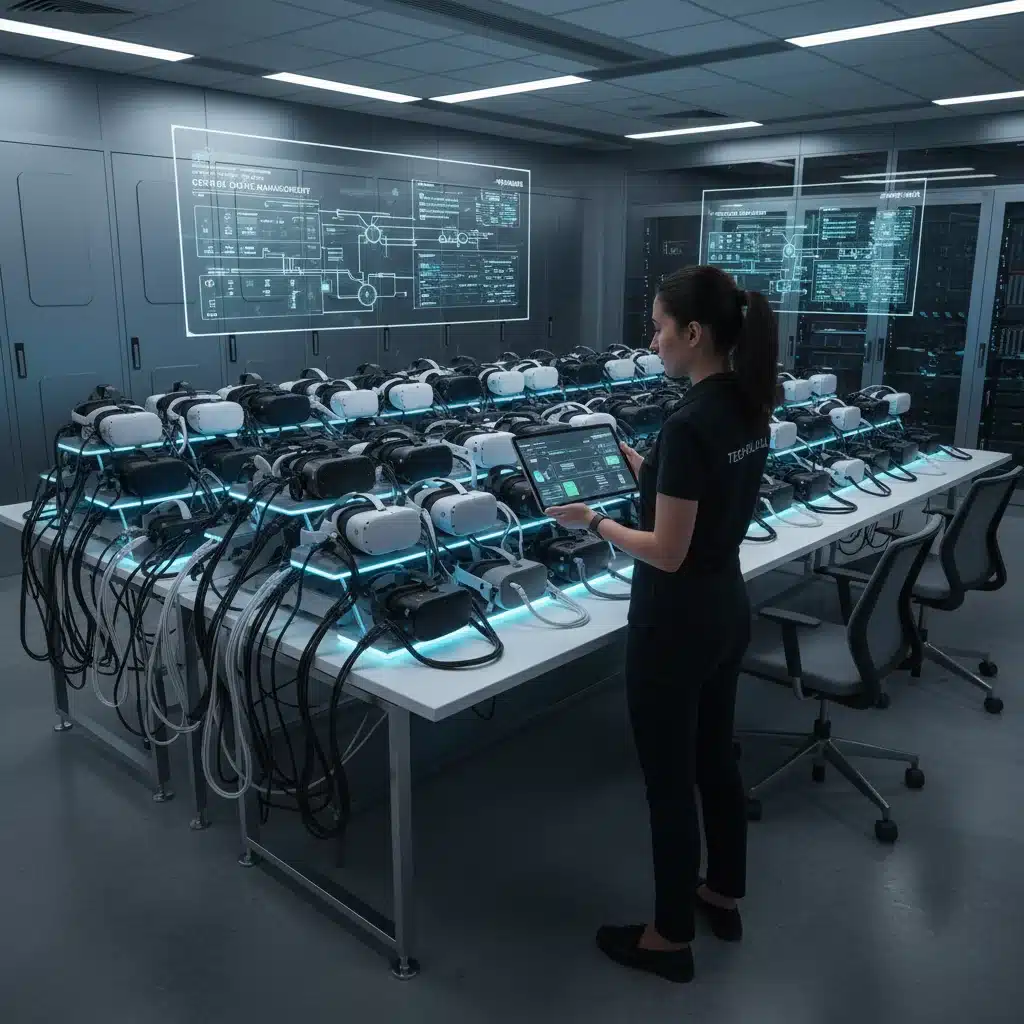
Managing 100+ VR headsets manually is impractical. Enterprises require robust Mobile Device Management (MDM) solutions tailored for VR devices. These platforms allow IT administrators to remotely deploy software updates, manage applications, monitor device health, and troubleshoot issues from a central console. Features like batch provisioning, content distribution, and remote wipe capabilities are indispensable for maintaining security and operational efficiency across a large fleet of devices. When selecting a VR headset for industrial training, investigate the available MDM tools and their compatibility with your existing IT infrastructure. A strong MDM solution can drastically reduce the administrative burden and ensure your VR industrial training program runs smoothly.
Software Ecosystem and Content Development
The best hardware is only as good as the software and content it runs. A robust software ecosystem is crucial for long-term success in VR industrial training.
Platform Compatibility and Open Standards
Consider headsets that support open standards or have broad platform compatibility. This ensures flexibility in content development and avoids vendor lock-in. While proprietary platforms may offer integrated solutions, an open approach allows for greater customization and the ability to leverage a wider pool of content developers. Compatibility with popular development engines like Unity and Unreal Engine is also a strong indicator of a healthy software ecosystem. The ability to easily port or develop custom training modules is a key advantage for any VR headset for industrial training.
Content Creation and Customization
Most industrial training requires highly specialized content. Evaluate how easy it is to create, customize, and deploy your own VR training modules on the chosen platform. Does the manufacturer provide SDKs (Software Development Kits) or APIs (Application Programming Interfaces) that are well-documented and easy to use? Are there established content development partners who specialize in industrial simulations for that particular headset? The availability of user-friendly authoring tools or partnerships with specialized content developers can significantly accelerate your training program’s deployment and evolution. A VR headset for industrial training should ideally facilitate seamless content integration.
Future-Proofing Your Investment
VR technology is advancing at an incredible pace. To ensure your investment remains relevant for years to come, consider the future-proofing aspects of your chosen hardware.
Modularity and Upgradability
Some industrial VR headsets are designed with modular components, allowing for easier upgrades of specific parts (e.g., improved displays, better batteries, or advanced tracking modules) without replacing the entire unit. This modularity can extend the lifespan of your investment and reduce the TCO over time. While not all headsets offer extensive modularity, it’s a feature worth considering for long-term strategic planning.
Manufacturer Support and Roadmap
Investigate the manufacturer’s commitment to enterprise clients. Do they offer dedicated business support, extended warranties, and a clear product roadmap? A manufacturer with a strong track record of supporting industrial applications and a transparent vision for future hardware and software developments provides greater assurance for your investment. This includes timely firmware updates, security patches, and access to technical assistance. Reliable manufacturer support is a cornerstone for any large-scale VR industrial training initiative.
Cost-Benefit Analysis for Large-Scale Deployment
While the initial capital expenditure for 100+ VR headsets can be substantial, it’s crucial to perform a thorough cost-benefit analysis. Consider not just the upfront cost of the hardware, but also:
- Reduced Training Time: VR can significantly shorten the time required to achieve proficiency compared to traditional methods.
- Improved Retention: Immersive experiences lead to better knowledge retention.
- Enhanced Safety: Training in hazardous environments without real-world risk.
- Reduced Material Waste: Practicing procedures without consuming expensive materials or damaging equipment.
- Scalability: Easily replicate training across multiple sites globally.
- Consistency: Standardized training experiences for all employees.
- Travel Savings: Eliminating the need for trainers and trainees to travel to physical training sites.
- Maintenance and Support: Factor in the costs of MDM solutions, hygiene supplies, and technical support.
The long-term savings and improvements in operational efficiency often far outweigh the initial investment, making a VR headset for industrial training a highly justifiable expenditure.
Case Studies and Real-World Applications
Numerous industries are already leveraging VR industrial training with significant success. For instance, in manufacturing, VR is used to train technicians on complex assembly lines, reducing error rates and speeding up onboarding. In the energy sector, VR simulates dangerous scenarios like oil rig emergencies or power plant operations, allowing workers to practice safety protocols in a controlled environment. Healthcare uses VR for surgical training and patient care simulations, enhancing precision and decision-making skills. These real-world applications demonstrate the tangible benefits of a well-implemented VR training program and underscore the importance of selecting the right VR headset for industrial training that can meet these diverse demands.
Addressing the Challenges of Large-Scale VR Deployment
While the benefits are clear, deploying VR for 100+ users comes with its own set of challenges. These include:
- User Adoption: Overcoming initial resistance or technophobia among employees. Proper onboarding and demonstrating clear benefits are key.
- Infrastructure: Ensuring robust Wi-Fi networks and charging solutions for a large fleet of devices.
- Content Creation: Developing high-quality, relevant training content can be time-consuming and expensive. Consider partnerships with specialized VR content studios.
- Technical Support: Establishing a reliable support system for troubleshooting hardware and software issues.
- Data Security: Protecting sensitive training data and ensuring compliance with privacy regulations.
Proactive planning and addressing these challenges head-on are crucial for a successful VR implementation. A well-chosen VR headset for industrial training will come with ecosystem support that helps mitigate many of these issues.
Conclusion: The Future of Industrial Training is Virtual
The year 2026 marks a pivotal moment for VR industrial training. With continuous advancements in hardware, software, and deployment strategies, virtual reality is no longer a niche technology but a mainstream tool for workforce development. Choosing the right VR headset for industrial training, especially for large organizations with 100+ users, requires a meticulous evaluation of hardware specifications, ergonomic design, hygiene considerations, connectivity options, and software ecosystem support. By prioritizing durability, performance, ease of management, and future-proofing, enterprises can make strategic investments that will yield significant returns in improved safety, efficiency, and employee skill development. The immersive, engaging, and cost-effective nature of VR training positions it as the definitive future of industrial education, empowering a highly skilled and adaptable workforce ready for the challenges of tomorrow.